Your phone lights up before you’ve finished the first sip of tea — a message from work, a family text, a forgotten reminder. Three-part breath (Dirga Pranayama) is a quick, repeatable practice you can use anywhere to slow the nervous system, reduce stress, and sharpen focus. This guide gives clear steps, simple variations, and practical fixes so you can reset in minutes.
April 12, 2026 (4mo ago) — last updated August 21, 2026 (3d ago)
Three-Part Breath: Dirga Pranayama for Calm & Focus
Learn Dirga Pranayama (three-part breath) with step-by-step practice to reduce stress, improve focus, and reset quickly at work or home.
← Back to blog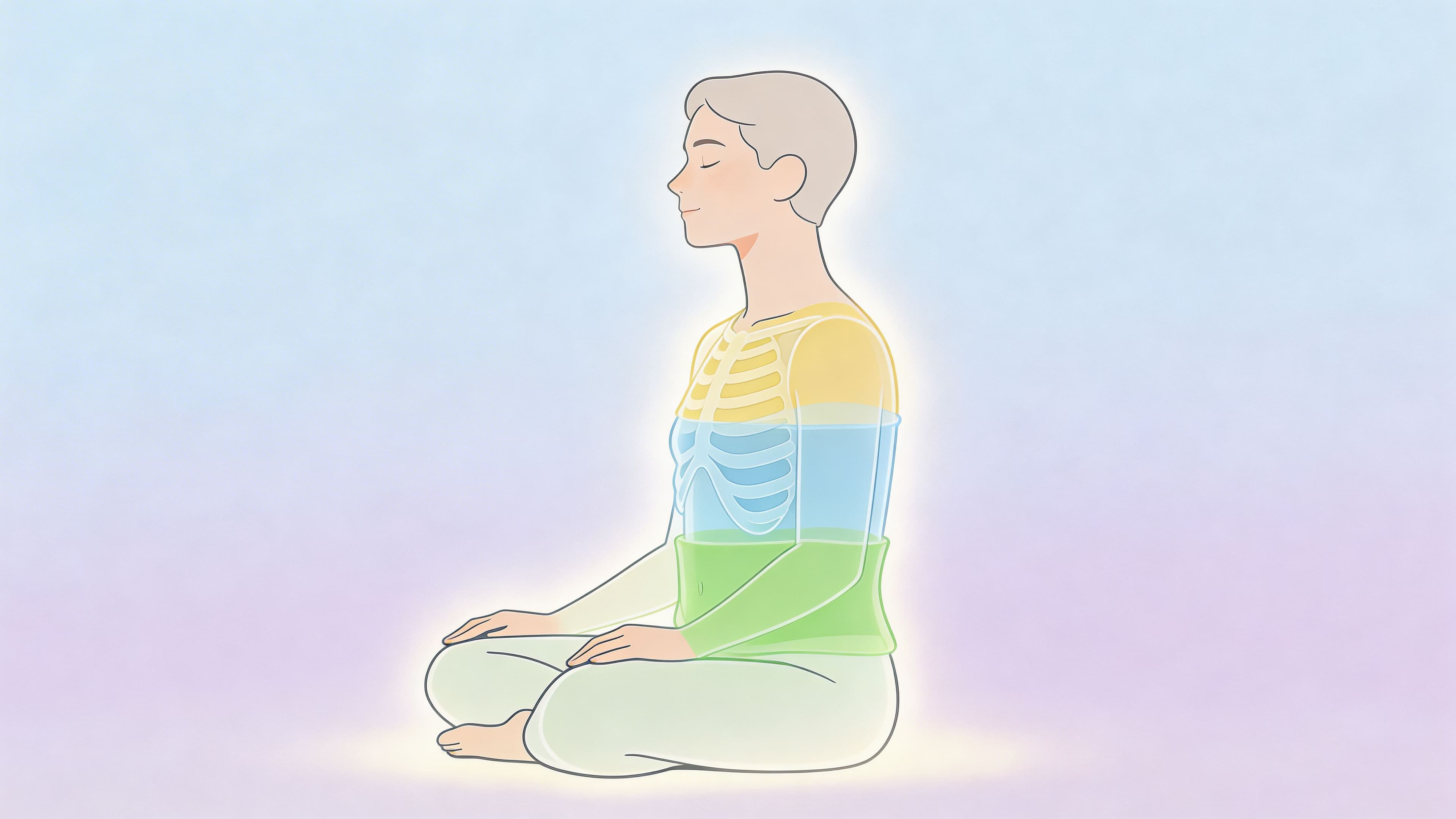
Three-Part Breath: Dirga Pranayama for Calm & Focus
Summary: Learn Dirga Pranayama (three-part breath) with step-by-step practice to reduce stress, improve focus, and reset quickly at work or home.
Introduction
Your phone lights up before you’ve finished the first sip of tea — a message from work, a family text, a reminder you forgot. By midday your shoulders creep up, your jaw tightens, and your breathing moves into the chest.
Three-part breath, or Dirga Pranayama, is a simple, repeatable practice you can use anywhere to slow the nervous system, reduce stress, and sharpen attention. This guide gives clear steps, quick variations for different bodies and settings, and practical troubleshooting to help you start right away.
Your reset button in a noisy world
Many people don’t lack the ability to relax; they’ve simply learned to live braced. The breath becomes shallow, the chest does most of the work, and the abdomen barely moves. Dirga Pranayama restores a fuller, organized breath pattern: belly, ribs, chest, then back down. That sequence reduces space for spiraling thoughts and gives attention a gentle job to do.
What three-part breath changes
Instead of pulling air only into the upper chest, let the inhale arrive in stages:
- Belly
- Ribcage
- Upper chest
The exhale reverses that order. Slowing the exhale often settles the body more than making the inhale larger.
You don’t need a perfect breath. You need a breath you can feel.
Why it feels grounding fast
Following a tactile sequence narrows mental drift and brings attention back to the body. A full breath can feel unfamiliar or emotional at first — both are normal. Over time, practicing this sequence makes it easier to step out of automatic stress reactions.
How to practice Dirga Pranayama
A useful three-part breath feels organized, not dramatic. Start where you can be comfortable for a few minutes: a chair, a supported cushion, or lying down with knees bent. Place one hand on the belly and one on the upper chest for feedback if you tend to overwork the chest.
Build the inhale in three stages
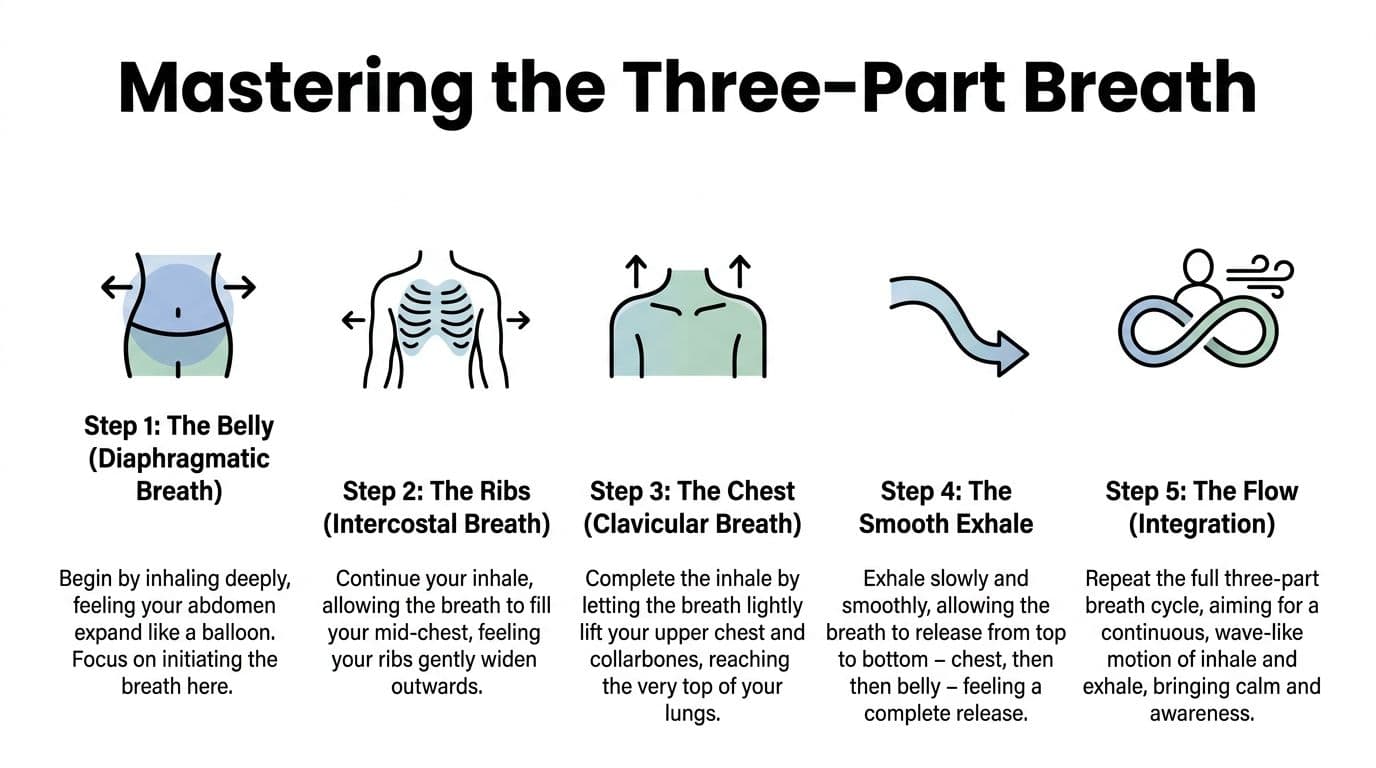
Begin low. Let the belly receive the first part of the inhale — the diaphragm descending and the lower lungs filling, not a forced push outward. Continue to widen through the side ribs. Finish with a small rise through the upper chest. Keep movement small and relaxed; if the shoulders lift or the throat tightens, ease back.
Exhale from top to bottom
Let the upper chest soften first, then feel the ribs draw in, and let the belly release last. This wave-like release slows the breath and helps the nervous system settle.
Smooth beats big. A steady, moderate breath settles better than the largest inhale you can manage.
A reliable starter pattern
- Position: Sit upright or lie down with support
- Inhale: Belly → ribs → upper chest
- Exhale: Upper chest → ribs → belly
- Rounds: Start with a few cycles
- Pacing: Slow enough to keep the breath comfortable and quiet
Short, consistent practice is better than rare, forced sessions. Five careful rounds often work well. If dizziness, air hunger, or agitation appears, make the breath smaller and return to a natural pace between rounds.
Three-part breath is best seen as a trainable regulation skill rather than a cure for anxiety, addiction, or stress. Practiced consistently, it becomes a direct physical interrupt for habitual stress responses1.
Pair a few rounds with other workplace stress-management techniques and bookmark practical guides for regular support.
The science behind the calm
This breath feels different from “just taking a deep breath.” Sequence and pace change physiology in measurable ways.
What your nervous system is doing
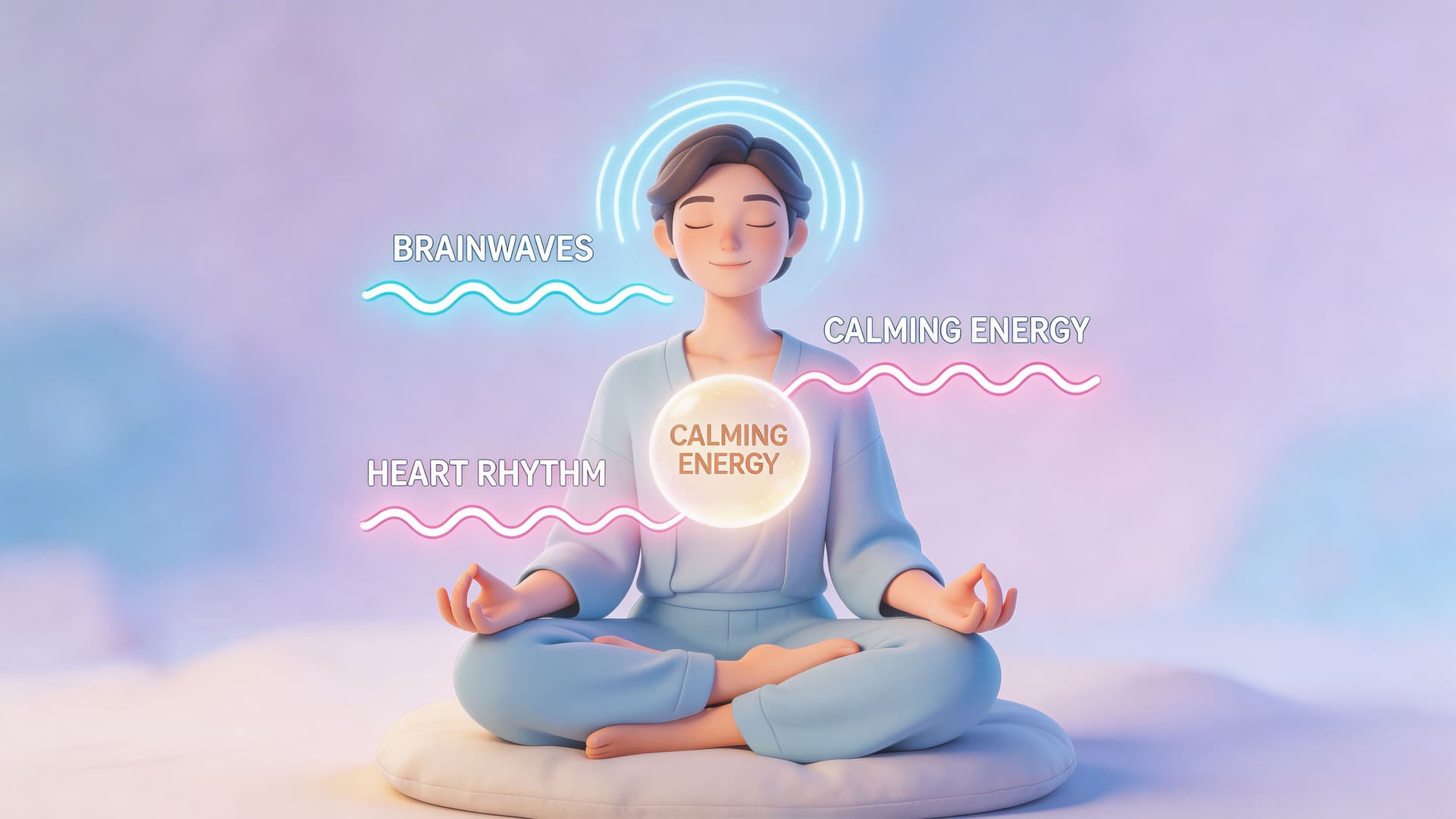
Fast, shallow breathing tends to sit with sympathetic activation, the branch associated with fight-or-flight. Slow, deliberate breathing helps shift toward parasympathetic activity, linked with rest and recovery. A randomized trial found that slow pranayama breathing, which mirrors Dirga Pranayama mechanics, produced reductions in systolic and diastolic blood pressure in people with stage 1 hypertension over three months2.
Why slower usually works better
Slowing the breath and allowing a smooth exhale reduces overbreathing and gives the diaphragm time to move fully. That changes pressure patterns in the torso and influences heart rhythm and vagal tone. Practically, slower and steady often outperforms deeper but rushed breathing.
A calm breath sends a different signal to the brain than a strained one.
Variations for every body and situation
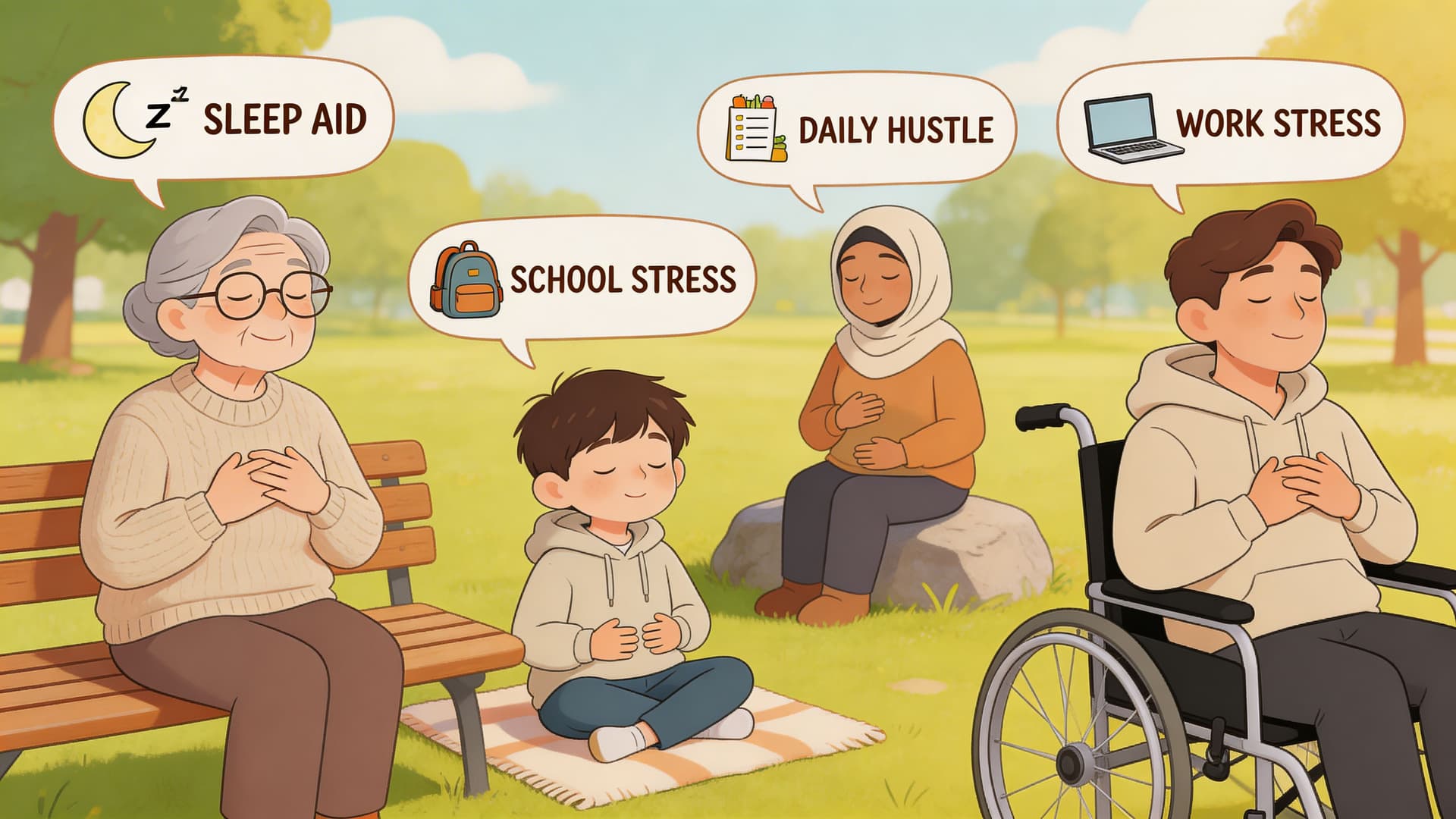
Not everyone is comfortable on the floor, and that’s fine. The setup matters more than the position.
Lying down when sitting feels like work
The floor gives clear feedback: the abdomen softens more easily and the back body can widen. Lying down often feels less effortful for people with fatigue, tension, or pain.
Seated in a chair for work, pain, or arthritis
Chair practice is often the most useful because people will actually do it:
- Plant feet firmly on the floor
- Scoot forward slightly to avoid collapsing into the backrest
- Rest one hand on the belly and one on the side ribs if helpful
- Keep the face soft so the inhale doesn’t climb into the throat
Seated breathwork is commonly used in chair-yoga approaches to reduce pain-related focus within minutes.
Fixes for rounded posture and short breath
- Rounded upper back: place a folded blanket behind the mid-back while seated
- Tight abdomen: start with belly-only breathing before adding ribs and chest
- Pain flare: make the breath smaller and smoother, not deeper
- Public setting: skip hand placement and sense the sequence internally
For movement-based complements, consider beginner Chi Gong routines that build body awareness and gentle energy flow: Chi Gong Exercises for Beginners.
If a breathing technique increases strain, it’s not the right version for your body yet.
Common hurdles and how to address them
Many problems come from trying too hard, too fast, or from a posture that obstructs the diaphragm. A broad review found about 75 percent of slow deep breathing interventions were effective, but sessions under five minutes or using fast paces showed no benefit, and poor posture can block diaphragm movement3.
Typical sticking points
- Dizziness: you’re forcing the inhale or breathing too quickly. Make the breath smaller and slow down.
- Chest takeover: begin with one or two rounds of belly-only breathing before building the full sequence.
- Can’t feel the ribs move: place your hands on the side ribs for sensory feedback.
- Anxiety when breathing: don’t chase depth. Stay with a softer version and keep the exhale easy.
What tends to work
Less effort and more consistency. Good posture, a manageable pace, and enough time for the nervous system to respond make a bigger difference than dramatic breathwork.
Aligning your breath with personal work
Three-part breath supports stress reduction and can aid deeper personal reflection. After a few rounds, try a brief check-in:
What challenge am I meeting today, and where do I feel it in my body first?
That question turns the breath into a self-study tool. Over time, Dirga Pranayama helps you notice patterns without being driven by them.
Quick Q&A
How long should I practice each time?
Start with five careful rounds. Short, consistent practice beats rare, strained sessions. If you want deeper change, build a few unhurried minutes daily.
Can three-part breath help anxiety or blood pressure?
It’s a regulation skill that supports calming and can lower blood pressure with regular practice, but it’s not a standalone cure2.
What if I feel dizzy or anxious when breathing?
Make the breath smaller, slow the pace, and return to a natural resting breath between rounds. Adjust posture and reduce intensity until the body trusts the pattern.
1.
Kaplan Clinic, “Three-Part Breath (Dirga Pranayama),” overview and clinical notes. https://kaplanclinic.com/three-part-breath-dirga-pranayama-lisa-lilienfield/
2.
A. Garfinkel and H. J. Critchley, “Effects of slow pranayama breathing on cardiovascular parameters in stage 1 hypertension: randomized controlled trial,” 2009. https://www.va.gov/WHOLEHEALTHLIBRARY/tools/diaphragmatic-breathing.asp
3.
Meta-analysis on slow deep breathing interventions and posture effects, PubMed Central. https://pmc.ncbi.nlm.nih.gov/articles/PMC9873947/
Discover Your Life Purpose Today!
Unlock your true potential and find your life’s purpose.
