Learn five simple Qigong exercises, plus posture and belly‑breathing techniques to boost energy, reduce stress, and improve balance. This beginner‑friendly guide gives a short daily routine and safety tips to help you start today.
March 16, 2026 (6mo ago) — last updated July 25, 2026 (1mo ago)
Qigong Exercises for Beginners
Five simple Qigong exercises, posture and breathing tips to boost energy, reduce stress, and improve balance. Beginner routines and safety guidance.
← Back to blog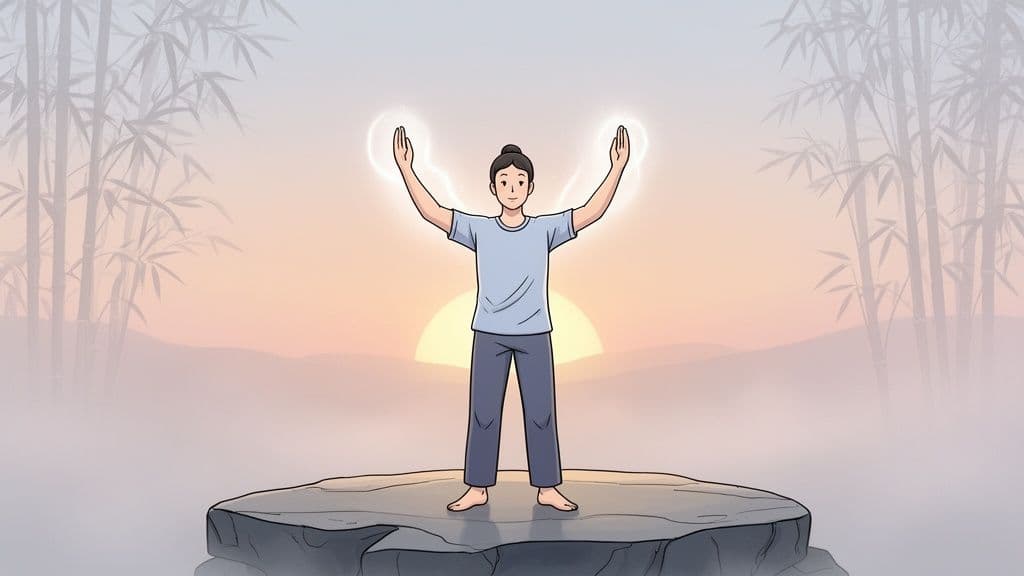
If you’re looking for a way to quiet your mind while gently moving your body, Qigong (often written Chi Gong) might be exactly what you need. It’s a practice that combines slow, gentle movements with deep breathing and a calm mind. Think of it as a moving meditation that’s easy to start—no special gear or peak fitness required.
Why Qigong Is the Perfect Practice for Beginners
Many people want a practice that doesn’t push limits but encourages slowing down, tuning in, and being present. That’s the heart of Qigong. It’s not about how hard you can go; it’s about how deeply you can connect with yourself.
The movements are simple and low‑impact, making them a great fit for virtually any age or fitness level. This is why Qigong is considered one of the most effective mindful movement practices—the focus is on the internal connection between your body and your mind.
Understanding the Energy Behind the Movement
Qigong is about working with your body’s natural energy. The word qi (pronounced chee) is life energy, and gong means work or cultivation—together, the practice of cultivating your own life energy.
You don’t have to be an expert in ancient philosophy to feel the benefits. Simply showing up and moving with intention is enough to begin influencing this energy and bringing greater balance and well‑being into your life. Learn more about what qi is in our guide: What Is Qi?.
This practice is a physical extension of the self‑discovery ideas found in Dan Millman’s The Life You Were Born to Live. Just as that book and the Life Purpose App help you understand your path, Qigong helps harmonize your inner world with your physical health.[superscript]
“This isn’t a complex workout you need to master. It’s a way to connect with yourself, making your practice meaningful from the very first session.”
A Gentle Practice with Global Reach
One of the most beautiful things about Qigong is how simple and adaptable it is, which has helped it spread across the globe. Today, Tai Chi and Qigong are estimated to be practiced by around 100 million people worldwide.1
Here’s a quick look at benefits you might notice when you start.
Quick Benefits of Starting Qigong
| Benefit Area | What Beginners Can Expect |
|---|---|
| Stress Reduction | A noticeable sense of calm and a quieter mind, often after just one session. |
| Improved Balance | Slow, deliberate movements help improve stability and body awareness, which can reduce fall risk in older adults.2 |
| Increased Energy | Feeling more revitalized and less fatigued, rather than tired out. |
| Better Sleep | Regular practice can help regulate sleep patterns and improve sleep quality.3 |
These benefits are a big reason millions of adults have embraced the practice. Qigong has ancient roots in traditional Chinese medicine, but its modern appeal lies in simple, rhythmic movements and breathing anyone can learn.
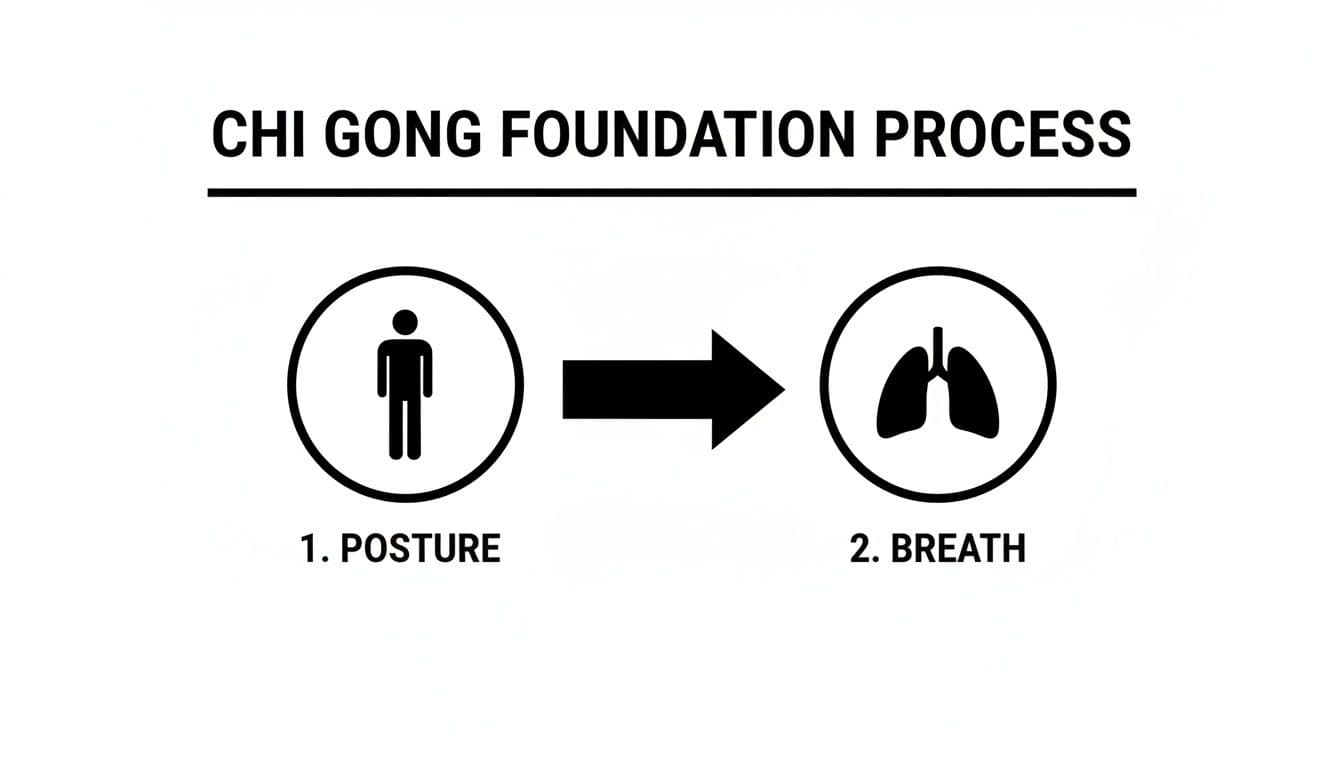
Posture and Breath: The Two Pillars of Your Qigong Practice
Before learning the flowing movements you might associate with Qigong, focus on the engine of the practice: your stance and your breath. It may feel like you’re learning to stand again, but with intention. This foundation is what makes all the other exercises truly work.
Everything starts from the Wuji stance. Think of it as your body’s home base or neutral gear. It’s the position you’ll return to again and again, and it’s a powerful practice for cultivating stillness and balance.
Finding Your Natural Stance
To settle into Wuji, stand with feet parallel, about shoulder‑width apart, toes pointing forward. Feel the entire surface of your feet making solid, even contact with the floor.
- Knees: Keep them soft, with a slight bend—never locked.
- Spine: Imagine a silk thread lifting the top of your head toward the sky, creating length through your spine. Tuck your chin slightly to straighten the back of your neck.
- Shoulders: Consciously drop your shoulders down and away from your ears.
- Arms: Let them hang naturally by your sides. Create a little space in your armpits, as if holding a small, delicate egg.
The aim isn’t rigid posture. Look for alignment that feels both strong and relaxed—a position you could hold comfortably for minutes.
“It took me a while to stop trying to force this posture. The shift happened when I focused on letting go of tension and allowing my body to settle into its natural alignment.”
The Power of Belly Breathing
With your body settled in Wuji, bring attention to diaphragmatic (belly) breathing. Most breathe shallowly into the chest. Instead, draw the breath down into the abdomen. Place a hand on your lower belly: as you inhale through the nose, feel the belly expand; as you exhale, feel it fall back in. This deep breathing calms the nervous system and helps guide energy through the body.
Stand in Wuji and take 10 slow, deep belly breaths. Let your attention rest on the abdomen rising and falling. This builds the mind‑body connection at the heart of Qigong.
Five Foundational Qigong Exercises to Get You Started
With posture and breathing in place, put it all into motion. Here are five foundational Qigong exercises perfect for beginners. Don’t seek perfection—the goal is to connect your mind to your movement.
Lifting the Sky
If you do one movement in the morning, make it this one. Lifting the Sky is a gentle, full‑body stretch that opens energy channels along the torso.
- Start in Wuji.
- Inhale, interlace your fingers and turn palms up.
- Raise your arms in a wide arc, up over your head. Let your eyes follow your hands.
- Pause at the top. Exhale, release your fingers and let your arms float back down.
Flow through this movement 8–10 times, focusing on creating space in the chest and between vertebrae.
Pushing the Wave
A go‑to for calming a frazzled mind. Cultivate gentle, flowing strength, like a wave rolling to shore.
- Begin in Wuji, feet slightly wider if you like.
- Inhale, draw hands up toward your chest, palms facing in.
- Exhale, sink weight back slightly and push hands forward, palms out, as if pushing a soft wave.
- Inhale, allow weight to shift forward and float hands back to the chest.
Keep the movement fluid and continuous, letting breath guide the pace.
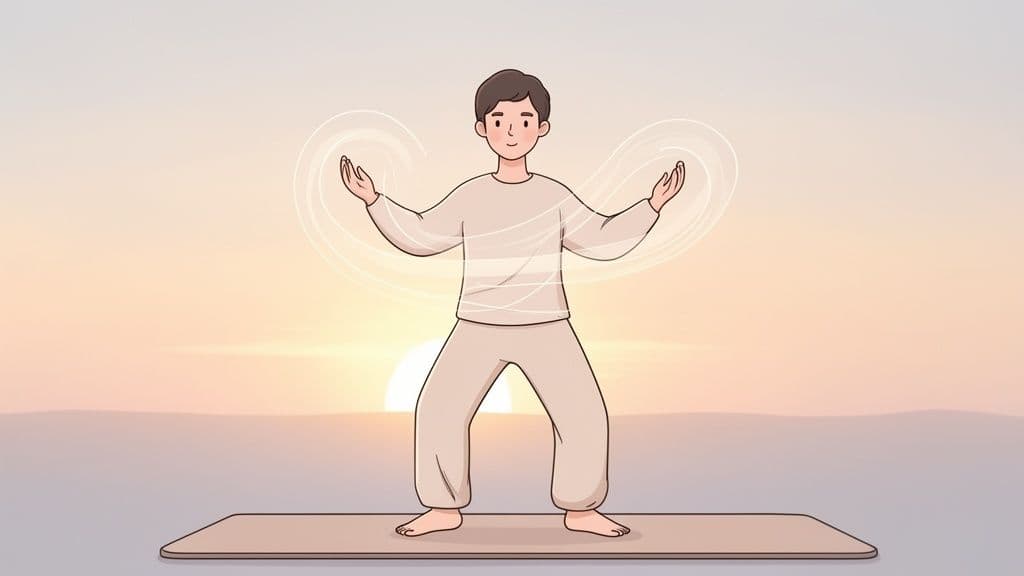
Hugging the Tree (Zhan Zhuang)
A potent standing meditation for building internal strength and energy.
- Stand in Wuji with knees soft and slightly bent.
- Raise arms to chest height, elbows dropped and palms facing the chest—like loosely hugging a tree.
- Keep fingers relaxed and curved.
Hold for 1–2 minutes to start. Breathe into the belly and notice sensations. Imagine a warm ball of energy circulating between your arms and torso. Lower and shake out arms if they get tired, then try again.
The Archer
A dynamic movement to open the chest, strengthen the back, and sharpen focus.
- Start in a wide stance with knees bent.
- Raise arms to chest level and cross them in front.
- Inhale, extend one arm out to the side, forming an L with the hand.
- Simultaneously draw the other hand back toward the shoulder, as if pulling a bowstring.
- Turn your head and gaze past your extended fingertip.
- Exhale, release and bring hands back to center.
Repeat 6–8 times per side.
Separating Heaven and Earth
A finishing movement to stretch and harmonize energy.
- From Wuji, bring hands in front of the lower abdomen, palms toward each other as if holding a ball.
- Inhale, float one hand up (palm toward sky) while the other presses down (palm toward earth), feeling a stretch along the side.
- Exhale, return hands to the belly and repeat on the other side.
Flow with your breath and feel yourself as a conduit between sky and earth.
Building a Consistent Daily Qigong Routine
To get the most from Qigong, practice a little each day. Short, focused sessions daily are more effective than long, infrequent ones. Think of it like tending a garden: small daily attention yields big results.
Finding Your Rhythm and Space
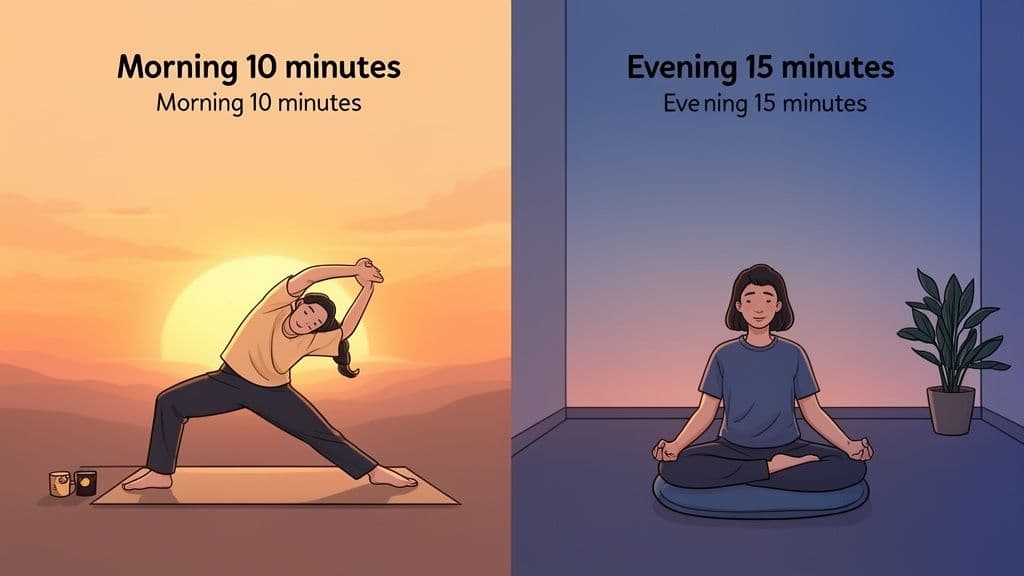
The best time is when you’ll actually do it. Many prefer morning sessions to set a calm tone; others like evenings to unwind. Any quiet corner with room to extend your arms works. A designated spot becomes a cue to tune inward.
Link your Qigong habit to an existing routine—after brewing your coffee or before brushing your teeth. This habit‑stacking makes consistency easier.
“This practice is meant to be nourishing. If you miss a day, come back the next day. Letting go of perfectionism is a Qigong practice itself.”
A 10‑Minute Morning Wake‑Up Routine
- Opening and grounding (2 minutes): Settle into Wuji and take ten slow belly breaths.
- Lifting the Sky (3 minutes): 8–10 repetitions, focusing on space through the spine.
- Pushing the Wave (3 minutes): 6–8 smooth repetitions.
- Closing (2 minutes): Return to Wuji, hands over lower abdomen, take a few deep breaths.
A 15‑Minute Evening Wind‑Down Routine
- Opening and breathing (3 minutes): Shake out limbs, then slow belly breathing.
- Separating Heaven and Earth (4 minutes): About 8 alternating repetitions.
- Hugging the Tree (5 minutes): Hold posture, breathe deeply, and notice thoughts without attachment.
- Closing (3 minutes): End in Wuji with hands on the lower abdomen and appreciate the stillness.
Common Mistakes to Avoid for a Safe Practice
The goal isn’t perfection—it’s moving with intention and awareness. Common traps include trying too hard and creating physical tension, such as a clenched jaw, raised shoulders, or locked joints. Qigong emphasizes softness and flow; forcing movement creates resistance and undermines the practice.
Listening to Your Body’s Wisdom
Your body is your best teacher. If you have a knee injury, don’t force a deep horse stance—modify it. Widen your stance or bend less and find engagement without strain. This idea of working with your nature, not against it, mirrors themes in Dan Millman’s The Life You Were Born to Live and the Life Purpose App. Learn more about the Life Purpose App: [/life-purpose-app].
“The real aim is to build a practice you can enjoy for life. That happens when you stop fighting your body and start treating it like a wise partner.”
Gentle Corrections for a Better Flow
- Don’t force movement. Ease up if a stretch feels sharp.
- Melt away tension. Do quick body scans and relax shoulders, face, and jaw.
- Know good vs. bad pain. Mild stretch is okay; sharp, stabbing pain is not. Stop and modify if needed.
Your Questions About Qigong Answered
Is Qigong a Form of Meditation?
Yes. Qigong is often called a moving meditation: gentle, repetitive movements and focused breathing quiet the mind and cultivate present‑moment awareness. You can practice active Qigong (movement) or passive Qigong (standing, breathing, visualization).
What Is the Difference Between Qigong and Tai Chi?
Tai Chi originated as a martial art and retains those roots, while Qigong was developed primarily for health and healing. Both are gentle and meditative, but Qigong focuses more directly on cultivating and balancing qi.
How Is Qigong Different from Yoga?
Yoga’s tradition and posture practices differ from Qigong’s flowing movement approach. Yoga often involves holding poses (asanas) and deeper stretching; Qigong emphasizes soft, circular, repetitive motions to encourage smooth energy circulation.
Who Should Not Do Qigong?
Qigong is very safe and adaptable for most people. If you’re pregnant or managing a major health condition, consult your doctor or a qualified Qigong instructor before starting. Always listen to your body and avoid pushing into pain.
At Life Purpose App, we believe understanding your unique path is the first step to living a more harmonious life. Discover your personal life path, explore core spiritual laws, and find clarity on your journey. Get started with the Life Purpose App today.
Quick Q&A (Concise Answers to Common Concerns)
Q: How long before I notice benefits? A: Many people feel calmer and more grounded after a single session; consistent daily practice amplifies benefits over weeks.
Q: Do I need to be flexible or fit to start? A: No. Qigong is low impact and adaptable—modify stances and ranges as needed.
Q: What’s the simplest way to begin each day? A: A 10‑minute routine of grounding breaths, Lifting the Sky, and Pushing the Wave is an effective morning wake‑up.
1.
https://en.wikipedia.org/wiki/Qigong. Estimation and overview of global practice and history.
2.
https://www.cochranelibrary.com/. See reviews on Tai Chi and fall prevention in older adults for evidence of balance benefits.
3.
https://www.nccih.nih.gov/health/tai-chi-and-qigong-in-depth. National Center for Complementary and Integrative Health overview of health effects, including sleep and stress benefits.
Discover Your Life Purpose Today!
Unlock your true potential and find your life’s purpose.
