You may be feeling two things at once: one part wants a beautiful seasonal ritual, the other wants something that actually helps. This autumn equinox blessing guide offers practical, grounded steps—altar ideas, scripts, and simple personalization tools—so your ritual feels honest and useful, not performative.
April 23, 2026 (5mo ago) — last updated September 10, 2026 (12d ago)
Autumn Equinox Blessing: Rituals & Altar Ideas
Create a grounded autumn equinox blessing with step-by-step rituals, altar ideas, scripts, and personalization tips to honor balance, harvest, and release.
← Back to blog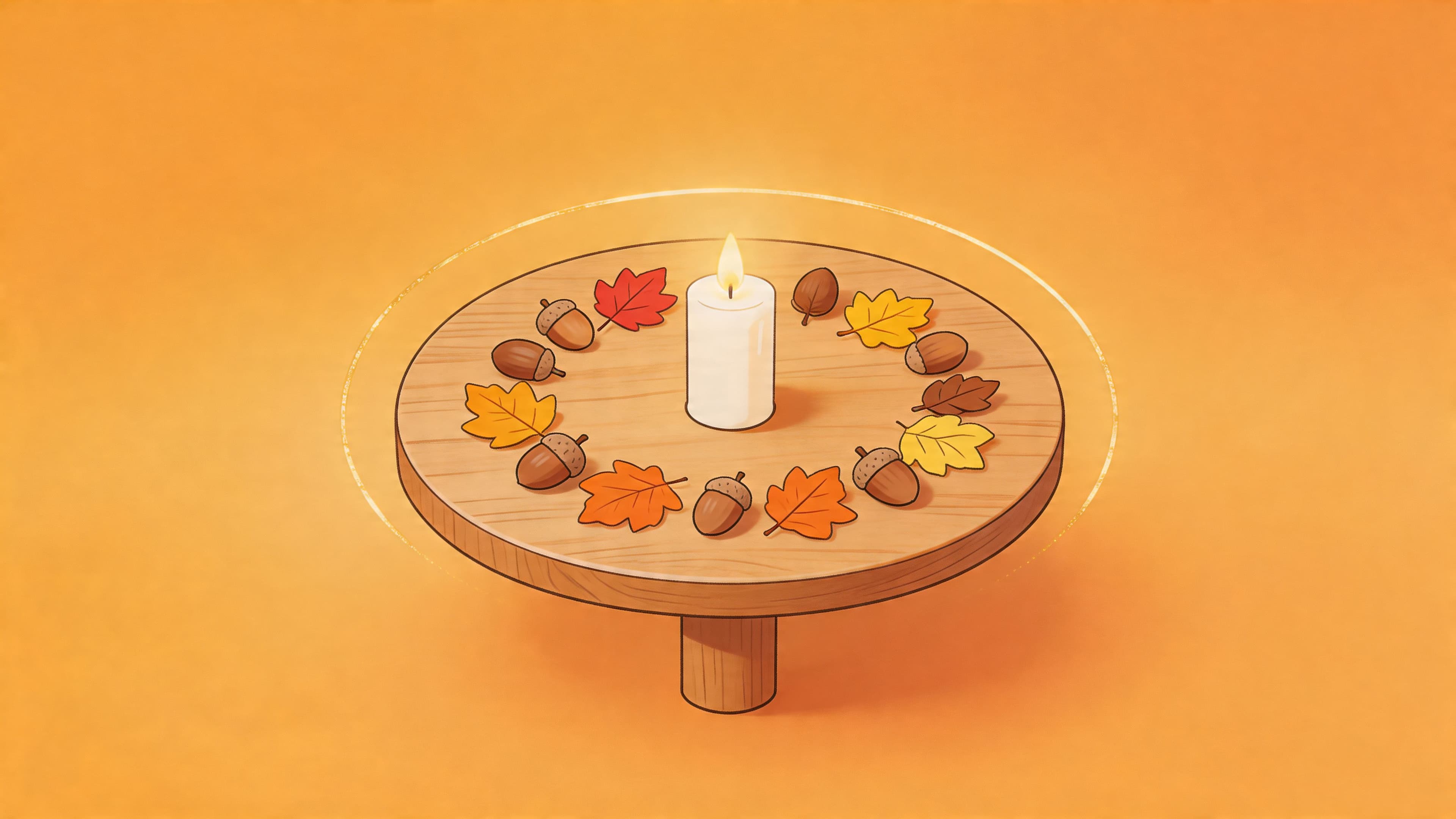
Autumn Equinox Blessing Guide
Craft a personal autumn equinox blessing to celebrate balance, gratitude, and intentional release. This step-by-step guide offers altar ideas, scripts, and ways to personalize your ritual.
Introduction
You may be feeling two things at once. One part of you wants a beautiful seasonal ritual. The other wants something that helps, not just a candle, a few nice words, and a vague sense that you “did something spiritual.”
That tension is exactly why an autumn equinox blessing matters. This turning point asks for honest balance, not polish. A grounded ritual gives you a clear container for what’s ripened in your life and what’s ready to fall away.
Embracing the spirit of the autumn equinox
Around September 20 to 22, the Sun crosses the equator, creating nearly equal hours of daylight and darkness1. That equal measure of light and dark is why many spiritual practitioners treat this day as more than a date on the calendar.
In practice, the equinox is not only about celebration. It’s about accounting. What came to fruition? What took energy but didn’t bear fruit? What are you still carrying that belongs to summer’s momentum, not autumn’s wisdom?
Why this moment has spiritual weight
Ancient people paid attention to this threshold because survival depended on it. Across medieval Britain and Celtic Ireland, harvest customs honored the last sheaf and the living spirit of the field2. These rituals were practical acts tied to food, storage, weather, and community.
Today, people still gather at seasonal sites such as Stonehenge for sunrise observances, not because ancient forms must be copied exactly, but because turning points still stir something primal3.
Practical rule: Treat an autumn equinox blessing as a harvest reckoning, not a manifestation exercise dressed in autumn colors.
The name Mabon was popularized in the 1970s, yet the deeper impulse is older than the label4. Seasonal observance has long been a way to mark practical change and communal rhythm.
What the equinox asks of you
This season asks for three things:
- Gratitude for what is here, not what you hoped would happen.
- Discernment about what to keep. Autumn is a sorting season.
- Release without drama. Leaves don’t cling to branches out of habit.
Many people weaken the ritual by making it too abstract. The more grounded approach is simpler. Name the harvest. Name the strain. Name the lesson.
Try beginning with sentences like these:
- I’m grateful for what matured, even if it arrived differently than I expected.
- I release the habit of forcing what is out of season.
- I welcome steadiness more than intensity.
If you hold that spirit clearly, the ritual stops feeling performative. It starts feeling like a return to rhythm.
Creating your sacred space and intention
You don’t need a perfect altar. You need a space that tells your nervous system, “I’m here on purpose.” A windowsill, a corner table, a low stool, or a cloth on the floor can work. What matters is that the space marks a shift from ordinary activity into conscious practice.
Build the altar from what the season offers
Start with a base, such as linen or a cloth in rust, gold, brown, or deep green. Add a few natural items: fallen leaves, nuts, berries, seed pods, apples, pears, small gourds, or a bowl of grain. Sparseness often works better than clutter.
A simple setup might include:
- A candle for the remaining light of the year.
- A bowl or plate for offerings such as nuts, fruit, or bread.
- One grounding object like a stone, acorn, or piece of wood.
- One written page where your intention will rest during the ritual.
For floral choices and textures that feel rooted in autumn, use a seasonal flowers guide or consult our seasonal altar guide to choose tones that won’t fight the ritual mood.
Clean the space before you ask it to hold anything sacred
Energetic preparation is most useful when it’s brief and intentional. Smoke cleansing with rosemary, cedar, or mugwort is common; if smoke isn’t practical, use sound, open a window, or wipe the surface with a little water and intention. A practical herbs guide can help you work with plant allies respectfully8.
If your body still feels hurried, your words won’t land deeply. Slow down before you begin speaking blessings.
Set an intention with enough honesty to matter
An autumn equinox blessing needs one clear center. Not six goals. Pick one intention and let it hold the ritual.
Use a journal and answer these prompts:
| Prompt | What to listen for |
|---|---|
| What has ripened in my life since late spring? | Real results, not plans only |
| What am I grateful for that I didn’t expect? | Surprise blessings reveal deep lessons |
| What feels complete, heavy, or outgrown? | This points to release |
| What quality do I want to carry into the darker season? | Choose a trait, not a fantasy |
Shorten the intention until it feels true. “I bless the courage to simplify.” “I release the need to prove.” Those are usable and can be spoken with conviction.
Performing your autumn equinox blessing ritual
A common ritual framework includes a preparation phase, a core ritual, and a closing. Some guides suggest roughly 20 minutes, 75 minutes, and 15 minutes for these phases; use timing as a guide, not a rule, so you don’t compress sacred work into a rushed moment5.
Balance the ritual with breath, movement, silence, and spoken blessing. If you tend to stay in your head, pair the ceremony with meditation and journaling to help you settle.
Opening the ritual well
Begin with cleansing. Then wash your hands and face with care. Stand or sit before your altar and take a few slow breaths. If you like a formal opening, turn your palms upward as you inhale and lower them as you exhale until your chest softens and your attention gathers.
Speak a simple opening prayer. Keep it plain and sincere:
“I enter this equinox in honesty. I honor the balance of light and dark. I give thanks for what has grown. I release what has finished. May this blessing bring clarity, steadiness, and right relationship.”
Sincerity matters more than ornate language.
The core movement of the blessing
The heart of the ritual can follow a flowing sequence:
- Name your harvest. Read from your journal or speak aloud what has ripened in your life.
- Acknowledge the cost. Say what felt difficult so gratitude doesn’t become denial.
- Balance the opposites. Hold one hand out for what you’re keeping and one for what you’re releasing. Breathe.
- Move, don’t just think. Sway, step, bow, or place your hands on the ground.
- Speak the blessing itself. Let intention become word.
Sample blessings:
Gratitude:
“I bless the visible harvest and the hidden one. I bless the work that bore fruit and the effort that taught me patience. I thank the earth, my body, my relationships, and the unseen grace that carried me farther than I knew.”
Release:
“I release what is finished. I release drained effort, stale obligation, and the fear that keeps me grasping past the season. What falls away now makes room for wisdom, rest, and cleaner devotion.”
Balance:
“At this meeting place of light and dark, I ask for right measure. Enough action to stay alive to purpose, enough rest to hear what matters, enough courage to tell the truth about what this season requires.”
What works and what doesn’t
- Structure helps when you drift or dissociate, but too much structure can create self-consciousness.
- Movement helps when emotion is stuck in the body, but don’t force movement if it feels performative.
- Longer ritual time helps when you need to settle; a shorter ritual is wiser when fatigue would dull the experience.
The best ritual is the one you can inhabit fully. A smaller blessing done with presence carries more weight than a long ceremony done mechanically.
If tears come, let them. If nothing dramatic happens, that’s fine. Quiet often means the work is landing.
Closing and integration
Close by sitting or lying down for a few minutes, breathing into the belly, and letting the nervous system return to neutral. Offer gratitude aloud, thank the season and your willingness to show up, and extinguish the candle with deliberateness.
Afterward, eat something simple such as bread, fruit, or soup. Grounding the body helps the ritual integrate.
Personalize your blessing with your life path
Most equinox rituals are generous but generic. They speak about balance, gratitude, and release in broad terms. That works up to a point, but many people need something more exact. Dan Millman’s system of 45 life paths offers one way to make a blessing more precise and targeted for recurring life lessons7.
Search interest for equinox numerology and personalized ritual searches has grown in recent years, which suggests many readers seek tailored practices rather than generic ceremonies6.
Match the blessing to the lesson
A seasonal ritual gets stronger when it addresses your core gifts and recurring challenges. For example:
- Leadership: Focus on cleaning up the shadow side of leadership, such as releasing control.
- Relationships: Ask what kind of connection you cultivated and what patterns you’re ready to stop feeding.
- Creativity: Honor what’s already been made instead of always chasing the next idea.
A personalized blessing doesn’t need more complexity. It needs a sharper target.
Examples of tailored equinox intentions
| Life path theme | Equinox blessing focus |
|---|---|
| Leadership | “May I harvest confidence without hardening into control.” |
| Relationships | “May I release imbalance in giving and receiving.” |
| Creativity | “May I honor what I’ve made and trust the next season of expression.” |
| Discipline | “May I keep devotion and release perfectionism.” |
| Service | “May I give from fullness, not exhaustion.” |
Adapting your ritual and continuing the practice
A ritual only becomes part of your life when it fits your life. Some years you’ll want the full ceremony. Some years you’ll have a candle, ten quiet minutes, and a tired body. Both can be valid.
Adapt the blessing to your reality:
- Alone in a small space: Use one candle, one leaf, one written intention. Sit close to the altar so the ritual feels contained.
- With family or friends: Let each person name one harvest and one release. Keep the group blessing short so it stays heartfelt.
- A few minutes only: Stand outside, place a hand on your heart and one on your belly, and speak one sentence of gratitude and one sentence of release.
- Emotionally raw: Skip ornate language. Use grounding, tea, a blanket, and a plainspoken blessing.
What doesn’t help is forcing the “ideal” version when your capacity is low. Adaptation is not failure. It’s mature practice.
Keep the ritual alive after the candle goes out
Use the days after the equinox to listen for what the ritual stirred up. Journal one prompt each morning or evening:
- What felt complete in the ritual, and what still feels unresolved?
- Where am I still out of balance in daily life?
- What am I being asked to protect as the season turns inward?
- What would gratitude look like as a habit, not a mood?
Keep one small promise to yourself afterward. Rest more fully. Simplify one commitment. Repair one conversation. Finish one loose end. That’s how the equinox keeps working on you.
Frequently Asked Questions
What is an autumn equinox blessing and why does it matter?
An autumn equinox blessing is a focused ritual that honors balance, harvest, and release. It matters because it offers a practical way to mark seasonal change and make meaningful choices about what to keep and what to let go.
How long should I spend on an equinox ritual?
There’s no fixed length. Use a framework of preparation, core ritual, and closing as a guide. A shorter, present practice is better than a longer, distracted one.
How can I personalize the ritual to my life path?
Choose one clear intention that addresses your recurring challenges or gifts. Use tools like life-path frameworks to sharpen the focus, and adapt practices to your energy and circumstances.
Quick Q&A — Concise answers to common concerns
Q: I’m tired, can a short ritual still work?
A: Yes. A candle, a single sentence of gratitude, and a deliberate breath can be enough. Presence matters more than length.
Q: What if I’m not spiritual but want a practical ritual?
A: Focus on the practical elements: naming harvest, listing what to release, and one follow-up promise. That gives the equinox practical force.
Q: How do I avoid making the ritual performative?
A: Keep language plain, choose one intention, and limit props. A smaller, honest practice lasts longer than a showy one.
1.
NASA, “Seasons and Equinoxes,” https://earthobservatory.nasa.gov/features/Seasons.
2.
History UK, “Harvest Traditions and Customs,” https://www.history.co.uk/.
3.
English Heritage, “Stonehenge: Celebrating the Solstices and Equinoxes,” https://www.english-heritage.org.uk/visit/places/stonehenge/.
4.
Encyclopaedia Britannica, “Mabon,” https://www.britannica.com/topic/Mabon.
5.
Way of Belonging, “Autumn Equinox Ritual Guide,” https://wayofbelonging.org/.
6.
Google Trends, search interest for “equinox numerology,” https://trends.google.com/trends/explore?q=equinox%20numerology.
7.
Dan Millman, The Life You Were Born to Live, https://danmillman.com/books/lifeyouwereborn/.
8.
The Herbal Academy, “A Guide to Smudging Herbs,” https://theherbalacademy.com/guide-to-smudging-herbs/.
Discover Your Life Purpose Today!
Unlock your true potential and find your life’s purpose.
