Ein ausgewogenes Leben ist keine abstrakte Idee. Konzentrieren Sie sich auf fünf Kernbereiche — Gesundheit, Geld, Karriere, Beziehungen und Sexualität — um einen klaren Rahmen zu schaffen, mit dem Sie Bilanz ziehen und konkrete nächste Schritte planen können. Dieser Ansatz baut auf Dan Millmans Arbeit und der Lebenssinn-App auf12.

October 12, 2025 (1y ago) — zuletzt aktualisiert September 21, 2026 (1mo ago)
5 Lebensbereiche für Balance & Sinn
Bewerten Sie Ihr Leben mit Dan Millmans fünf Bereichen — Gesundheit, Geld, Karriere, Beziehungen, Sexualität — und erstellen Sie einen praktischen Aktionsplan für mehr Balance.
← Zurück zum Blog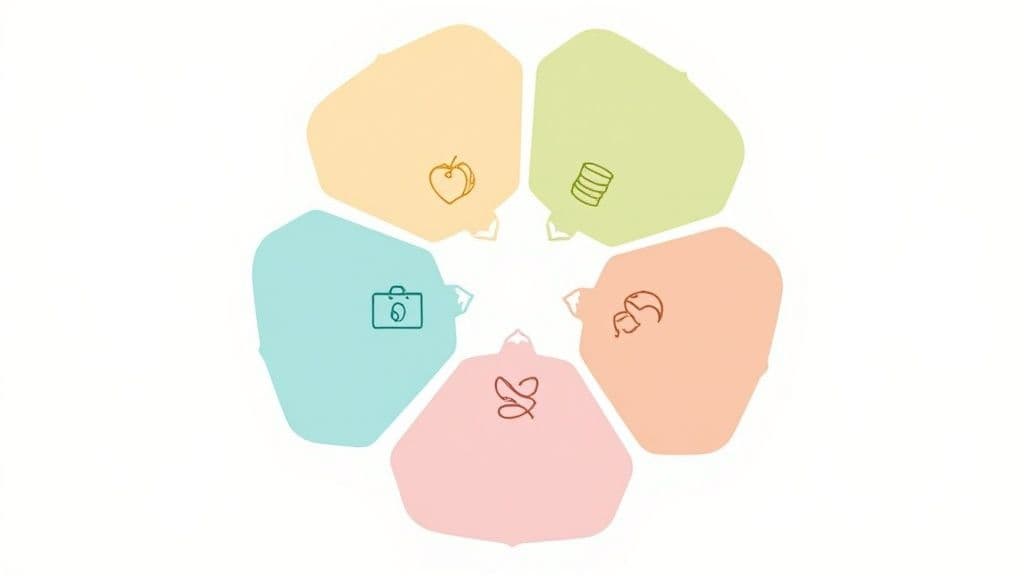
Ein ausgewogenes Leben ist keine abstrakte Idee. Konzentrieren Sie sich auf fünf Kernbereiche — Gesundheit, Geld, Karriere, Beziehungen und Sexualität — um einen klaren Rahmen zu schaffen, mit dem Sie Bilanz ziehen und konkrete nächste Schritte planen können. Dieser Ansatz baut auf Dan Millmans Arbeit und der Lebenssinn-App auf12.
5 Lebensbereiche für ein ausgewogenes Leben
Zusammenfassung: Nutzen Sie Dan Millmans fünf Lebenskategorien — Gesundheit, Geld, Karriere, Beziehungen, Sexualität — um ein ausgewogenes, sinnorientiertes Leben mit praktischen, schrittweisen Maßnahmen aufzubauen.
Einleitung
Ein ausgewogenes Leben ist keine abstrakte Idee. Konzentrieren Sie sich auf fünf Kernbereiche — Gesundheit, Geld, Karriere, Beziehungen und Sexualität — um einen klaren Rahmen zu schaffen, mit dem Sie Bilanz ziehen und konkrete nächste Schritte planen können. Dieser Ansatz basiert auf Dan Millmans System in „The Life You Were Born to Live“1 und der Lebenssinn-App2, die Einsicht in handlungsfähige Pläne verwandeln.
Ein Leitfaden zu den fünf Lebensbereichen für Balance
Verwenden Sie diese Bereiche, um Stärken zu erkennen, wiederkehrende Muster zu verstehen und kleine, beständige Schritte zu planen, die sich langfristig summieren.
Warum das Leben in Kategorien aufteilen?
Wenn das Leben überwältigend wirkt, macht die Aufteilung in klare Bereiche Veränderungen handhabbar. Dieses Rahmenwerk, adaptiert aus Dan Millmans Lebensweg-System, zeigt differenzierte, aber verbundene Erfahrungsbereiche, sodass Sie Ihre Energie dort fokussieren können, wo sie am meisten zählt. Muster in jedem Bereich zu sehen, gibt Ihnen eine Landkarte für Wachstum und klügere Entscheidungen.
Indem Sie diese fünf Bereiche untersuchen, können Sie Stärken identifizieren, wiederkehrende Herausforderungen angehen und ein ausgewogeneres Leben gestalten.
Die fünf zentralen Fokusbereiche
- Gesundheit: Körperliche, geistige und emotionale Energie, die Grundlage für alles andere.
- Geld: Ihre Beziehung zu finanziellen Mitteln und die Sicherheit oder Freiheit, die sie bieten.
- Karriere: Wie Sie Ihre Talente einsetzen und durch Arbeit Sinn finden.
- Beziehungen: Die Qualität Ihrer Verbindungen zu Familie, Freundinnen und Partnerinnen.
- Sexualität: Ihr Ausdruck von Intimität, kreativer Energie und Selbstakzeptanz.
Ihre Kernwerte zu kennen unterstützt Wachstum in allen fünf Kategorien. Lesen Sie, wie Sie Ihre Werte entdecken können auf unserer Seite zur Persönlichkeitsarbeit (/selbstentwicklung/werte-entdecken).
Gesundheit: der Motor, der alles antreibt

Von allen Kategorien ist Gesundheit die treibende Kraft. Ohne genügend Energie — körperlich, geistig oder emotional — lassen sich andere Ziele kaum verfolgen. Gesundheit als Grundlage zu betrachten hilft Ihnen, Selbstfürsorge als wesentlich und nicht als optional zu priorisieren. Die globale Lebenserwartung ist in den letzten Jahrzehnten gestiegen und beträgt aktuell etwa 73,49 Jahre, ein Hinweis auf Fortschritte in Gesundheit und Lebensbedingungen3.
Hören Sie auf Ihren Körper?
Stress, Müdigkeit und wiederkehrende Symptome sind Signale. Zu lernen, diese Botschaften wahrzunehmen, verhindert, dass kleine Probleme größer werden. Körperbewusstsein ist zentral für das Lebensweg-System und unterstützt klügere Entscheidungen über Ruhe, Aktivität und Behandlung.
Ihr Energielevel bestimmt die Qualität Ihrer Erfahrungen. Gesundheit zu priorisieren macht andere Veränderungen nachhaltiger.
Praktische Werkzeuge für eine starke Grundlage
Bauen Sie Gewohnheiten auf, die in Ihren Alltag passen: ausgewogene Ernährung, regelmäßige Bewegung, erholsamer Schlaf und Methoden zur mentalen Ruhe. Moderne Tools wie die Apple Health App erleichtern das Nachverfolgen und Aufrechterhalten von Gewohnheiten6. Für Orientierung zur körperlichen Aktivität siehe die Empfehlungen der Weltgesundheitsorganisation4.
Eine gesunde Beziehung zum Geld aufbauen
Geld ist oft emotional aufgeladen, ist aber grundlegend ein Tauschmittel. Wie Sie diesen Fluss managen, beeinflusst Ihre Sicherheit und Ihr Stressniveau. Das Lebensweg-Rahmenwerk kann offenlegen, warum Sie in Geldfragen auf bestimmte Weise denken und handeln, sodass Sie Gewohnheiten schaffen, die Ihre Prioritäten unterstützen.
Ihr Lebensweg und Ihre Finanzen
Ihre Lebenszahl erklärt oft finanzielle Tendenzen: ob Sie Sparen, Risikobereitschaft, Großzügigkeit oder Verdienst priorisieren. Bewusstsein hilft Ihnen, mit Stärken zu arbeiten, statt gegen sie anzukämpfen.
Das Verständnis Ihrer finanziellen Blaupause ist der erste Schritt, Geld als Ressource zu nutzen, die Ihr Leben unterstützt.
Entwerfen Sie Systeme — Budgetierung, Investieren, Geben — die zu Ihren Werten passen. Wenn Sie neu im Investieren sind, beginnen Sie mit anfängerfreundlichen Ressourcen, um die Grundlagen zu lernen und kostspielige Fehler zu vermeiden7. Für praktische Tipps zu Finanzplanung besuchen Sie unsere Finanzgrundlagen-Seite (/finanzen-basics).
Sinn im Beruf und in der Arbeit finden

Arbeit nimmt einen bedeutenden Teil unseres Lebens ein. Deshalb ist es wichtig, befriedigende Arbeit zu finden, um das allgemeine Gleichgewicht zu wahren. Die durchschnittlich geleisteten Jahresarbeitsstunden variieren je nach Land, und wie Zeit bei der Arbeit verbracht wird, prägt Wohlbefinden und Lebensbalance5.
Job, Karriere oder Berufung?
Betrachten Sie Arbeit als Job (bezahlt die Rechnungen), Karriere (langfristiger beruflicher Weg) oder Berufung (tief bedeutungsvoll). Nicht jeder braucht eine dramatische Berufung, aber jeder profitiert von Arbeit, die mit Werten und Stärken übereinstimmt.
Wenn Arbeit Ihre authentischen Stärken widerspiegelt, wird sie zu einem Vehikel für Wachstum und Erfüllung.
Nutzen Sie Einsichten aus Dan Millmans Buch und der Lebenssinn-App, um Berufe und Umgebungen zu identifizieren, in denen Sie aufblühen. Diese Klarheit hilft Ihnen, praxisnahe Schritte zu planen — Weiterbildung, Netzwerkaufbau oder kurze Experimente — um in besser passende Arbeit zu wechseln.
Erfüllende Beziehungen und Intimität pflegen
Beziehungen bringen oft unsere tiefste Freude und unsere größten Herausforderungen. Beziehungen umfassen Familie, Freundinnen, Kolleginnen, Gemeinschaft und romantische Partner*innen. Ihr Lebensweg beleuchtet, wie Sie natürlich in Beziehung treten und was Sie brauchen, um sich sicher zu fühlen.
Ihren Beziehungs-Blueprint verstehen
Ihre Lebenszahl hilft zu erklären, wie Sie kommunizieren, was Sie von anderen brauchen und welche wiederkehrenden Probleme auftreten können. Diese Einsicht fungiert wie ein Benutzerhandbuch fürs Herz und hilft Ihnen, Konflikte zu navigieren, Grenzen zu setzen und um das zu bitten, was Sie brauchen. Lernen Sie praktische Wege, emotionale Achtsamkeit in Beziehungen zu entwickeln.
Das Verstehen von Beziehungsmustern hilft Ihnen, unterstützende, authentische Verbindungen aufzubauen.
Sexualität als menschlicher Ausdruck
Sexualität ist ein Teil des menschlichen Ausdrucks und kreativer Energie. Sie ist verbunden mit Intimität, Selbstakzeptanz und persönlicher Vitalität. In diesem System wird Sexualität als Teil der ganzen Person betrachtet, nicht als Tabu. Das Verstehen des Bedarfs an körperlicher Verbindung hilft Ihnen, Beziehungen zu kultivieren, die emotional, körperlich und spirituell stimmig sind.
Wie Sie Ihr ausgewogenes Leben erstellen
Balance bedeutet nicht perfekte Werte in jeder Kategorie. Es geht um Harmonie über die fünf Bereiche hinweg. Stellen Sie sich Ihr Leben als ein Rad mit fünf Speichen vor. Wenn eine Speiche schwach ist, wird die Fahrt holprig. Stärken Sie schwächere Speichen und das ganze Rad rollt glatter.
Bilanz ziehen
Beginnen Sie mit ehrlicher Reflexion. Verwenden Sie das Lebensweg-Rahmenwerk von Dan Millman und der Lebenssinn-App, um zu sehen, welche Bereiche Aufmerksamkeit brauchen. Das ist keine Schuldzuweisung; es ist eine Karte für Veränderung. Ein persönlicher Entwicklungsplan hilft, Einsichten in konkrete Schritte zu verwandeln.
Selbsteinschätzung über die fünf Lebenskategorien
Verwenden Sie die folgende einfache Tabelle, um über Zufriedenheit nachzudenken und Wachstumsbereiche zu identifizieren. Seien Sie ehrlich — das ist für Sie.
| Lebenskategorie | Leitfrage | Ihre Zufriedenheit (1–10) | Fokusbereich |
|---|---|---|---|
| Gesundheit | Wie vital und energiegeladen fühle ich mich im Alltag? | ||
| Geld | Fühle ich mich finanziell sicher und frei? | ||
| Sexualität | Fühle ich mich in meinem sexuellen Ausdruck wohl und erfüllt? | ||
| Karriere | Ist meine Arbeit bedeutungsvoll und mit meinem Lebenssinn im Einklang? | ||
| Beziehungen | Sind meine Verbindungen zu anderen unterstützend und authentisch? |
Nachdem Sie diese Tabelle ausgefüllt haben, entsteht ein klareres Bild Ihrer Prioritäten. Nutzen Sie einen strukturierten Plan, um Fortschritte zu erzielen und Verantwortung zu behalten.
Häufige Fragen — Kurzantworten
F: Was ist der erste Schritt zur Schaffung von Balance?
A: Machen Sie eine ehrliche Bestandsaufnahme über die fünf Kategorien, wählen Sie ein oder zwei Bereiche zur Verbesserung aus und setzen Sie eine kleine, messbare Gewohnheit, die Sie 30 Tage lang üben.
F: Wie bleibe ich verantwortlich?
A: Verwenden Sie einen einfachen Plan mit wöchentlichen Check-ins, einen Freund oder Coach zur Rechenschaft und Tracking-Tools wie Apps oder ein Journal.
F: Wie lange bis ich Veränderungen sehe?
A: Kleine Veränderungen summieren sich. Erwarten Sie spürbare Verbesserungen in Energie oder Klarheit innerhalb von Wochen und tiefere Veränderungen innerhalb von Monaten bei konsequenter Arbeit.
Drei prägnante Q&A am Artikelende
Q: Mit welcher Kategorie sollte ich anfangen?
A: Beginnen Sie dort, wo Sie die größte Lücke oder die größte Motivation spüren. Gesundheit und Finanzen bringen oft die unmittelbarsten Renditen in Energie und Stabilität.
Q: Wie mache ich Fortschritte, ohne mich überwältigt zu fühlen?
A: Wählen Sie eine kleine, messbare Gewohnheit und verfolgen Sie sie 30 Tage lang; fügen Sie erst dann die nächste Gewohnheit hinzu.
Q: Kann das Lebensweg-System mir wirklich bei Veränderungen helfen?
A: Ja. Es bietet Einsichten in Muster und Tendenzen, die helfen, realistische Strategien zu entwerfen, statt allein auf Willenskraft zu setzen.
1.
Dan Millman, “The Life You Were Born to Live.”
2.
Lebenssinn-App, https://lifepurposeapp.com
3.
CEOWORLD magazine, “Countries with the Longest and Shortest Life Expectancies in the World (2025),” https://ceoworld.biz/2025/01/13/countries-with-the-longest-and-shortest-life-expectancies-in-the-world-2025/
4.
World Health Organization, “Physical activity,” WHO fact sheet, https://www.who.int/news-room/fact-sheets/detail/physical-activity
5.
OECD, “Average annual hours actually worked per worker,” OECD Data, https://data.oecd.org/emp/workhours.htm
6.
Apple, “Apple Health,” https://www.apple.com/ios/health/
7.
Investogy, “How to Start Investing for Beginners,” https://blog.investogy.com/how-to-start-investing-for-beginners/
Entdecken Sie noch heute Ihren Lebensweg
Geben Sie Ihr Geburtsdatum ein und sehen Sie Ihren Lebensweg – kostenlos.
Finden Sie Ihren Lebensweg