Discover clear, practical steps to heal emotional wounds and practice forgiveness. This guide pairs compassionate mindset shifts with concrete tools you can use now to release hurt, protect your safety, and reclaim your energy for a fuller life.

November 30, 2025 (10mo ago) — last updated October 12, 2026 (Today)
Emotional Healing & Forgiveness for Inner Peace
Research-backed steps to release resentment, heal emotional wounds, and reclaim your energy with journaling, meditation, and boundaries.
← Back to blog
Discover clear, practical steps to heal emotional wounds and practice forgiveness. This guide pairs compassionate mindset shifts with concrete tools you can use now to release hurt, protect your safety, and reclaim your energy for a fuller life.
Emotional Healing & Forgiveness for Inner Peace
Summary: Practical, research-backed steps to release resentment, heal emotional wounds, and reclaim your energy for lasting well-being.
Introduction:
Discover clear, practical steps to heal emotional wounds and practice forgiveness. This guide pairs compassionate mindset shifts with concrete tools you can use now to release hurt, protect your safety, and reclaim your energy for a fuller life. Use the journaling prompts, meditations, and boundary strategies below to move at your own pace and build lasting inner peace.
Healing and Forgiveness: Understanding the Difference
Healing and forgiveness are related but distinct. Healing is the internal work you do to mend emotional wounds. Forgiveness is the conscious choice to release resentment toward someone else. When both happen together, recovery often gains momentum: inner work helps you let go of resentment, and forgiveness clears emotional debris that slows healing. Research links forgiveness practices to reductions in stress and increases in life satisfaction1.
A Simple Metaphor

Imagine stepping on a nail. Healing is the care you give the wound: cleaning, bandaging, resting, and protecting it. That work is yours to do whether the person who left the nail apologizes or not. Forgiveness is deciding not to replay that moment every day. It’s releasing the bitterness that keeps you emotionally tethered to the person and the pain.
You can heal without forgiving, and you can forgive while still doing deep personal healing. Progress isn’t linear. Expect setbacks, but know each step forward builds emotional freedom and a truer sense of peace.
Why This Journey Matters for Your Health
Healing and forgiveness aren’t about pretending something didn’t hurt. They’re acts of self-preservation with measurable benefits. Holding onto anger keeps your body in chronic stress, which harms sleep, immunity, blood pressure, and recovery. Chronic stress is linked to higher risk of cardiovascular issues and impaired immune function5.
When your nervous system stays on high alert, it produces stress hormones like cortisol and adrenaline. Those hormones help with immediate threats but are harmful when constant. Over time, unresolved anger can increase inflammation, worsen concentration, and slow physical healing. Choosing healing is a decision to quiet that internal alarm and prioritize your well-being.
A Global Shift Toward Holistic Health
People increasingly seek emotional reconciliation alongside physical health, and the mind-body wellness market has grown as a result2. Major health organizations are integrating traditional and complementary medicine into national systems3, and consumer interest in alternative healing remains high4.
Common Roadblocks to Forgiveness — and How to Reframe Them
Forgiving can feel like climbing a mountain you don’t have energy for. That’s normal. Many people get stuck because of protective beliefs. These beliefs are understandable responses; they’re your mind trying to keep you safe. The goal is to understand and gently reframe them so you can choose a healthier way forward.
Fear of Condoning Harm
A common myth is that forgiving means saying what they did was okay. That’s not true. Forgiveness is an internal act that frees you from the burden of anger. It doesn’t excuse behavior or replace accountability.
“Forgiveness doesn’t excuse the behavior. It frees you from the weight of anger so you can heal.”
They Don’t Deserve It
Waiting for an apology keeps you tethered to the person who hurt you. Forgiveness is for you, not them. Holding on to anger only harms you in the long run.
Anger as Protection
Anger can feel like a shield. Letting it go can feel like vulnerability. Instead of keeping that shield forever, learn to use clear boundaries as protection. Boundaries let you stay safe while opening the possibility of healing and clearer choices.
Reframing Common Barriers
| Common Belief | A New Perspective |
|---|---|
| “If I forgive, it means what they did was okay.” | “I can forgive their action for my own peace without condoning it.” |
| “They don’t deserve my forgiveness.” | “Forgiveness is a gift of freedom I give myself, not them.” |
| “I’ll be vulnerable if I let go of my anger.” | “My anger was a shield; now healthy boundaries are my fortress.” |
| “I can’t forgive until they apologize.” | “I can’t control them, but I can control my healing by choosing to let go.” |
| “If I forgive, I have to let them back in.” | “Forgiveness and reconciliation are separate. I can forgive from a distance.” |
Seeing these barriers differently won’t make them vanish overnight, but it opens a path forward.
A Practical Toolkit for Healing and Forgiveness
Understanding these ideas is one thing; doing the work is another. Below are practical tools to try. They’re invitations, not prescriptions. Find what feels safe and authentic for you.
Journaling Prompts
Writing helps move tangled feelings out of your head and into view. Try these prompts:
- Acknowledge the Anger: Write an unsent letter to the person who hurt you. What is your anger trying to tell you?
- Identify the Grief: What did this cost you? What did you lose? Allow yourself to mourn.
- Shift Perspective: What has this pain taught you about yourself and your values?
If these wounds connect to earlier experiences, consider inner-child work or guided therapy. For guided journaling ideas, see the journaling for healing resources.
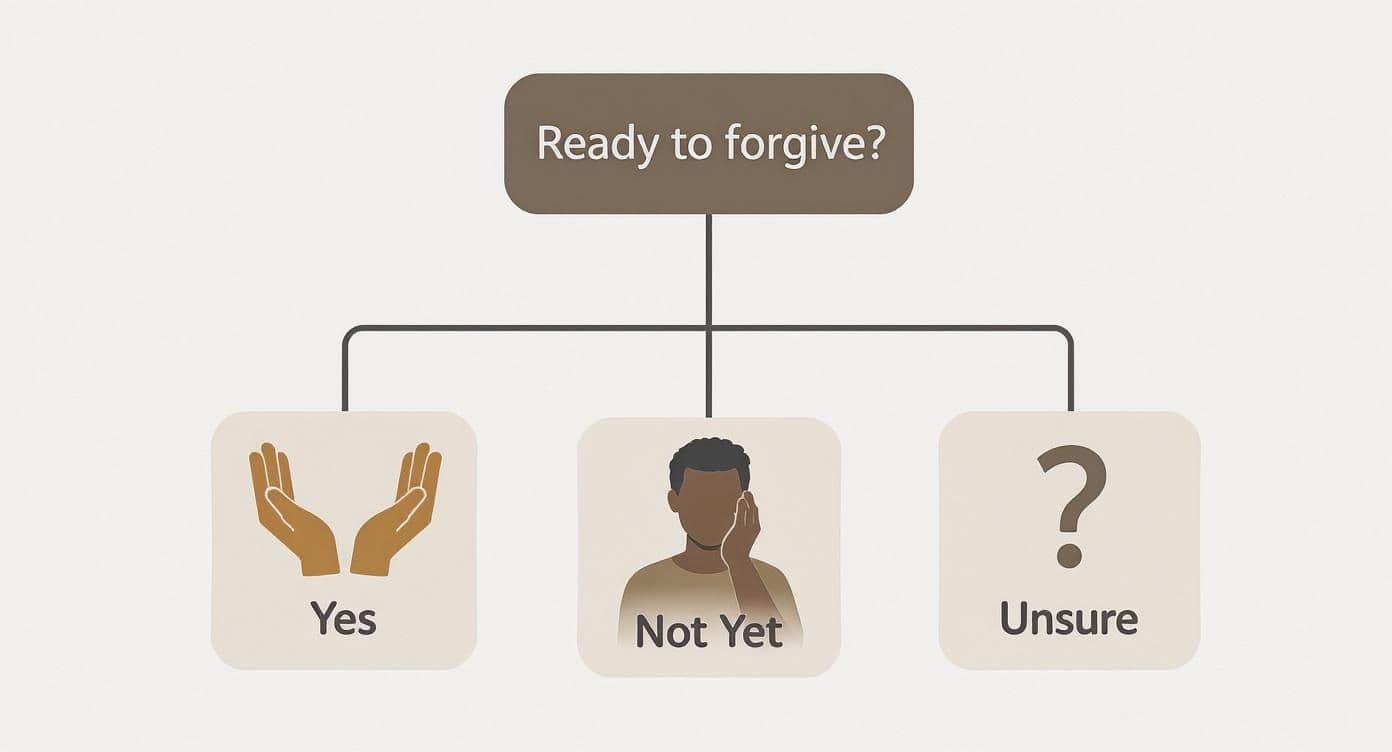
Use a simple decision check to meet yourself where you are. There are compassionate, constructive steps whether you’re ready now or need more time.
A Simple Meditation to Release Resentment
Meditation can calm your nervous system and loosen resentment’s grip.
- Find a quiet space. Sit comfortably, close your eyes, and take a few slow breaths.
- Notice the hurt. Allow the feeling to arise and notice where you feel it in your body.
- Breathe in, breathe out. Inhale calm; exhale resentment, as if a dark cloud is dissolving.
- Repeat a mantra. Choose a phrase such as, “I release this burden for my own peace,” or, “I choose freedom over this pain.”
This practice creates the internal space where forgiveness can emerge in its own time. For more methods, explore our guide to meditation practices.
Boundary Tools
Boundaries are the practical companion to forgiveness. Use clear, simple language when you need distance. Examples:
- “I won’t continue this conversation while you raise your voice.”
- “I need a break from contact so I can heal.”
Firm boundaries protect you without escalating conflict.
Connect Forgiveness to Your Life Purpose
Unresolved pain can act like an anchor that keeps you from living the life you want. Forgiveness can free the energy you’ve been spending on resentment and redirect it into growth, joy, and purpose.
One approach is to view past hurts through the lens of your life path. Tools like the Life Purpose App, based on Dan Millman’s The Life You Were Born to Live, can help identify recurring lessons and strengths tied to your birth date6. That context can turn painful experiences into catalysts for growth.
How to Use Purpose to Heal
- Identify core lessons using purpose-focused tools or reflections.
- Connect past hurts to those lessons.
- Reframe your story so difficult events become part of learning rather than proof you’re a victim.
When forgiveness becomes part of a larger growth plan, it changes from a moral obligation into a strategic step toward self-mastery.
When Forgiveness Is Not the Right Choice
Forgiveness isn’t always safe or wise. If harm is ongoing, if the person shows no remorse, or if reconnecting would put you or others at risk, protection comes first. Forcing forgiveness in those circumstances can re-traumatize you.
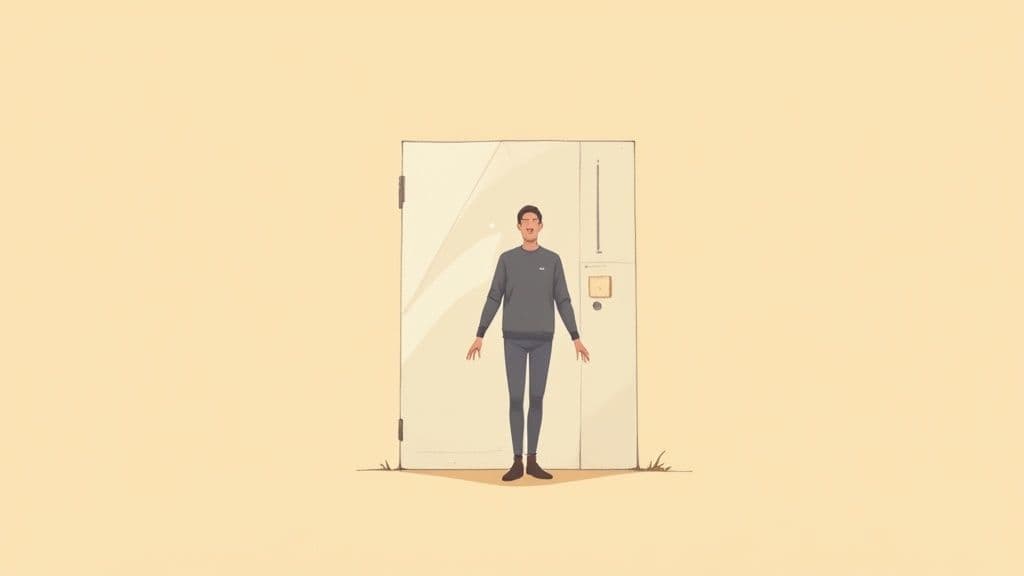
Prioritize Safety
Situations where safety must come first include:
- Ongoing abuse of any kind.
- A complete lack of remorse or intent to change.
- Dynamics where reconnection would create harm.
Protecting yourself is not failure; it’s a valid and courageous act of self-care. If forgiveness feels unsafe, consider therapy and firm boundaries as primary steps.
Common Questions About Forgiveness
“If I forgive them, do I have to let them back into my life?”
No. Forgiveness is internal; reconciliation requires mutual work. You can forgive without restoring trust or contact.
“How long does this take?”
There’s no set timeline. Small hurts may resolve quickly; betrayals and trauma can take months or years. Be gentle with yourself.
“If I still remember it clearly, does that mean I haven’t forgiven?”
Remembering doesn’t mean you haven’t forgiven. Forgiveness reduces the emotional intensity attached to the memory; it doesn’t erase the lesson.
Quick Q&A
Q: What’s the difference between healing and forgiveness?
A: Healing is the internal care you give yourself. Forgiveness is the choice to release resentment toward another person.
Q: Is forgiveness always necessary for healing?
A: No. You can heal without forgiving, and sometimes forgiveness comes later. Safety and boundaries can be the first priority.
Q: How do I start if I’m not ready?
A: Start small with journaling, boundary-setting, and short meditations. Seek therapy if the pain is deep or ongoing.
Three Concise Q&A Sections (Summary)
Practical Steps
Q: What practical first steps can I take? A: Start with an unsent letter, brief meditations, and one clear boundary. Small, consistent practices build momentum.
Q: Are there tools to guide me? A: Yes. Use journaling prompts, guided meditations, and apps or worksheets for reflection.
Boundaries & Safety
Q: Does forgiveness mean I must reconcile? A: No. You can forgive while keeping distance. Reconciliation requires mutual effort and safety.
Q: What if the harm is ongoing? A: Prioritize safety, document concerns, and seek professional support before considering forgiveness.
Timing & Healing
Q: How will I know I’m making progress? A: Progress shows up as reduced emotional reactivity, clearer thinking, and more energy for the life you want.
Q: What if I have setbacks? A: Setbacks are normal. Treat them as information about where you need more support or practice.
Additional Concise FAQs
Q: How does forgiveness affect physical health?
A: Letting go of chronic anger can reduce stress hormones and inflammation, improving sleep, immunity, and heart health5.
Q: Can tools like the Life Purpose App help with forgiveness?
A: Yes. Seeing recurring lessons and strengths can reframe hurts as growth opportunities and free energy for forward movement6.
Q: When should I seek professional help?
A: If the pain feels unmanageable, if you experience ongoing trauma, or if safety is a concern, seek a therapist or support professional.
1.
Toussaint, R., et al., “Forgiveness and Health: A Systematic Review and Meta‑Analysis,” linking forgiveness practices to reduced stress and greater life satisfaction. https://www.ncbi.nlm.nih.gov/pmc/articles/PMC6075943/
2.
Market analysis of mind‑body‑spirit and holistic wellness sectors showing rapid growth. https://www.grandviewresearch.com/industry-analysis/mind-body-wellness-market
3.
World Health Organization reporting on integration of traditional and complementary medicine into national health systems. https://www.who.int/health-topics/traditional-complementary-and-integrative-medicine
4.
Statista Consumer Insights survey on global preferences for alternative and complementary healing approaches. https://www.statista.com/study/142994/consumer-insights-health-and-well-being-global/
5.
American Psychological Association, overview of stress and its physical and mental health effects. https://www.apa.org/topics/stress
6.
Dan Millman, The Life You Were Born to Live and related Life Purpose App resources for identifying recurring life lessons and strengths. https://www.danmillman.com/the-life-you-were-born-to-live
Discover your life path today
Enter your date of birth and see your life path, free.
Find your life path