Burnout drains energy, motivation, and meaning. This guide gives immediate actions and longer-term habits to stop the decline, rebuild reserves, and reconnect with purpose.

January 31, 2026 (8mo ago) — last updated September 22, 2026 (1mo ago)
Recover from Burnout: Regain Energy & Purpose
Practical, science-informed steps to recover from burnout: rest, set boundaries, improve sleep and nutrition, and reconnect with purpose.
← Back to blog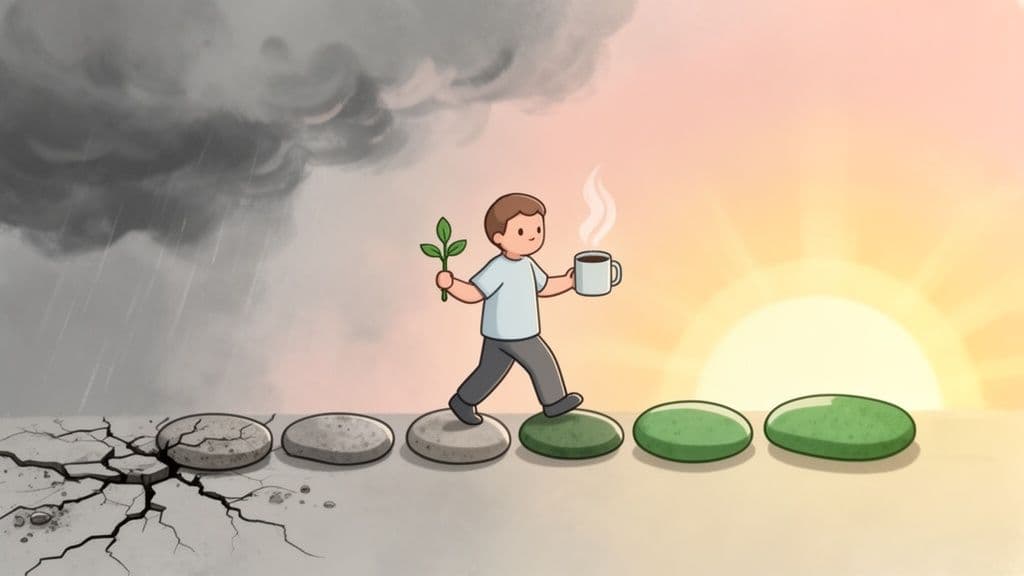
Burnout drains energy, motivation, and meaning. This guide gives immediate actions and longer-term habits to stop the decline, rebuild reserves, and reconnect with purpose.
Recover from Burnout: Regain Energy & Purpose
Learn practical, science-informed steps to recover from burnout, restore energy, set clear boundaries, and reconnect with purpose.
Introduction
Burnout drains your energy, motivation, and sense of meaning. This guide gives immediate actions you can use today and longer-term habits to rebuild physical and mental reserves, protect your time, and reconnect with what matters.
Stop digging: the first step to recovery
The earliest move in recovery is simple: stop digging. Notice the hole you’re in, put down the shovel, and allow yourself space to climb out. Recovery begins by methodically stopping the energy drains and then intentionally rebuilding your well-being.
How to tell if it’s burnout or stress
Burnout often creeps in slowly. If exhaustion lasts for weeks or months and sleep no longer restores you, that’s a sign. Burnout is deep depletion that makes even small tasks feel overwhelming.
Seeing these signs isn’t weakness; it’s the first step toward change. A 2022 Future Forum pulse found widespread burnout across the workforce, with many workers reporting chronic exhaustion and imbalance1.
Burnout versus stress: key differences
Stress often means you have too much to do. Burnout feels like there’s nothing left to give. Comparing common symptoms helps you choose the right response:
| Symptom | Stress | Burnout |
|---|---|---|
| Engagement | Over-engaged | Disengaged |
| Emotions | Heightened, reactive | Blunted, detached |
| Physical impact | Urgency, hyperactivity | Helplessness, exhaustion |
| Primary damage | Physical energy drain | Emotional drain, loss of motivation |
| Mindset | “I have too much to do.” | “I don’t see the point.” |
The World Health Organization recognizes burnout as an occupational phenomenon marked by exhaustion, cynicism, and reduced efficacy2.
What burnout looks like in everyday life
It might be the project manager who once loved brainstorming but now dreads meetings, or the designer who feels empty after a success. Burnout commonly shows three core symptoms: overwhelming exhaustion, cynicism or detachment, and a sense of ineffectiveness. Naming what’s happening gives you power to begin recovery. Tools like the Life Purpose App and Dan Millman’s work can help you reconnect with meaning and direction6.
Immediate action: your burnout first-aid kit
A ten-step overhaul can feel impossible when you’re burned out. Begin with simple, stabilizing actions that create breathing room.
- Create distance: take a mental health day, protect your weekend from work pings, or enforce a hard stop after a set hour.
- Interrupt the cycle: take short rests, micro-breaks, and micro-boundaries to slow the downward spiral.
Visualize the pattern—exhaustion, cynicism, ineffectiveness—to remind yourself this is a pattern, not a personal failing.
How to ask for what you need, without apology
Telling a manager or loved one you need space is necessary. Keep it clear and calm.
- To a manager: “I’ve been running at an unsustainable pace and need a day to recharge. I’ll take tomorrow as a personal day and ensure critical tasks are covered.”
- To a loved one: “I’m feeling very drained and need quiet time this weekend. Can we reschedule to next week?”
These are direct statements of need, not drama. Setting boundaries is an act of self-preservation.
Grounding techniques to calm a frayed nervous system
Short grounding practices can send a clear signal that you are safe. Try box breathing:
- Inhale through your nose for a count of four.
- Hold for four.
- Exhale through your mouth for six.
- Repeat five times.
A five-minute screen-free walk also helps—notice the wind, the light, and nearby sounds. Physical anchors, like a small object or a short ritual, can remind you to breathe and return to the present. Unplugging and taking real time off matters: some surveys found remote workers report better ability to take vacations and lower burnout rates than office workers3.
Rebuild physical and mental foundations
Burnout hollows you out. Recovery is a patient process of rebuilding through rest, nourishment, and restorative movement.
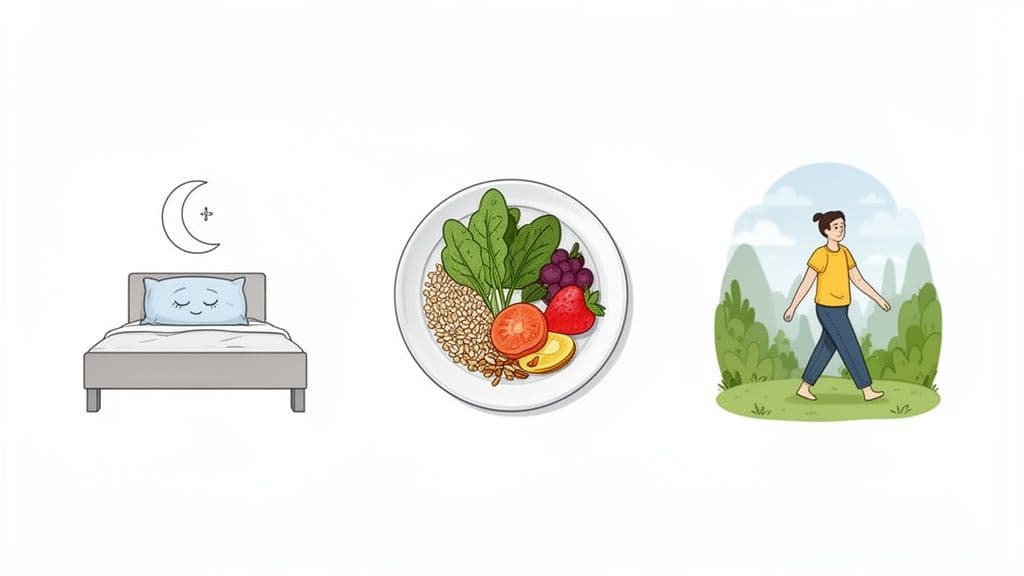
Think of yourself as a drained battery that needs a slow, steady charge fueled by deep rest, nourishing food, and gentle movement.
The power of true rest and better sleep
Quality often matters more than quantity. Even long time in bed can feel unrefreshing when your nervous system is on edge. Build a wind-down routine to cue your body that the day is over. Practical tips:
- Go screen-free an hour before bed to protect melatonin.
- Dim lights in the evening to mimic natural sunset.
- Do a few minutes of gentle stretching to release tension.
For a practical guide to sleep hygiene, see this resource on improving sleep quality5.
Fuel your body for sustained energy
Caffeine and sugar give a quick jolt, then a crash. Aim for whole, nutrient-dense foods that stabilize energy. At each meal include:
- Complex carbohydrates like oats, brown rice, or sweet potatoes
- Lean protein such as chicken, fish, beans, or tofu
- Healthy fats like avocado, nuts, or olive oil
Small swaps add up, for example a handful of spinach in eggs, or an apple with peanut butter instead of candy.
Redefine movement as restoration
Now is not the time for punishing workouts. Choose movement that soothes your nervous system:
- A 15-minute walk outside lowers stress hormones.
- Gentle yoga or tai chi pairs movement with breath.
- A short living-room stretch session can be healing.
Rest, nutrition, and restorative movement rebuild the foundations for lasting resilience.
Redraw boundaries at work and home
If you’re burned out, your boundaries were likely stretched or erased. Rebuilding them protects your energy so you can show up as your best self. Employees who feel cared for by their employer are far less likely to burn out4.
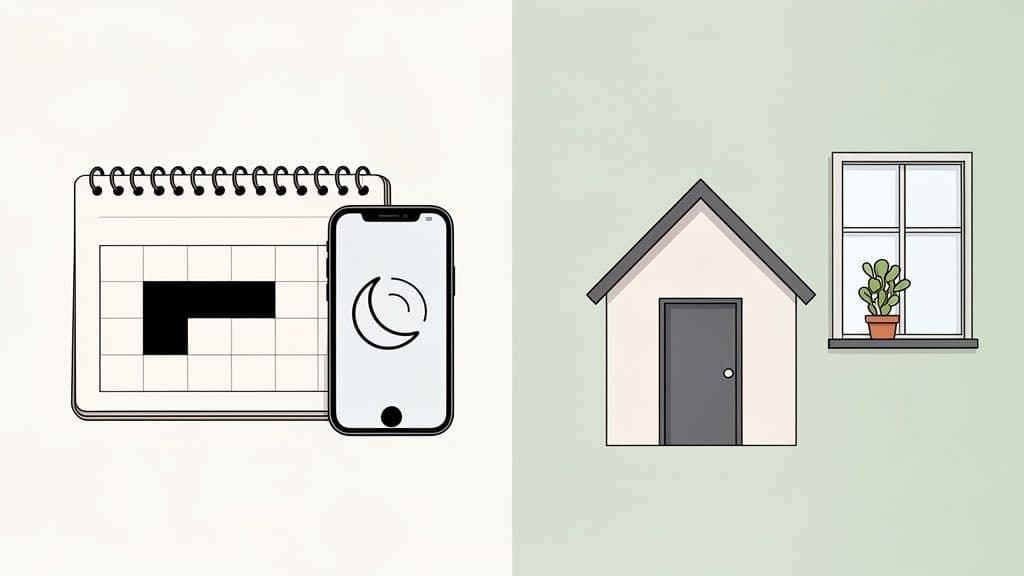
Reclaim time at work
Small, deliberate actions protect your time:
- Define start and end times and honor them.
- Use your calendar as a shield—block focus time and lunch.
- Use Do Not Disturb during focus blocks and after hours.
These practices preserve energy and prevent the cycle that leads to burnout.
Say no without burning bridges
Saying no protects your capacity. Use clear, professional language:
- Bandwidth: “Thanks for thinking of me. My plate is full with [Project X], and I couldn’t give this the attention it deserves.”
- Not your role: “That’s important. I believe [Colleague Name] is the best person to handle that.”
- Timeline change: “I can help, but I won’t be able to get to it until next week. Does that work?”
These responses protect your energy while staying professional. For more workplace strategies, see our workplace stress management techniques.
Extend boundaries beyond the office
Apply the same intentionality at home: schedule “do nothing” time, say no to social plans when you need rest, or ask your partner to take on dinner when you need an hour alone. These choices aren’t selfish; they’re essential.
Reconnect with purpose and direction
Burnout often brings a deep sense of disconnection from your work and yourself. Reconnecting with meaning can be a lifeline. Dan Millman’s system and the Life Purpose App offer a framework for understanding strengths, challenges, and life cycles that can validate feelings of misalignment and point you toward change6.
Understand your personal rhythms
Recognizing life cycles helps you reframe difficult periods as part of a larger pattern, letting you rest when needed and act when the time is right. For ideas on finding work and activities that energize you, see How to Find Your Calling in Life.
Common questions about healing from burnout
How long does recovery take?
There’s no fixed timeline. Some people feel better in weeks with rest and boundary changes; others need months. Focus on consistent small steps and celebrate progress.
Can I recover without quitting my job?
Yes. Many people recover by changing boundaries, prioritizing, delegating, and having candid conversations with managers. If a workplace is toxic with no room for change, leaving may be necessary, but start with what you can control first.
What’s the difference between a bad week and burnout?
A bad week is temporary and tied to a specific event. Burnout is chronic depletion that doesn’t lift after a weekend away and includes cynicism and a sense that nothing you do matters.
Quick practical checklist
- Take one immediate action: a day off, a hard stop tonight, or a short walk.
- Add one restorative habit: a wind-down hour, a whole-food swap, or a 15-minute outdoor walk.
- Say no to one extra commitment this week.
- Schedule a short conversation with your manager about priorities or workload.
Top Q&A — quick answers to common concerns
Q: What should I do first when I suspect burnout?
A: Stop digging. Take a short break, protect an evening or day, and use grounding techniques such as box breathing or a screen-free walk to interrupt the stress cycle.
Q: How do I rebuild energy without drastic life changes?
A: Focus on three pillars: better sleep routines, nutrient-dense meals, and restorative movement. Small, consistent improvements add up.
Q: How do I protect myself at work without damaging relationships?
A: Set clear work hours, block focus time on your calendar, use Do Not Disturb, and use respectful scripts to decline or reprioritize tasks.
If you want step-by-step tools, see our self-care rituals and workplace stress management guides.
1.
Future Forum Pulse 2022: Research on work and burnout. https://futureforum.com/insights/pulse-2022/
2.
World Health Organization, “Burn-out an ‘occupational phenomenon’: International Classification of Diseases,” May 28, 2019. https://www.who.int/news/item/28-05-2019-burn-out-an-%E2%80%98occupational-phenomenon%E2%80%99
3.
Global Life-Work Survey 2023 findings on remote vs. office worker vacation and burnout rates. https://www.global-life-work-survey.com/2023-report
4.
Meditopia, breakdown of employee burnout statistics and impacts on turnover. https://meditopia.com/en/forwork/articles/employee-burnout-statistics
5.
Practical guide to improving sleep quality. https://www.siennaliving.com.au/blogs/journal/how-to-improve-sleep-quality
6.
Dan Millman, The Life You Were Born to Live, and the Life Purpose App. https://www.amazon.com/Life-You-Were-Born-Live/dp/091581160X • https://www.lifepurposeapp.com/
Discover your life path today
Enter your date of birth and see your life path, free.
Find your life path