Discover 10 powerful life purpose quotes that offer more than inspiration. Get actionable insights to find your unique path, gifts, and true calling today.
May 14, 2026 (Today)
10 Powerful Life Purpose Quotes to Find Your Way
Discover 10 powerful life purpose quotes that offer more than inspiration. Get actionable insights to find your unique path, gifts, and true calling today.
← Back to blog
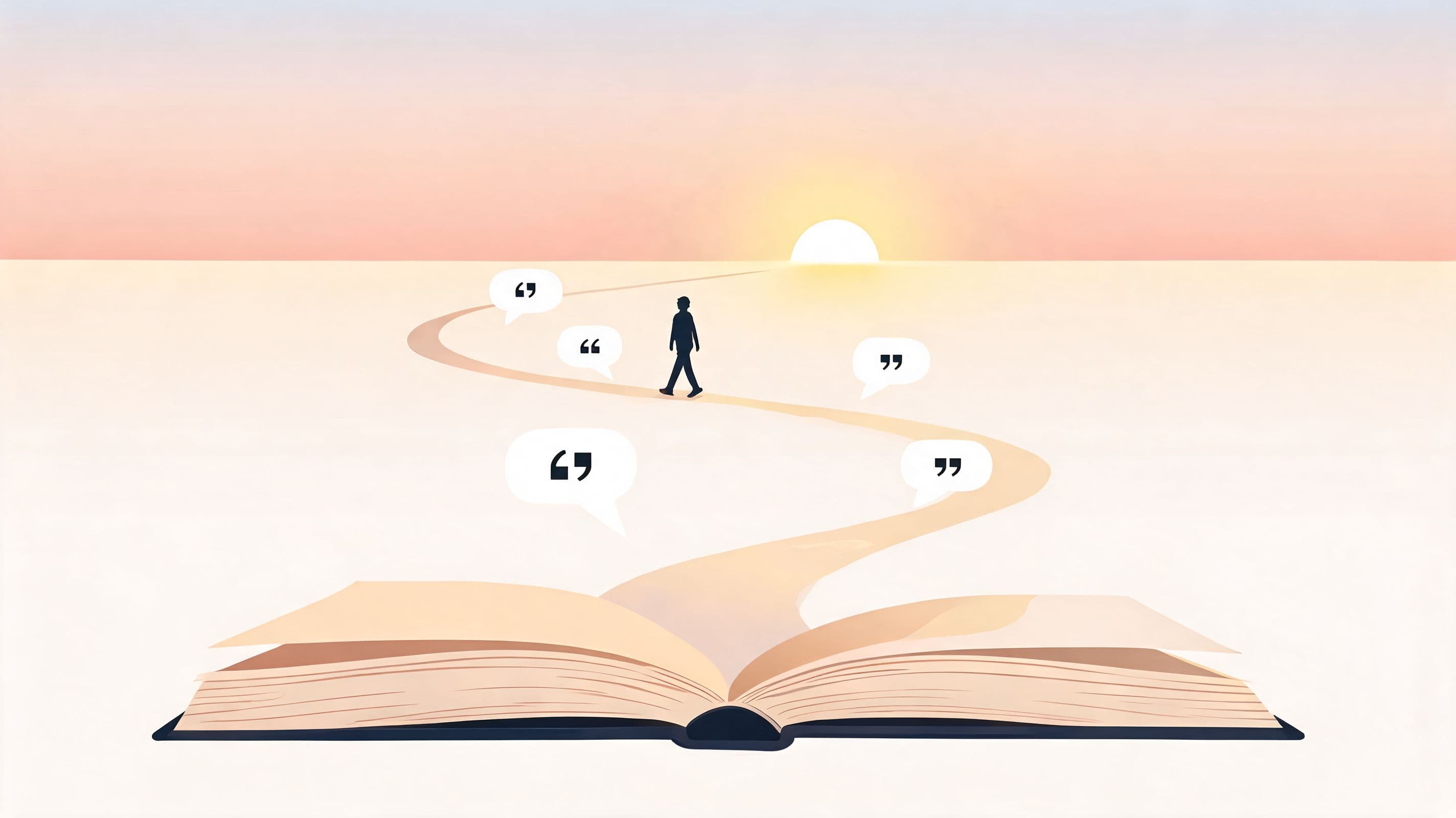
Are you collecting life purpose quotes because they feel meaningful, yet still finding yourself unsure what to do on Monday morning? That's the gap most quote lists never close. They inspire for a moment, then leave you alone with the same decisions, the same patterns, and the same unanswered question about what your life is asking of you.
That's why I return to Dan Millman's The Life You Were Born to Live and the Life Purpose App. Instead of offering scattered wisdom from unrelated voices, this system gives you a single framework. It treats purpose as something you can study through your birth date, your recurring lessons, your gifts, your relationships, and your timing in life. The result is less vague motivation and more usable self-knowledge.
This is also why generic inspiration often fades. A lot of people can feel moved by a quote, but struggle to turn that feeling into a habit. A cited summary on life purpose quotes and practical application describes that gap directly, noting many seekers struggle to translate motivation into habits. That matches what I've seen in practice. Insight matters, but only when it changes how you choose, work, love, and recover.
If you like the visual spark of short sayings, there's still a place for that. Even simple decor-based collections like Quote My Wall inspiration can remind you what you want to live by. But if you want life purpose quotes that reveal your path, Dan Millman's system goes much deeper. These ten principles are the ones I've found most useful when someone wants clarity that lasts.
1. The Life You Were Born to Live
The core idea in Dan Millman's The Life You Were Born to Live is simple and demanding at the same time. Your birth date points to a specific life path, and that path carries both gifts and tests. The value of the system is that it gives structure to experiences that otherwise feel random.
The Life Purpose App is the cleanest way to work with that structure because it calculates one of the 45 life paths from your birth date and organizes the material in a form you can revisit. If you want the broad view first, start with The Life You Were Born to Live guide and then compare that reading with what shows up in your actual life.

How this becomes practical
A person with a strong leadership pattern might finally see why they keep stepping forward in group situations, but also why impatience keeps costing them trust. A more inward, mystical pattern might explain why someone needs solitude and research to feel sane, even in a loud, highly social workplace. The point isn't flattery. The point is recognition.
What works is using your reading as a map. What doesn't work is treating it as a label.
- Enter your exact birth date: Let the Life Purpose App generate your path before you try to interpret yourself from memory or wishful thinking.
- Read gifts and challenges together: People get into trouble when they only want the flattering half.
- Check it during transitions: Career changes, breakups, moves, and health scares tend to make the pattern easier to see.
Practical rule: If a life purpose quote feels beautiful but gives you no next action, pair it with a concrete review of your path, your current cycle, or one recurring relationship.
2. The obstacle is the way
Some teachings sound comforting but stay shallow. Dan Millman's The Life You Were Born to Live and the Life Purpose App are useful because they don't pretend your path should feel easy. A life path always includes friction. That friction is often the lesson.
A builder type may wrestle with rigidity and perfectionism. A highly expressive creative type may have talent to spare but struggle to channel it consistently. A freedom-seeking personality may crave movement so much that commitment feels like confinement, even when commitment is exactly what matures them.
What helps and what backfires
The most productive move is to ask, “What is this obstacle training in me?” That question changes everything. It turns a problem from proof that you're off-path into evidence that you're in the curriculum.
What backfires is using spiritual language to excuse repetition. If you keep saying, “This is just my nature,” you stop growing. The useful reading in Dan Millman's The Life You Were Born to Live and the Life Purpose App doesn't let you hide that way.
Try this when you hit a wall:
- Name the repeating challenge: Is it control, avoidance, scattered energy, fear of visibility, or difficulty receiving support?
- Link it to your path: Read the challenge description in the app and ask where it already shows up in work, money, and relationships.
- Shrink the lesson: Don't vow to transform your whole personality. Practice one better response this week.
Obstacles usually stop being meaningless once you can see the kind of person they're trying to build.
I've seen people relax the moment they realize their hardest pattern isn't random. Relief matters. But discipline matters more. Insight without changed behavior is only better vocabulary.
3. Know thyself
How do you tell the difference between a flattering personality description and a system that helps you live better?
Dan Millman's The Life You Were Born to Live answers that by giving self-knowledge structure. The value is not that it says something interesting about you once. The value is that it gives you a consistent way to examine recurring patterns in how you decide, react, avoid, commit, and relate.
That is why this section matters. In this system, “know thyself” means observing your life closely enough to see what repeats.
The Life Purpose App helps turn that principle into practice. You enter your birth data, get your life path reading, and then test it against real situations while they are still fresh. An argument with your partner. A stretch of procrastination at work. The familiar urge to start over instead of staying with the harder lesson. Used well, the app supports honest reflection. It does not do the reflection for you.
A good starting point is a clear reading of your birthday themes. Read it with a pencil in hand, or with notes open. Mark what feels uncomfortably accurate, not just what sounds appealing.
Here's a practical way to use this principle:
- Track one repeating pattern: Pick the issue that keeps showing up, such as control, self-doubt, over-giving, inconsistency, or fear of visibility.
- Test the reading against real evidence: Look at your work history, closest relationships, money habits, and stress responses.
- Review it regularly: A useful insight read once becomes inspiration. A useful insight reviewed monthly becomes self-knowledge.
- Use examples carefully: Studying public figures can sharpen your eye, but your own life gives the most reliable material.
There is a real trade-off here. A precise framework can bring relief because it names what has felt confusing for years. It can also tempt people to cling to the description and call that growth. I've seen that mistake often. The healthier approach is to treat the reading as a mirror and a set of working hypotheses. Keep what proves true in lived experience. Question what does not.
Self-knowledge earns its value through application. If a reading helps you catch your pattern earlier, choose better under pressure, or stop repeating the same relationship dynamic, then it is doing its job.
4. We are expressions of a larger whole
A lot of suffering comes from assuming everyone should move through life the way you do. Dan Millman's The Life You Were Born to Live and the Life Purpose App interrupt that habit by showing how different life paths naturally prioritize different values.
One person wants structure, sequence, and predictability. Another wants freedom, experiment, and movement. One person leads by initiating. Another leads by harmonizing. Neither is wrong, but they can easily misread each other if they don't understand the deeper pattern.
Why this matters in real relationships
This principle becomes useful the moment conflict appears. Most arguments aren't really about dishes, deadlines, or text messages. They're about different ways of organizing reality.
I've found this especially helpful in work settings. A team often gets stuck because people mistake difference for incompetence. Once they see that a colleague's path favors caution, service, originality, or authority, they can negotiate instead of judging.
Use the system in a grounded way:
- Compare before blaming: Run both people through the Life Purpose App before deciding someone is “difficult.”
- Translate values into behavior: A need for autonomy can look like unreliability. A need for order can look like control.
- Look for complement, not sameness: Strong partnerships often depend on difference managed well.
This perspective also keeps spiritual work humble. Your path is meaningful, but it isn't the whole picture. Dan Millman's The Life You Were Born to Live makes more sense when you remember every path contributes something necessary.
5. Your gifts are your life purpose
People often make purpose too abstract. In practice, purpose usually begins where your natural gifts meet real responsibility. That's one of the strongest threads in Dan Millman's The Life You Were Born to Live, and the Life Purpose App helps you identify those gifts without reducing them to a career test.
A research-oriented person may be built to investigate, synthesize, and teach. A creative communicator may come alive through writing, design, performance, or storytelling. A naturally executive person may not need permission to lead, but they do need maturity so their strength benefits others instead of dominating them.

Gifts need training
A gift isn't a finished product. It's raw material. I've seen people misread this principle and assume that because something comes naturally, it should also come effortlessly. Usually the opposite is true. Your deepest gift often asks the most from you.
If you want to work with this carefully, read how to discover your talents inside the broader framework of Dan Millman's The Life You Were Born to Live and the Life Purpose App.
What works best:
- Track live moments: Notice when your energy rises while helping, building, teaching, creating, or organizing.
- Ask trusted people: Other people often see your gift before you claim it.
- Make one decision from alignment: Choose one project, client, or commitment because it fits your gift, not because it flatters your ego.
A useful life purpose quote should point you toward serviceable talent, not just a nicer self-image.
Many readers of life purpose quotes get stuck at this point. They wait for a dramatic revelation. Most of the time, purpose is quieter. It sounds like, “I do this naturally, it helps people, and I feel more honest when I do it.”
6. Relationships are mirrors
Why do a few relationships seem to press the same sore spot again and again?
Dan Millman's The Life You Were Born to Live treats that pattern as useful information, not bad luck. In this system, relationships act like mirrors. They reflect the traits you overuse, the needs you avoid, and the lessons you still resist. The Life Purpose App helps by letting you compare path dynamics directly, so you can examine recurring tension with more precision than chemistry, blame, or guesswork usually allow.
I've found this principle especially helpful because it cuts through moral drama. The question stops being, “Who is the difficult one?” The better question is, “What is this relationship asking each person to learn?”
How to use the mirror without becoming rigid
Start with one relationship that carries emotional charge. A spouse who feels controlling. A friend who goes distant without warning. A business partner who wants every detail defined while you want flexibility. Those differences matter, but the first job is to identify the pattern before you assign fault.
A grounded way to work with it:
- Compare patterns in the open: If the relationship is safe enough, read each path description together instead of analyzing the other person in private.
- Translate behavior into needs: Directness may reflect a need for honesty. Withdrawal may reflect a need for space. Structure may reflect a need for safety.
- Use the system as a tool, not a weapon: A path reading should create understanding, not give you new language for criticism.
- Watch for repetition: If the same conflict appears across different relationships, the mirror is probably showing your side of the lesson too.
This takes maturity. Any self-knowledge system can become a shield for ego if you use it to diagnose everyone except yourself.
The practical shift is simple. Move from accusation to translation. “You never commit” can become “You tense up when expectations arrive too fast.” “You have to control everything” can become “You settle when roles and agreements are clear.” That kind of reframing does not excuse harmful behavior, and it does not save every relationship. It does make friction easier to see.
That is the value of this section of Millman's framework. It helps people work with relationships as part of purpose, not as a distraction from it.
7. Life flows through nine-year cycles
What if the problem is not lack of effort, but poor timing?
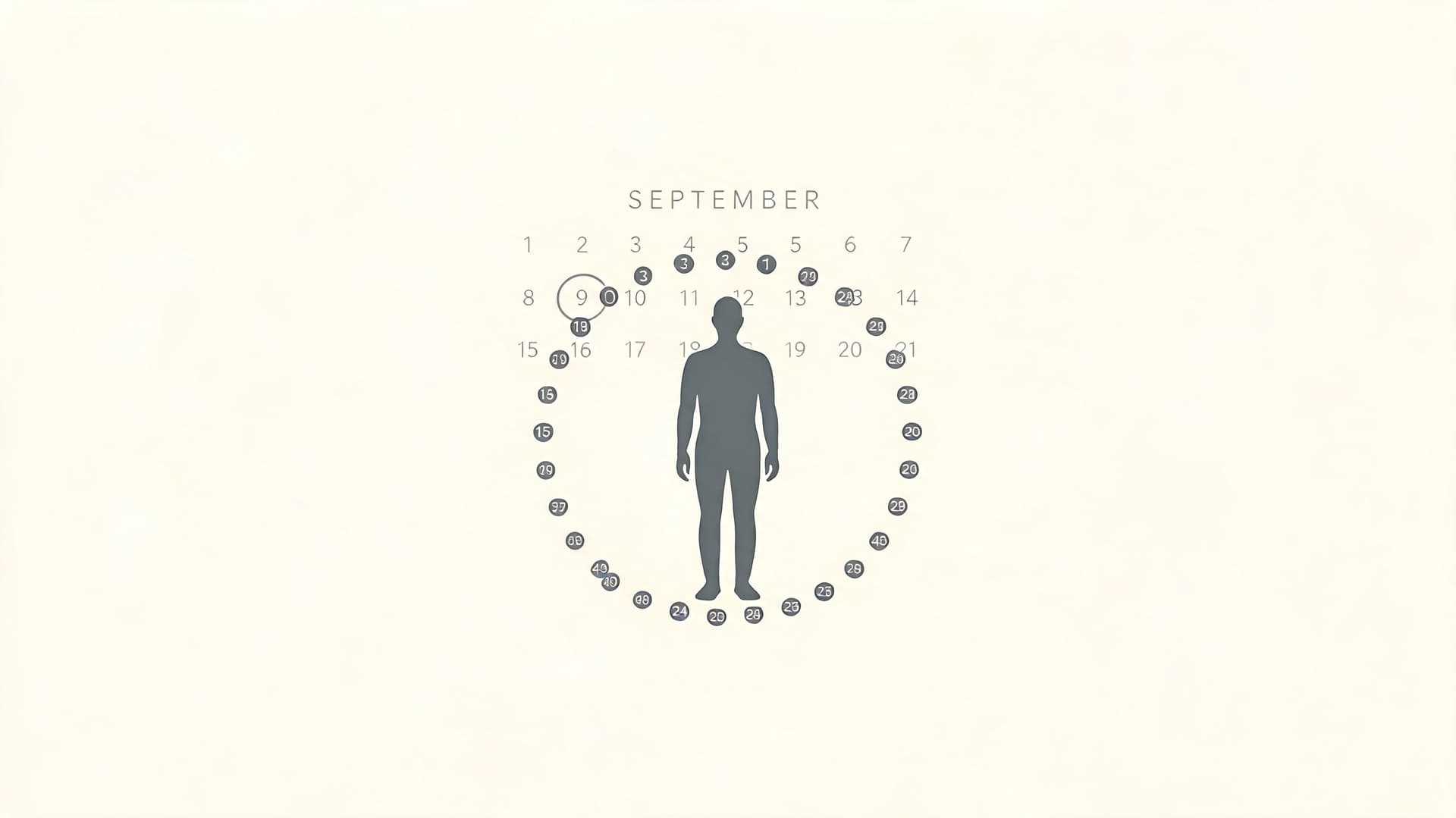
Dan Millman's The Life You Were Born to Live treats life as developmental rhythm, not a flat timeline. The nine-year cycle is one of the clearest examples. The Life Purpose App helps translate that idea into something you can review against your age, choices, and turning points.

I have seen this change how people interpret their lives. A year that feels slow or frustrating is not always a sign that something is broken. In Millman's framework, some periods are built for starting, some for building, and some for finishing what has run its course. Confusion starts when a person demands expansion from a season that is asking for closure.
That trade-off matters. If you force a new identity too early, you can leave important lessons unfinished. If you cling to stability in a year that calls for change, life often creates pressure for you.
Timing changes the meaning of effort
The same action can be wise in one cycle and costly in another. Starting a company, ending a relationship, relocating, returning to school, or committing to a new discipline all carry different weight depending on the stage you are in. That is why cycle work is useful. It gives context to effort.
A grounded way to use the nine-year cycle:
- Find your current cycle first: Use the Life Purpose App before making major conclusions about your direction.
- Identify the central task of the year: Ask whether this period is asking for initiation, discipline, adjustment, expression, responsibility, or completion.
- Match decisions to the season: A year of closure may be better for simplifying, repaying, grieving, or finishing than for stacking on new commitments.
- Review past turning points: Look back at prior years in the same cycle position and note what themes repeated.
One pattern shows up often. People in transition call themselves inconsistent when they are between identities. Once they can see the cycle, the self-judgment softens and the work gets clearer.
When you understand your cycle, the better question is not “Why am I behind?” It is “What does this period of life require from me now?”
That is the practical strength of this part of Millman's system. It does not remove choice. It helps you choose with better timing.
8. Every number holds meaning
This principle can be mishandled easily, so it needs discipline. In Dan Millman's The Life You Were Born to Live, numbers matter because they belong to a coherent system tied to your birth date and development. The Life Purpose App keeps that system organized. That's very different from chasing every repeated digit as a cosmic message.
I'm cautious with this one. People can become superstitious fast. They start reading random significance into license plates, timestamps, and apartment numbers while ignoring the deeper pattern that Dan Millman describes.
Keep symbolism tethered to the system
The most useful way to approach number meaning is to study the numbers that shape your path, then notice how their themes echo through your choices. If your core pattern emphasizes responsibility, freedom, service, introspection, or expression, that theme will likely show up repeatedly in concrete life decisions.
What works:
- Study your actual path numbers first: Use the Life Purpose App before inventing interpretations.
- Journal recurring themes, not random signs: Track repeated life lessons more than repeated digits.
- Use number symbolism to deepen reflection: Not to make every decision for you.
What doesn't work is magical inflation. Dan Millman's The Life You Were Born to Live gives numbers ethical and developmental meaning. It does not encourage passivity, fatalism, or obsession.
A person can still choose badly while holding the “right” symbolism. A person can still choose wisely without seeing any special sign at all. The value of this principle is not prediction. It's orientation.
9. Purpose emerges through service
Many people seek purpose as though it were a hidden treasure. In my experience, purpose becomes clearer when it begins helping someone besides yourself. Dan Millman's The Life You Were Born to Live makes that visible by connecting each path with a way of contributing, and the Life Purpose App helps you see how your gifts can land in the world.
A conciliatory person may serve by mediating conflict. A nurturing pattern may naturally move toward caregiving, mentoring, or steady support. A visionary path may serve by leading when others hesitate. A humanitarian pattern may feel most alive when helping people through endings, transitions, or broader social concerns.
Service is the test of clarity
This doesn't mean everyone needs a grand mission. Sometimes service is modest and close to home. It can look like building a dependable business, helping a team function, mentoring one younger person well, or bringing calm to a chaotic family.
I also think service keeps spiritual work honest. If your purpose language makes you more self-important but less useful, something has gone off track. That's one reason I like pairing this principle with lived action, including experiences that put you in real contact with other people's needs, whether locally or through things like female-focused social impact trips.
A practical way to test this principle:
- Ask where people already seek you out: Advice, structure, empathy, courage, creativity, or perspective.
- Notice fulfilling effort: Service often feels demanding but clean.
- Look for fit, not fantasy: Your path usually serves through ordinary strengths expressed consistently.
Dan Millman's The Life You Were Born to Live and the Life Purpose App are most useful when they move you from self-description into contribution.
10. Your birth date is no accident
What if your birth date is less a prediction and more a pattern to work with?
This idea gets misunderstood fast. In Dan Millman's The Life You Were Born to Live, the point is not that every event was prewritten or that pain carries a tidy spiritual explanation. The useful claim is narrower and more practical. Your birth date may describe recurring themes, built-in strengths, and the kinds of lessons you are likely to meet.
That makes this one of the most delicate parts of the system. Used with maturity, it gives people language for patterns they have felt for years but could not name. Used carelessly, it turns into blame, fatalism, or spiritual simplification.
I have found one test especially helpful. If a reading makes a person more honest, more responsible, and more compassionate, it is probably being used well. If it makes them rigid, superior, or passive, they are using the system poorly.
Meaning without blame
A birth-date reading should never be used to explain away abuse, loss, trauma, or injustice. Real harm still matters. Grief still needs room. Responsibility still belongs where it belongs.
What this principle can do is help a person ask better questions after the fact. Why does this lesson keep repeating? Which strengths did hardship force me to build? Where do I keep meeting the same challenge in different forms?
That is a different posture from saying everything happened for a reason. It is closer to saying your life may hold patterns worth studying.
A careful practice looks like this:
- Review your starting conditions: Family dynamics, temperament, culture, and the pressures that shaped your early life.
- Track repeating themes: Notice the challenge that returns in work, love, conflict, money, or self-trust.
- Use the app as a prompt, not a verdict: Compare the reading against lived experience and keep what proves true in practice.
- Revisit your interpretation over time: A life-purpose system often makes more sense at 40 than it did at 20.
Interest in this kind of self-discovery is clearly growing, but the stronger point is not market size. It is usefulness. People return to systems like Millman's because they want a coherent way to interpret their lives, especially when personality labels and generic inspiration stop helping.
That is the unique strength of this framework. It does not give you a random quote to admire for a day. It gives you one integrated map, rooted in birth-date patterns, then asks you to test that map against your actual choices, relationships, and turning points.
Used wisely, your birth date becomes a starting reference. It helps you study your life with more precision and less drift. That is often enough to act with more clarity.
10-Point Comparison of Life Purpose Quotes
A simple comparison helps here, but the true value is seeing how these ten ideas function as one system. Millman's framework is strongest when you use the principles together, then test them against real life. Some ideas are easy to apply in a single sitting. Others ask for years of observation, honest feedback, and course correction.
Here is a clearer summary of the ten core principles covered in this article.
| Principle | Application difficulty | What you need | Likely result | Best use case | Main strength |
|---|---|---|---|---|---|
| The Life You Were Born to Live | 2/5 | The book or app, plus reflection time | A structured starting point for self-study | Anyone who wants one integrated framework instead of scattered quotes | Brings the whole system into focus |
| The obstacle is the way | 3/5 | Journaling, pattern tracking, patience | Better judgment during stress and setbacks | Periods of hardship, transition, or repeated frustration | Turns friction into useful information |
| Know thyself | 2/5 | Honest self-observation and a willingness to test what fits | Clearer language for strengths and blind spots | Early self-discovery work | Gives you a direct baseline |
| We are expressions of a larger whole | 3/5 | Reflection on interdependence, community, and shared patterns | More humility, empathy, and perspective | Teamwork, family systems, community life | Reduces isolation and self-absorption |
| Your gifts are your life purpose | 3/5 | Skill inventory, feedback, and real-world experiments | Better alignment between talent and contribution | Career decisions and creative direction | Connects aptitude with meaning |
| Relationships are mirrors | 4/5 | Emotional honesty, conflict review, and follow-through | Stronger awareness of recurring relational patterns | Partnerships, parenting, leadership | Makes conflict more instructive |
| Life flows through nine-year cycles | 2/5 | Cycle tracking and periodic review | Better timing and less panic during change | Major decisions, reinvention periods, endings and beginnings | Adds context to transition |
| Every number holds meaning | 3/5 | Willingness to study the symbolic language without becoming rigid | A richer interpretive lens | Reflective practice and symbolic self-study | Makes patterns easier to notice |
| Purpose emerges through service | 3/5 | Direct contribution, work that helps others, feedback from real people | More grounded meaning and sustained motivation | Service work, mentoring, contribution-focused careers | Keeps purpose tied to action |
| Your birth date is no accident | 4/5 | Careful interpretation, maturity, and discernment | A stronger sense of coherence in your life story | Long-term reflection and existential questioning | Helps organize experience into a usable pattern |
A few trade-offs matter.
The easier principles, such as self-knowledge, gifts, and life cycles, give quick traction. They are useful early because they create language and structure fast. The harder principles, especially relationships as mirrors and birth date meaning, can be more impactful, but they also invite projection if handled carelessly.
That is why I would not treat all ten principles as equal in timing. Start with the ones that sharpen observation. Then use the more interpretive ideas after you have enough lived evidence to judge them well.
Used this way, the list stops being a collection of appealing life purpose quotes. It becomes one working model for self-discovery, with the book and the Life Purpose App helping you move from inspiration to practice.
Your Purpose Is a Practice, Not a Destination
What if purpose is not a message you finally decode, but a set of practices you return to again and again?
That shift matters. People often look for one perfect sentence that will explain their whole life. In practice, that search can become its own trap. It creates pressure to be certain before you have enough lived evidence. A better approach is to work with purpose the way you would work with strength or judgment. You build it through attention, testing, reflection, and correction.
That is why this article has stayed with one system rather than collecting disconnected life purpose quotes. Dan Millman's The Life You Were Born to Live gives readers a coherent framework. The Life Purpose App makes that framework usable in ordinary life. Instead of asking for a grand revelation, it asks better working questions. What patterns keep repeating? Which challenges keep asking for maturity? Where do your natural abilities meet real responsibility?
I have found that this approach holds up best during messy seasons. It still gives you something to examine when life feels uncertain. You can look at your life path, your current cycle, and your relationship patterns, then compare those ideas against what is happening. Some parts will fit cleanly. Some will need time. That is a strength, not a flaw, because honest self-discovery usually comes with revision.
Actual testing is application.
A useful quote changes what you notice. A useful system changes what you do next. It helps you choose work with more self-respect, spot recurring conflict faster, and make sense of transitions without turning every hard season into a personal failure. Readers return to frameworks like this for a simple reason. When a model helps clarify one relationship, one decision, or one period of confusion, it earns another look.
Purpose also becomes clearer through repetition. You study a principle, apply it, get partial insight, then revisit it later with better judgment. Over time, the book and the app can work together as a steady practice of self-observation. The book offers the philosophy and language. The app helps you apply those ideas to your own birth date, patterns, and timing.
If you take one thing from these life purpose quotes, take this. Purpose rarely arrives fully formed. It becomes visible through honest reflection, useful structure, and action that serves both your growth and the people around you.
If you want to turn life purpose quotes into something practical, start with the Life Purpose App. It's the most direct way to explore Dan Millman's The Life You Were Born to Live through your own birth date, your 45-path reading, your nine-year cycles, and your relationship dynamics, so you can move from inspiration to lived clarity.
Discover Your Life Purpose Today!
Unlock your true potential and find your life’s purpose.