Learn how to meditate lying down effectively. Our guide covers correct posture, techniques, and pro tips to stay awake and comfortable for a deeper practice.

May 19, 2026 (5mo ago) — last updated July 5, 2026 (3mo ago)
How to Meditate Lying Down Without Falling Asleep
Learn how to meditate lying down effectively. Our guide covers correct posture, techniques, and pro tips to stay awake and comfortable for a deeper practice.
← Back to blog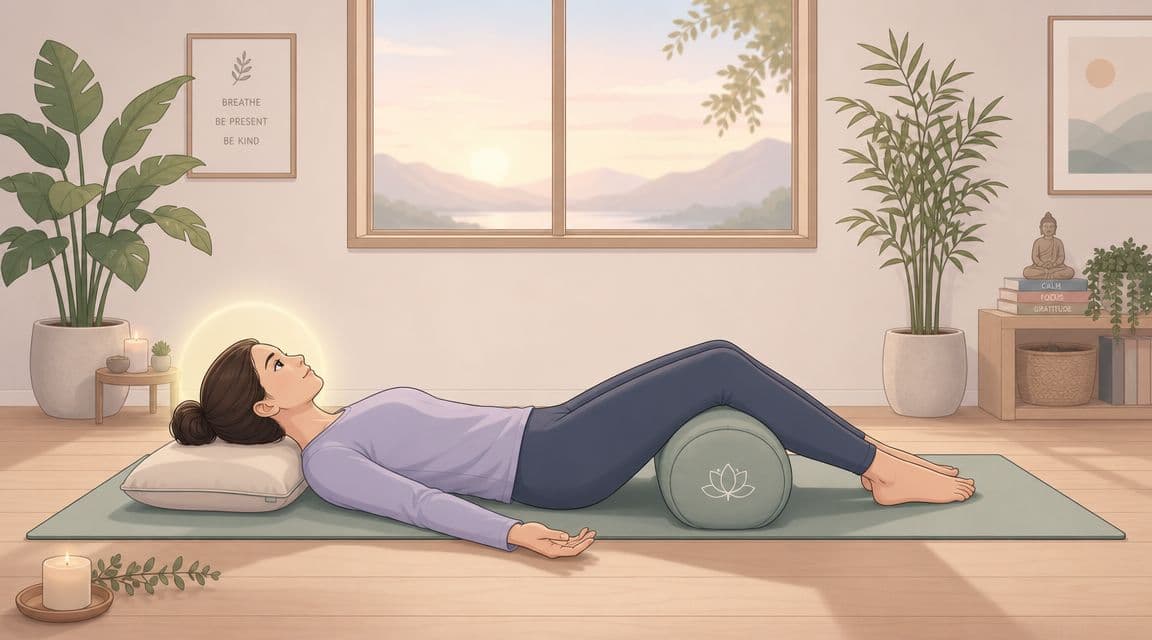
Learn how to meditate lying down effectively. Our guide covers correct posture, techniques, and pro tips to stay awake and comfortable for a deeper practice.
Your hips go numb. Your lower back starts talking. Your shoulders tighten because you're trying so hard to “sit properly” that the meditation becomes a posture endurance test.
That's usually the moment people wonder if they can just lie down instead.
Yes, you can. And for some bodies, some nervous systems, and some practice goals, it's not a compromise. It's the smartest option in the room. The main question isn't whether it's allowed. The main question is how to meditate lying down without turning the session into a nap.
A good lying-down practice has structure. It has a setup that supports the spine, a clear attentional anchor, and a purpose. Comfort matters, but comfort alone isn't enough. You're aiming for restful, wakeful awareness.
Why Meditating Lying Down Is a Valid Practice
I've worked with plenty of people who thought lying down meant they were failing at meditation before they'd even begun. Usually the story is simple. Sitting cross-legged hurts, kneeling hurts, a chair helps a bit, but the body still pulls attention away from the practice.
If that's you, drop the guilt.
Historically, lying down isn't some watered-down modern shortcut. Headspace notes that meditation has traditionally been practiced in four postures, standing, sitting, lying, and walking, and that the Buddha is often depicted lying on his side. That matters because it clears up a common misunderstanding. Lying down is within the tradition. It's just usually not the first posture teachers recommend.
Why sitting still gets recommended first
The reason is practical, not moral. Sitting upright tends to balance relaxation and alertness better. Lying down makes it easier to release physical effort, but it also makes it easier to drift.
That doesn't make supine meditation “less real.” It means the posture has its own trade-offs.
Practical rule: A posture is working if it reduces unnecessary strain while preserving attention.
If seated practice leaves you fighting pain, bracing the jaw, or waiting for the timer to end, that posture may be getting in the way. In that case, lying down can become the more skillful choice, especially for accessibility, recovery, deep relaxation, and body-based awareness.
A better way to frame it
Instead of asking, “Is this cheating?” ask better questions:
- What is my goal today? Deep rest, body awareness, emotional regulation, or sharp concentration?
- What does my body allow right now? Not on an ideal day. Today.
- Can I stay aware in this position? Because that's the line between meditation and sleep.
Used well, lying down is not a fallback posture. It's a distinct form of practice. Once you treat it that way, everything gets easier.
Your Foundational Setup for Mindful Rest
A lying-down meditation lives or dies by setup. If you just collapse onto the bed the way you do at the end of a long day, your body gets a very clear message: sleep now.
You want a different message. You want support, space, and enough intention that the nervous system can settle without switching off.
The basic supine position
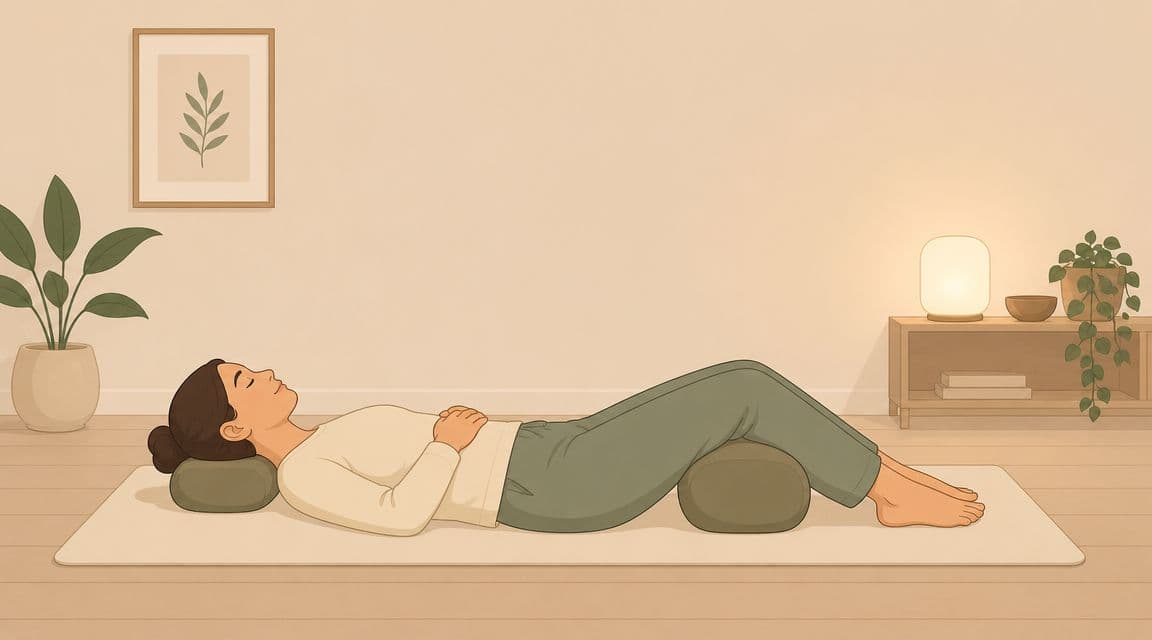
A useful starting posture comes from this lying-down meditation setup guide. Lie on your back on a mat or bed. Keep your legs about hip-width apart, let the ankles relax, and place the arms slightly away from the torso.
This is simple, but details matter. If your arms are pinned too close to the body, your chest can feel cramped. If your legs are held stiffly together, the hips often grip without you noticing.
Try this checklist:
- Head support: Use a thin pillow if needed. Enough to support the head, not enough to fold the chin heavily toward the chest.
- Arms placement: Leave a little air between the arms and ribs so the shoulders can soften.
- Leg position: Let the feet fall naturally outward if that feels easy and neutral.
When to switch to semi-supine
If your lower back doesn't like flat-on-the-floor lying, change the geometry. Don't grit your teeth and call it mindfulness.
The same guidance recommends a semi-supine variation with bent knees and feet planted slightly wider than the hips. You can also place a bolster under the knees to reduce lumbar load. For many people, this is the difference between “I can relax” and “my back is stealing the whole session.”
Comfort should support attention. It shouldn't become the whole event.
If spinal support is a bigger issue for you, especially at night, resources on pain relief for dextroscoliosis sleep can help you think more clearly about pillow placement, leg support, and how alignment changes sensation.
Build a posture that feels deliberate
Here's a quick comparison that helps:
| Setup | Best for | Watch out for |
|---|---|---|
| Flat supine | Open front body, simple breath awareness, body scan | Lower back strain, excessive softness |
| Semi-supine with bent knees | Low back support, longer sessions, beginners | Feet too close to hips can create tension |
| Head pillow and knee bolster | Reducing strain, creating neutral support | Over-padding can make you too drowsy |
One more thing. If you want a grounded overview of attentional basics before you start experimenting with posture, this guide on how to practice mindfulness is a useful companion.
Don't confuse luxury with function
Props aren't there to make the pose fancy. They're there to remove unnecessary effort.
Use what helps you stay still without sagging into sleep. A mat often works better than a very soft mattress for daytime practice because it keeps the body a little more awake. A bed can work too, especially if pain or fatigue is part of the picture. Just be honest about what happens to your attention there.
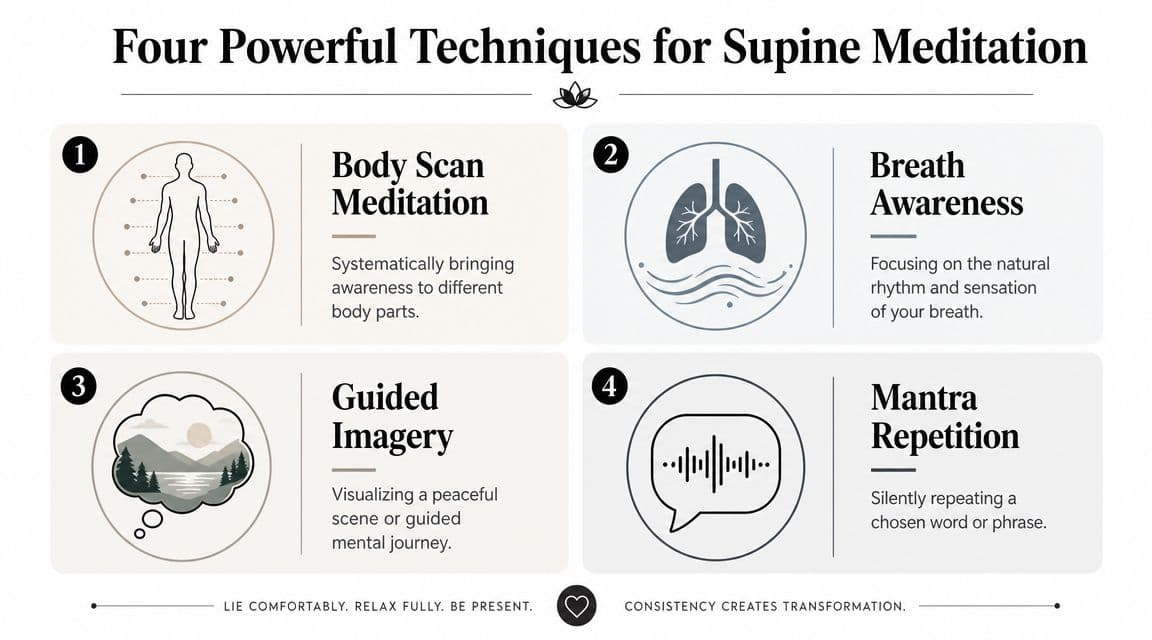
Four Powerful Techniques for Supine Meditation
Once your body is set up well, technique matters more than people think. The biggest mistake beginners make is lying down and trying to “just be aware” with nothing to hold the mind.
That's usually when the mind fogs out.
Teachers who work with supine practice often point to one main issue. The risk of sleep increases when attention settles in the belly while tracking the breath, and shifting attention higher, toward the upper chest, throat, or nostrils, can help reduce drowsiness. For beginners, stronger anchors like body scan and guided practice tend to work better.
Body scan
This is one of the best places to start if you want to meditate lying down successfully.
Move attention through the body in a slow sequence. Toes, feet, calves, knees, thighs, pelvis, belly, chest, hands, arms, shoulders, throat, face, scalp. You're not trying to force relaxation. You're noticing sensation as it is.
A simple internal script sounds like this:
Feel the toes from the inside. Notice tingling, warmth, pressure, or nothing much at all. Then move on.
That “or nothing much at all” matters. It keeps the practice honest. The job is to notice, not to manufacture.
Best use: Physical tension, stress, overstimulation, reconnecting with the body.
Focused breath awareness
Breath practice while lying down needs a slight adjustment. If the lower belly focus makes you sleepy, bring the attention higher.
Try resting one hand lightly on the upper chest or notice the breath at the nostrils. Feel cool air on the inhale, warmer air on the exhale. If you want more structure, count softly. Inhale one, exhale one, up to ten, then start again.
A practical variation from the research-based guidance is counted breathing with a non-straining pace, gradually extending toward a longer rhythm. The key phrase is non-straining. If the count becomes a performance, it stops being meditation.
If breath mechanics at night are part of your broader struggle, the practical guide to deeper sleep offers useful context on breathing patterns and comfort.
Progressive muscle relaxation
Some people get sleepy when they lie down. Others get restless. Their body settles, but the nervous system keeps buzzing.
That's where progressive muscle relaxation earns its keep. Gently tense one area on an inhale, release on an exhale. Hands first. Then shoulders. Then face. Then legs. The contrast teaches the body what release feels like.
Try this mini-sequence:
- Hands: Make fists gently. Hold for a breath. Release completely.
- Shoulders: Lift them a little toward the ears. Then let them drop.
- Jaw: Clench very lightly. Then soften the tongue and lips.
This technique is more active than a pure body scan, which is exactly why it helps people who can't settle through passive observation alone.
Simplified Yoga Nidra style rotation
You don't need a formal long-form script to benefit from this style. A simple rotation of awareness can create deep rest without knocking you out.
Move attention briskly but clearly through selected points of the body. Right thumb, fingers, palm, wrist, forearm, elbow, shoulder. Left side. Face. Chest. Belly. Legs. Then sense the whole body at once.
This works because it gives the mind a task. Not a hard task. Just enough of one to keep consciousness online.
If you keep falling asleep in supine practice, choose the technique with the clearest job for the mind.
Which one should you use today
Here's the short version:
- Use body scan when you feel disconnected, tense, or physically overloaded.
- Use upper-chest or nostril breath awareness when you want steadiness and clarity.
- Use progressive muscle relaxation when agitation is stronger than fatigue.
- Use a Yoga Nidra style rotation when you want deep rest but still want to stay aware.
Not every technique fits every day. Good practice is responsive.
How to Stay Awake and Focused During Practice
Falling asleep during lying-down meditation isn't a character flaw. It's feedback.
It tells you something useful. Maybe you're tired. Maybe the room is too warm. Maybe the technique is too diffuse. Maybe your body finally felt safe enough to let go and it took the first available exit.
That's information, not failure.
What you're actually training
One reason teachers stay cautious with this posture is its close link to sleepiness. One Mind Dharma notes that lying down commonly leads to “sloth and torpor,” even though mindfulness-based meditation can also support better sleep outcomes. Those are two different goals. Sleep support is valid. Attentional training asks for wakeful awareness.
If you nod off, don't label the whole session a waste. Adjust the conditions and try again.
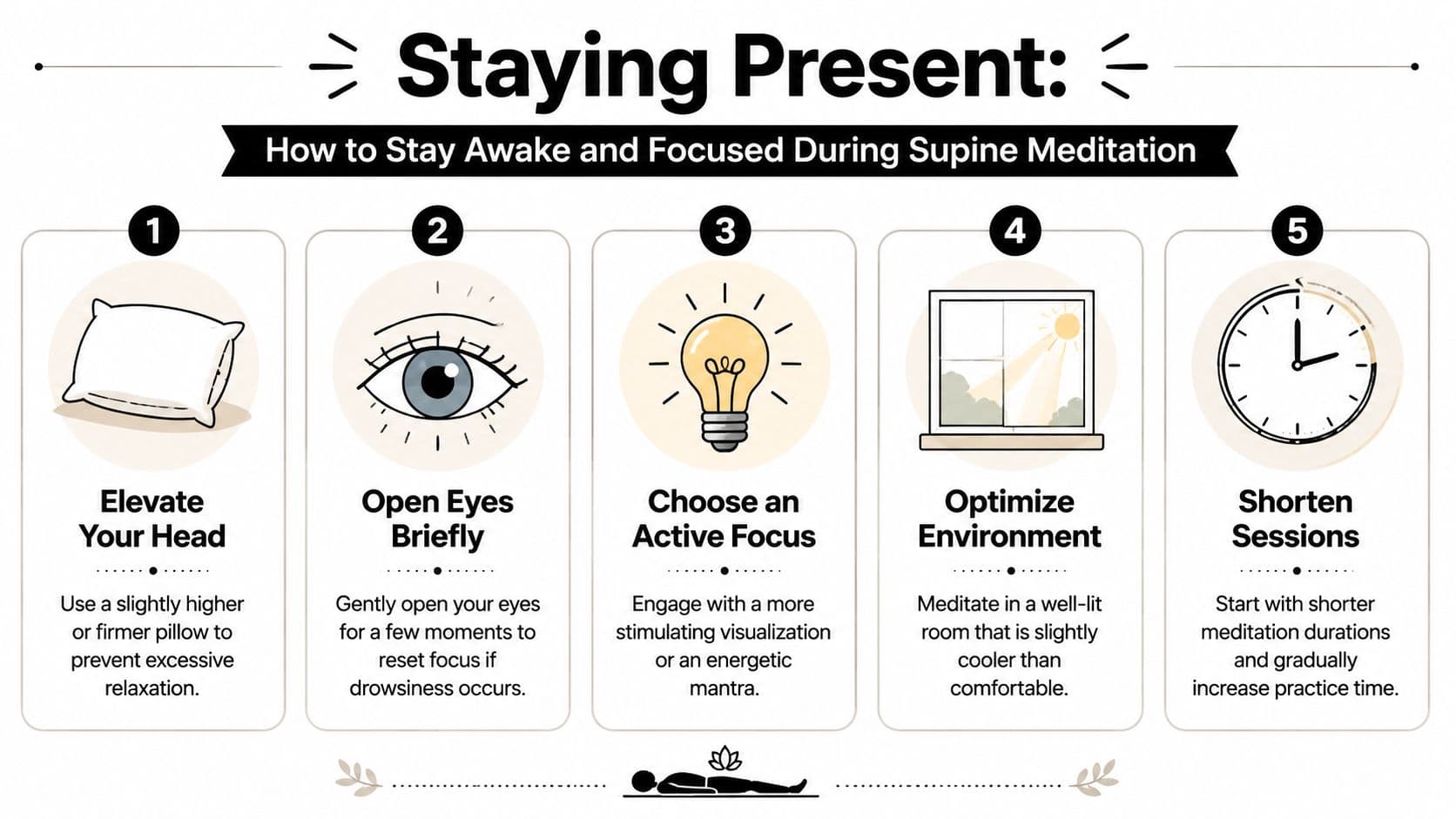
A short rescue checklist
Use these changes one at a time so you can tell what helps:
- Shorten the session: If you keep drifting at longer lengths, work with a brief container first.
- Raise the head slightly: A firmer or slightly higher pillow can reduce the “lights out” effect.
- Open the eyes for a few breaths: Soft gaze, then close them again once alertness returns.
- Cool the room a little: Warmth and heaviness pair up fast.
- Practice before a meal or well after one: Full digestion can pull you down hard.
- Choose a more active anchor: Counting breath, guided practice, or a body scan usually holds attention better than vague awareness.
A structured breath pattern can help too. This explanation of the 3-part breath is useful if you want a clearer internal map of breath movement without slipping into passivity.
The skill isn't to avoid drowsiness forever. The skill is to notice it early and respond on purpose.
Signs you need a different approach
A few clues tell you the posture needs modification:
| If this happens | Try this instead |
|---|---|
| You fall asleep within minutes | Shorter session, cooler room, stronger anchor |
| Your back aches | Bent knees or support under knees |
| Your mind gets foggy | Move attention to nostrils or upper chest |
| You feel trapped or irritable | Open eyes, reset arms, use a guided meditation |
That's practice. Observe, adjust, repeat.
From Relaxation to Deeper Self-Discovery
Once lying-down meditation becomes stable, it can do more than settle your nervous system. It can become a place where insight shows up subtly, without you chasing it.
This matters because most public advice on supine meditation stays at the level of posture tips. Positivity's overview points out a real gap here. Guidance rarely shows for whom lying-down meditation is actually better, and a more useful direction is to use it purposefully for goals like pain management or anxiety reduction rather than as a generic relaxation trick. I think that's exactly right.
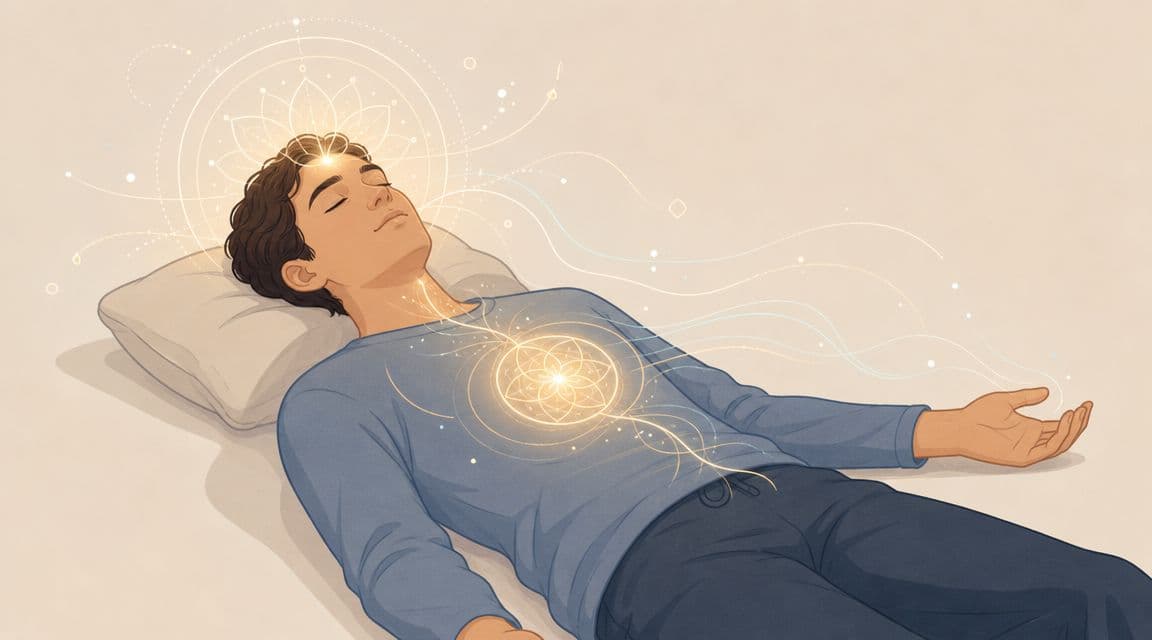
Don't just relax. Inquire.
A good supine session can hold a gentle question. Not a problem-solving question. More like a listening question.
Try one of these before you begin:
- What am I avoiding feeling in my body right now
- Where am I forcing my life
- What wants my attention, not my control
- What feels quietly true, even if I haven't acted on it yet
Then meditate. Don't chase an answer. Let the question sit in the background while breath or body awareness stays in the foreground.
That's a very different use of the posture. It turns the practice into a contemplative space rather than a sedation tool.
Why lying down can help insight
Some people access self-understanding more easily when they're not holding themselves upright. Less effort in the body can mean less defensiveness in the mind.
Not always. Some people need more verticality to feel clear. But if seated meditation makes you brace, supine practice may let deeper material surface because the body no longer has to manage discomfort first.
A useful support for that kind of reflection is an article on meditation for self-discovery, which explores how contemplative practice can become a way of hearing yourself more honestly.
Rest isn't the opposite of inner work. Sometimes rest is what allows inner work to begin.
Give the session a job
Before you start, choose one lane:
-
Recovery Use body scan, longer exhale, and full physical support.
-
Emotional regulation Use a strong anchor and name feelings as they arise.
-
Self-inquiry Hold one question lightly and return to sensation whenever thinking takes over.
Purpose changes quality. Without it, lying down often slides into vague comfort. With it, the same posture becomes precise.
Final Tips and Encouragement for Your Practice
If you want to meditate lying down well, remember three things.
First, support the body on purpose. A thin pillow, bent knees, or a bolster under the legs can change everything. There's no prize for enduring a bad setup.
Second, choose a technique strong enough for the position. Lying down usually works better with clear structure than with open-ended awareness, especially when you're learning.
Third, measure success by honesty, not by perfection. If you fell asleep, you learned something. If you stayed awake but fidgety, you learned something. If you found three steady breaths and then lost the thread, that still counts as practice.
Consistency beats marathon sessions. A short daily session builds familiarity with the posture, your energy patterns, and the techniques that work for your mind. Morning can be good if you tend to doze at night. Midday can be better if you need a reset and your mind is less likely to drop into sleep.
Be willing to experiment. Your body is not an obstacle to meditation. It's part of the conversation.
If you want your meditation practice to support deeper self-understanding, the Life Purpose App is a thoughtful place to continue. It's the digital companion to Dan Millman's book The Life You Were Born to Live, and it helps you explore your life path, core patterns, and inner themes with more clarity. If your lying-down practice is opening the door to reflection, this gives that reflection a meaningful framework.
Discover your life path today
Enter your date of birth and see your life path, free.
Find your life path