That quiet, persistent feeling that there must be something more, a richer connection or a calmer mind, is a common human impulse. This guide explains how meditation expands awareness, reshapes the brain, and offers practical techniques to bring higher consciousness into everyday life.

March 26, 2026 (6mo ago) — last updated August 23, 2026 (1mo ago)
Meditation for Higher Consciousness & Clarity
Learn how meditation expands awareness, rewires the brain, and offers practical techniques to bring higher consciousness into daily life.
← Back to blog
That quiet, persistent feeling that there must be something more, a richer connection or a calmer mind, is a common human impulse. This guide explains how meditation expands awareness, reshapes the brain, and offers practical techniques to bring higher consciousness into everyday life.
Meditation for Higher Consciousness
Summary: Discover how meditation expands awareness, rewires the brain, and offers practical practices to bring higher consciousness into daily life.
Introduction
That quiet, persistent feeling that there must be something more, a richer connection or a calmer mind, is a common human impulse. This guide explains how meditation expands awareness, reshapes the brain, and offers practical techniques to bring higher consciousness into everyday life. You’ll find approachable practices, neuroscience-backed benefits, and ways to carry awareness off the cushion and into daily moments.
Your Journey to a More Aware Life Starts Here
When we hear the term “higher consciousness,” it’s easy to imagine something out of reach, reserved for monks on remote mountaintops. It isn’t. Higher consciousness means an expansion of everyday awareness: a shift from being caught up in thought to observing life with clarity. Meditation is the bridge — the training ground for attention that quiets internal chatter so deeper intuition and insight can arise.
You Are Not Alone in This Search
If you feel pulled toward inner exploration, you’re in good company. Millions of people are turning inward, signaling a shift in how we approach personal growth and well‑being. About 18.3% of American adults now report meditating, roughly 60.53 million people1. Global estimates also show rapid growth in meditation adoption worldwide2.
Making the Journey Your Own
While meditation is universal, your path to greater awareness is personal. Frameworks like Dan Millman’s The Life You Were Born to Live can offer context and focus for practice. The Life Purpose App helps identify life themes so meditation becomes a targeted tool for growth6.
What Does Higher Consciousness Feel Like?
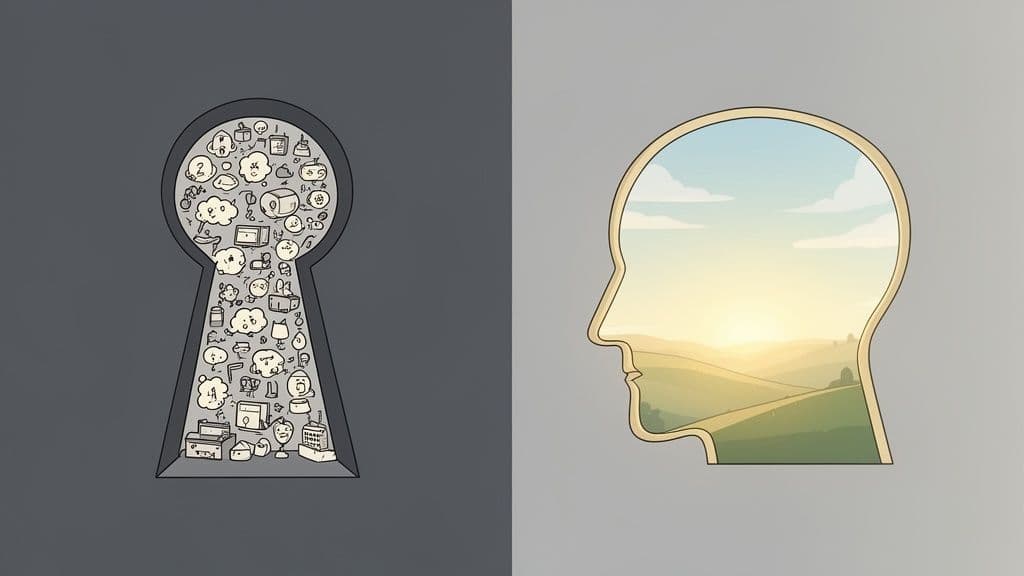
Higher consciousness isn’t detachment, it’s arriving more fully in your life. Most of us live through a narrow keyhole of stresses and replayed conversations. Higher awareness opens the door so you become the spacious observer of thoughts instead of being driven by them.
The Inner Experience of Expanded Awareness
Expanded awareness usually arrives gradually, like a sunrise. You may notice:
- A sense of space: mental static fades and you gain a moment to choose rather than react.
- Deeper intuition: decisions feel aligned with a calm inner knowing instead of frantic analysis.
- A feeling of unity: boundaries between “me” and “other” soften and you feel more connected to people and nature.
From this wider perspective, emotions no longer run the show. You can witness a feeling, trace where it comes from, and let it pass. That witnessing is central to moving toward higher consciousness.
“The goal isn’t to stop thinking, it’s to stop being unconsciously lived by your thinking.”
Your Unique Path to Consciousness
Each person’s experience of higher consciousness unfolds through their life path. As Millman explains, your life lessons and gifts shape how awareness develops. Using a tool like the Life Purpose App can help you choose practices that support those themes, so insights are tied to your specific growth rather than generic advice6.
How Meditation Rewires the Brain for Awareness
Meditation is attention training — like taking your mind to the gym. Each time you notice distraction and return to the breath, you strengthen focus. Neuroscience shows consistent meditation reshapes the brain, strengthening the prefrontal cortex for decision‑making and self‑regulation while reducing reactivity in the amygdala, which supports calmer responses to stress3.
The Goal Isn’t an Empty Mind
A common myth is that meditation means silencing all thought. It doesn’t. Practice changes your relationship with thoughts: you notice them and return to your anchor without judgment. Each gentle return is a successful rep for your awareness muscle.
Targeted techniques help, like mindfulness practices for taming a busy mind and step‑by‑step guides to build a daily habit. For practical instructions, see our guide on how to practice mindfulness.
Meditation for a Modern World
Meditation has moved into mainstream mental health. The meditator profile has broadened across ages and income levels, and many people now use meditation for anxiety reduction and stress management. Market reports show the meditation and mindfulness sector growing rapidly, reflecting strong consumer demand and expanding product offerings45.
Whether you want spiritual insight or a calmer mind, regular attention training supports higher awareness, bringing clarity, peace, and purpose to daily life.
Finding Your Meditation Style: Which Door Will You Open?
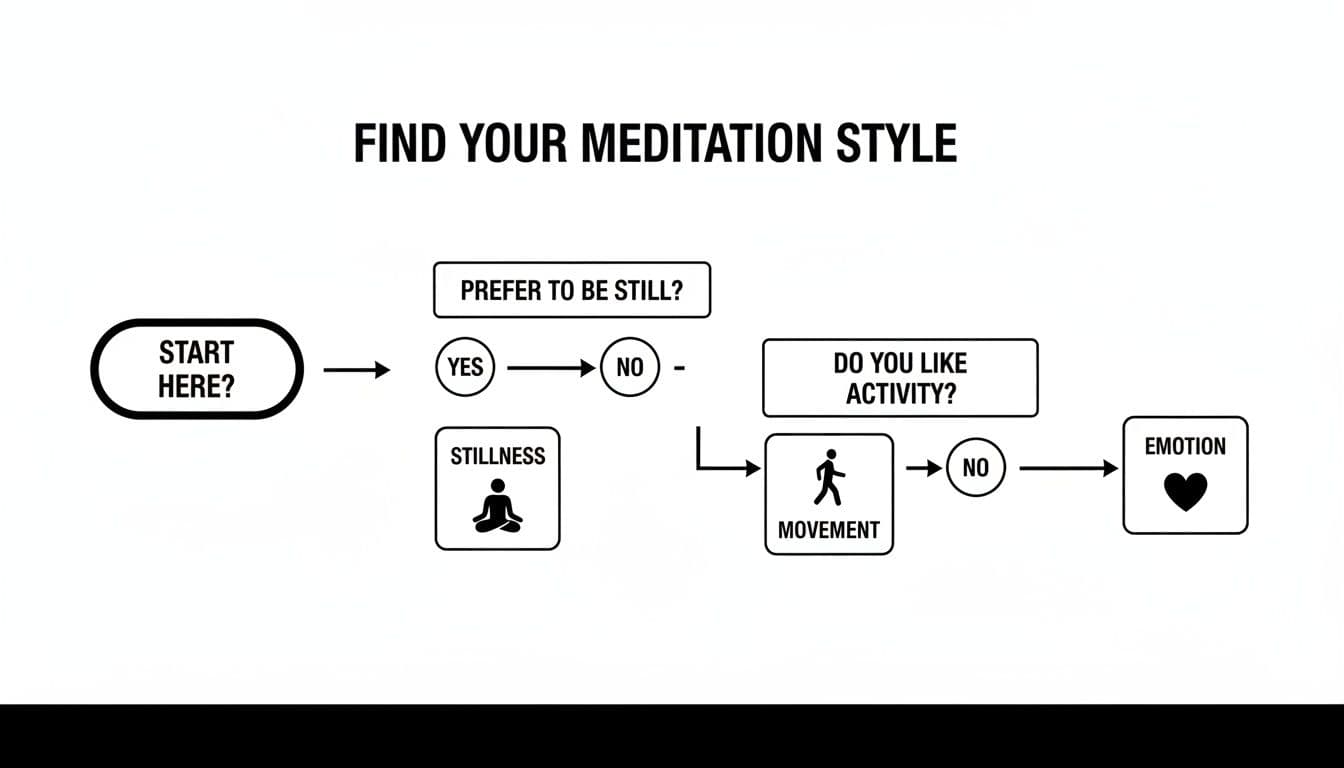
If you’ve tried to meditate and felt you were “doing it wrong,” good news: there’s no single right way. The most effective practice is the one you’ll keep doing. Think of trying practices like trying on shoes — some will fit, some won’t. Your goal is a style that matches your temperament.
Comparing Popular Meditation Approaches
| Meditation Style | Primary Focus | Effect on Consciousness | Best Suited For |
|---|---|---|---|
| Vipassanā (Insight) | Observing breath, sensations, thoughts | Builds clarity, non‑reactivity, self‑understanding | Analytical people comfortable with stillness |
| Metta (Loving‑Kindness) | Cultivating compassion and goodwill | Deepens empathy, emotional healing, connection | Those who struggle with self‑criticism or isolation |
| Walking Meditation | Mindful attention to motion and body | Grounds restless energy and connects you to the present | People who can’t sit still for long |
What This Looks Like in Practice
- Vipassanā: Sit quietly and notice breath, sensations, and thoughts without clinging. Great for learning the mechanics of mind.
- Metta: Repeat phrases that cultivate warmth toward self and others. Great for opening the heart and reducing self‑criticism.
- Walking Meditation: Attend to the sensations of walking — pressure underfoot, rhythm of steps. Ideal for channeling excess energy into presence.
Many people switch styles depending on life needs — Vipassanā during stressful work periods, Metta when they need more compassion.
Connecting Practice to Your Life Path
Aligning meditation with your life purpose deepens meaning. If patience is a core lesson, a grounding practice like walking meditation becomes a practical training ground. Understanding your spiritual blueprint can turn meditation from a wellness habit into a tool for personal evolution6.
Bringing Your Practice into Everyday Life
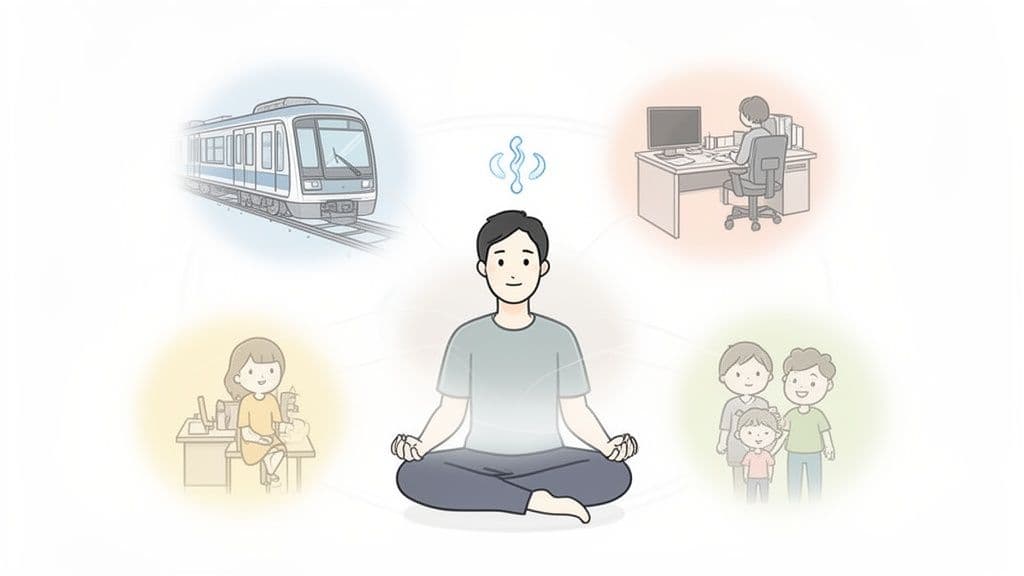
Finding peace on the cushion is one thing; bringing that spaciousness into daily life is another. Integration happens in the messy reality of commutes, meetings, and conversations. The goal is to carry small pockets of awareness into everyday moments.
Simple Anchors for Mindful Living
Start small. Pick one or two anchors that feel manageable and relevant:
- The Three‑Breath Pause: Before driving, joining a call, or replying to an email, take three slow breaths.
- Mindful Chores: Bring focused attention to a routine task like washing dishes or making coffee.
- Compassionate Listening: In difficult conversations, notice the urge to respond and instead listen to the feelings behind the words.
These micro‑practices build your awareness muscle throughout the day. Holistic choices like adequate rest and supportive supplements can help maintain balance.
Your Life Path as a Training Ground
When you connect meditation to your life path, daily frustrations become opportunities. If patience is your lesson, traffic becomes practice. Awareness gives you a sliver of choice — to breathe and relax instead of bracing with irritation. Journaling alongside meditation can deepen insights and clarify patterns over time.
Your Personal Practice Is Part of a Global Shift
Meditation can feel private, yet it’s part of a broad movement toward awareness. Corporate wellness programs, apps, and millions of individual practices show this shift has practical momentum and real‑world impact. The market’s rapid growth reflects widespread investment in mental and spiritual well‑being45.
“Your practice is a ripple in a global pond.” By practicing regularly, you contribute to a larger movement toward greater awareness.
Whether you use the Life Purpose App and Dan Millman’s framework, or simply steal five minutes for breathing, you’re part of a growing community dedicated to raising awareness, one breath at a time6.
Common Questions on the Path to Higher Consciousness
As you deepen practice, questions and doubts will arise — that’s healthy. Here are common concerns and practical guidance.
How Long Until I Feel a Difference?
It varies. Many people notice small shifts, like less reactivity or clearer thinking, within weeks of consistent practice. Deeper states of awareness typically unfold over months and years. Consistency matters more than session length.
What if I Cannot Quiet My Mind?
A busy mind is normal. The goal is not silence but noticing. Every time you catch your mind and return to your anchor, you’ve successfully meditated. Gentle, patient redirection builds the habit.
Can the Life Purpose App Help My Meditation?
Yes. Use the app to identify a theme or question before you sit, then release it into silence. This creates a personal frame for insight to arise organically6.
Ready to discover the spiritual lessons your life is meant to teach you? Download the Life Purpose App today to explore your personal path and bring a powerful new focus to your meditation practice.
Quick Q&A (Concise)
Q: How does meditation lead to higher consciousness?
A: By training attention, reducing reactivity, and widening perspective so you observe rather than react.
Q: Which meditation should I start with?
A: Start with what you’ll keep doing — Vipassanā for clarity, Metta for heart work, or walking meditation if you’re restless.
Q: How do I make meditation stick?
A: Start small, pick anchors (three breaths, mindful chores), and link practice to daily life and your personal purpose.
Three Concise Q&A Sections
Q: How quickly will meditation change my daily stress?
A: Many people notice small reductions in stress within weeks of regular practice; sustained change builds with consistent daily practice.
Q: What if I can’t sit still for long?
A: Try movement‑based practices like walking meditation or short micro‑practices tied to daily tasks; consistency matters more than posture.
Q: How do I know I’m making progress toward higher consciousness?
A: Look for subtle shifts — more space to choose responses, clearer intuition, and increased empathy — rather than dramatic overnight awakenings.
1.
MindfulnessBox, “Meditation Statistics & Trends,” https://mindfulnessbox.com.
2.
MindfulnessBox, global meditation adoption estimates and projections, https://mindfulnessbox.com.
3.
Tang, Y.-Y., Hölzel, B.K., and Posner, M.I., “The neuroscience of mindfulness meditation,” Nature Reviews Neuroscience 16 (2015): 213–225. [https://www.ncbi.nlm.nih.gov/pmc/articles/PMC4310050/](https://www.ncbi.nlm.nih.gov/pmc/articles/PMC4310050/).
4.
ResearchAndMarkets.com, meditation market size and projections (U.S. and global), https://www.researchandmarkets.com.
5.
MarketResearch Blog, “Fragmented $2.4 billion U.S. meditation market shifts to more virtual services,” https://blog.marketresearch.com/fragmented-2.4-billion-u.s.-meditation-market-shifts-to-more-virtual-services.
6.
Life Purpose App and Dan Millman’s The Life You Were Born to Live, [https://lifepurposeapp.com/the_life_you_were_born_to_live](https://lifepurposeapp.com/the_life_you_were_born_to_live).
Discover your life path today
Enter your date of birth and see your life path, free.
Find your life path