Self-realization is the practical work of uncovering your true self—removing conditioning so your choices and relationships reflect your deepest values. This guide explains what it looks like, how it differs from self-awareness, signs you’re progressing, practical steps to take, and tools to support your path.

January 26, 2026 (9mo ago) — last updated August 5, 2026 (2mo ago)
Self-Realization: Find Your True Life Path
Discover what self-realization means, signs you’re on the path, and practical steps to live a more authentic, purposeful life.
← Back to blog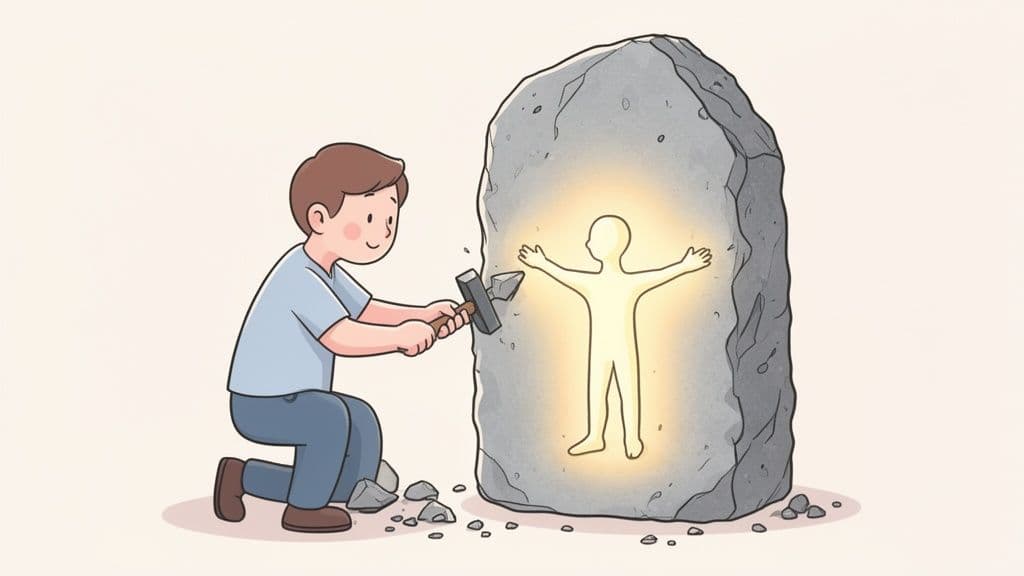
Self-realization is the practical work of uncovering your true self—removing conditioning so your choices and relationships reflect your deepest values. This guide explains what it looks like, how it differs from self-awareness, signs you’re progressing, practical steps to take, and tools to support your path.
Self-Realization: Find Your True Life Path
Discover what self-realization means and how to uncover a more authentic, purposeful life.
Introduction
Self-realization means discovering and living as your true, innermost self. It’s the work of removing conditioning—social expectations, family stories, and limiting beliefs—so your daily choices reflect who you really are. This article defines self-realization, contrasts it with self-awareness, lists signs you’re moving forward, offers practical steps, and points to tools and internal resources to support your path.
What Is Self-Realization?
Self-realization isn’t an abstract ideal. It’s a practical process of uncovering the core of who you are by peeling away layers of expectation and habit. Think of it like a sculptor revealing the statue inside the marble: the form was always there, and the work is removing what’s not you.
From Potential to Practice
The path converts inner potential into everyday reality through three core moves:
- Notice your genuine nature, values, and strengths.
- Accept every part of yourself—your gifts and your messy edges.
- Act in alignment with that rediscovered self through intentional choices.
“It’s not about becoming someone new. It’s about remembering and embodying who you’ve always been.”
The meaning of self-realization is most clear when you express your unique essence in your work, relationships, and daily routines—this brings steadier purpose and calm.
Self-Realization vs. Self-Awareness
The terms are related but distinct. Self-awareness is the first step: noticing thoughts, feelings, and reactions without judgment. It’s like turning on the lights in a dark room.
Self-realization is what follows: understanding why those patterns exist and integrating that insight so your behavior reflects your deeper self.
From Observation to Integration
For example, self-awareness might reveal you get defensive when you receive feedback. Self-realization uncovers the insecurity behind that defensiveness and guides you to respond in ways that align with your values.
For practical exercises, see related guides such as How to Know Your True Self and Ways to Improve Self-Awareness.
Signs You’re on the Path to Self-Realization
Self-realization often shows up as subtle shifts. Look for these signs:
- A reduced need for external validation—praise or criticism no longer controls your mood.
- A deeper sense of inner calm even when life is messy.
- Moving from blame to responsibility—you own your choices and emotional responses.
- Clearer decisions that reflect your priorities and more authentic relationships.
Population-level data show many people still search for meaning, which helps explain the rising interest in self-knowledge and personal growth1.
If this resonates, exploring the stages of spiritual awakening can offer helpful perspective.
Finding Your Unique Life Path
There’s no single map for everyone. Systems like Dan Millman’s The Life You Were Born to Live offer one practical lens for understanding recurring strengths and challenges tied to your birth date—useful for clarifying health, relationships, and work priorities2.
These frameworks aren’t fortune-telling; they’re tools to help you stop living someone else’s script and begin acting from your natural talents. Digital tools such as the Life Purpose App can help you experiment with these ideas in daily life4.
“By understanding the lessons of your life path, challenges become opportunities for growth.”
Navigating Common Obstacles
The path to self-realization is rewarding but demanding. You’ll meet resistance, fear, and familiar safety nets that no longer fit.
Ego Resistance
The ego holds tightly to job titles, status, and others’ approval. As your deeper self emerges, the ego can produce doubt, fear, and confusion. This friction is normal—the old patterns making space for a new way of living.
Fear of the Unknown
Familiar limitations feel predictable, so stepping into your true self can feel risky. Cultural conditioning and old wounds increase that fear. These challenges are part of the curriculum; learning to sit with uncertainty builds resilience.
Interest in frameworks that connect modern life with ancient wisdom is rising alongside the larger self-improvement market, which was valued at $46.1 billion and is projected to grow significantly in the coming decade3.
Practical Steps Toward Self-Realization
Self-realization advances through small, consistent choices. Try these concrete practices.
Cultivate Mindful Observation
Notice your inner life—thoughts, sensations, emotions—without judgment. Pause during the day and ask, “What’s happening inside me right now?” These check-ins create space between impulse and action.
Journal with Targeted Prompts
Journaling surfaces patterns. Try prompts such as:
- When do I feel most alive and fully myself?
- What activities make me lose track of time?
- If I couldn’t fail, what would I do?
- What are my non-negotiable core values?
Listen; don’t force answers. Over time, recurring themes reveal your true directions.
Reframe Challenges as Lessons
See setbacks as information tailored for your growth. When you react with frustration, pause and reflect. Tools like life-path frameworks can reframe struggles as part of your development and make problems feel meaningful.
These simple practices make self-realization concrete and manageable.
Questions People Ask
How long does this take?
There’s no fixed timeline. Self-realization is a lifetime practice. Some people have sudden awakenings; for many, growth is gradual. Each insight and authentic choice is progress.
Can I do this on my own?
The work is personal, but support helps. Teachers, mentors, communities, books, and apps can speed clarity and provide encouragement.
Will self-realization make me happy all the time?
No. It won’t remove sadness or anger. It helps you cultivate steadier inner calm and respond to emotions with greater clarity.
Quick Q&A: Common Questions About Self-Realization
Q: What is self-realization in simple terms?
A: Self-realization is discovering and living as your authentic self by removing conditioned patterns so your actions reflect your deepest values.
Q: How does self-awareness differ from self-realization?
A: Self-awareness is noticing thoughts and habits; self-realization is integrating that awareness into choices so you live in alignment with your true nature.
Q: What practical steps help me progress?
A: Practice mindful observation, targeted journaling, and reframing challenges as lessons. Explore frameworks like The Life You Were Born to Live for clarity2.
Three Concise Q&A Summaries
Q: How do I start my journey to self-realization?
A: Begin with daily mindful check-ins and short journaling prompts to identify patterns and values. Make one small choice each day that reflects those values.
Q: What barriers will I face?
A: You’ll meet ego resistance, fear of the unknown, and attachment to external approval. Name the reactions, take responsibility, and practice steady, small shifts.
Q: When should I seek support?
A: If patterns feel stuck, emotional pain is overwhelming, or you want guided tools, seek mentors, communities, or structured programs.
1.
Gallup, “State of the World’s Emotional Health,” Gallup, accessed January 2026, https://www.gallup.com/analytics/349280/state-of-worlds-emotional-health.aspx
2.
Dan Millman, The Life You Were Born to Live (New World Library), referenced for the life path framework.
3.
Custom Market Insights, “Self-Improvement Market Report,” Custom Market Insights, accessed January 2026, https://www.custommarketinsights.com/report/self-improvement-market/
4.
Life Purpose App, accessed January 2026, https://www.lifepurposeapp.com
Discover your life path today
Enter your date of birth and see your life path, free.
Find your life path