Feeling lost? Our guide explains what's a midlife crisis, its signs, and how to turn this challenging period into a journey of growth and purpose.
May 2, 2026 (4mo ago) — last updated July 22, 2026 (2mo ago)
What's a Midlife Crisis? A Guide to Finding New Meaning
Feeling lost? Our guide explains what's a midlife crisis, its signs, and how to turn this challenging period into a journey of growth and purpose.
← Back to blog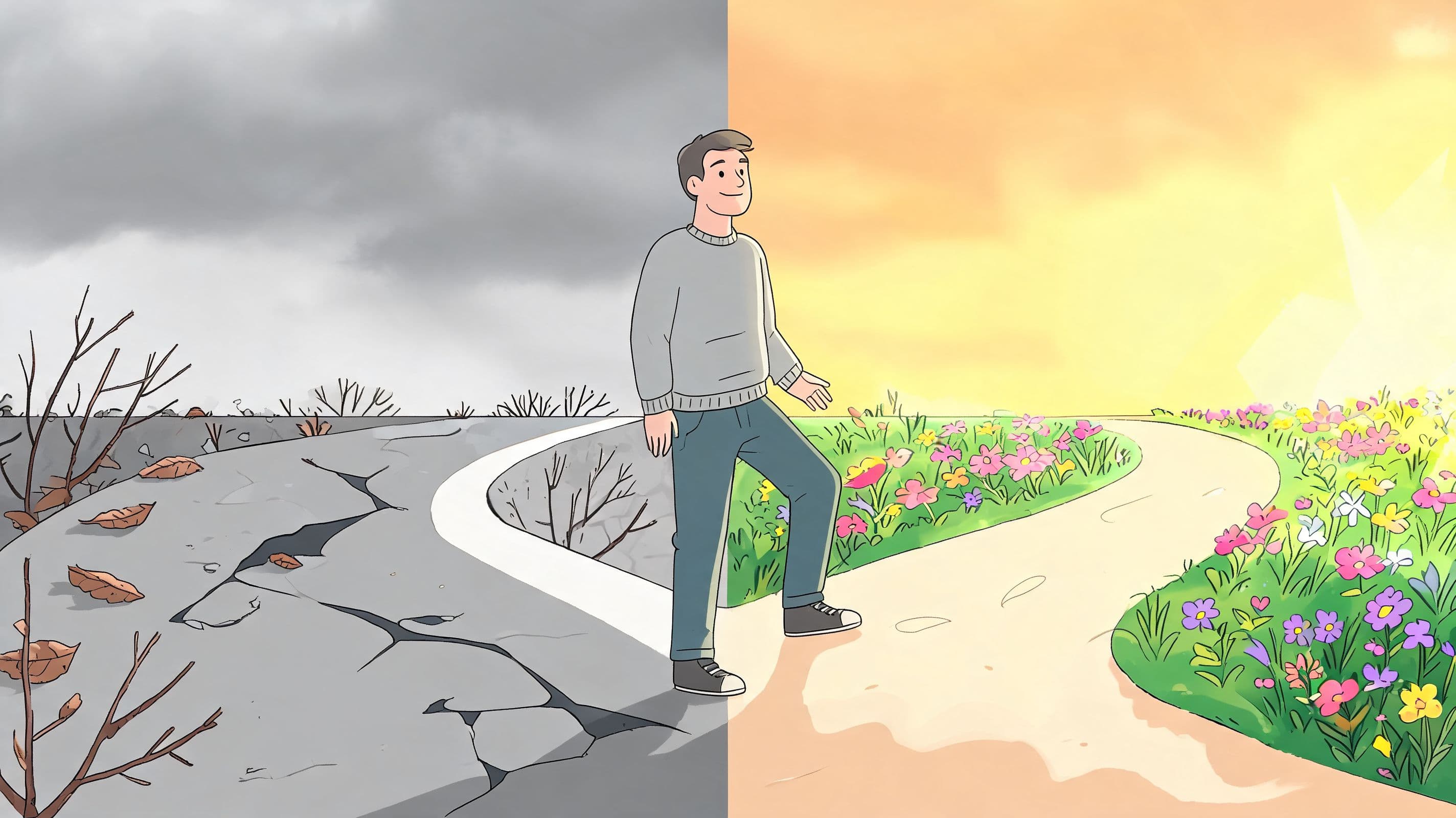
You wake up tired even after a full night’s sleep. You answer emails, pay bills, make dinner, check in on your kids or your parents, and keep moving because that’s what responsible adults do. On paper, your life may look stable. Inside, though, something feels off.
Maybe you’ve caught yourself thinking, “I worked this hard for this?” Maybe your job feels strangely hollow. Maybe your relationship is fine, but not alive. Maybe nothing is dramatically wrong, yet you still feel restless, flat, or oddly emotional. That experience can be unsettling because it doesn’t fit the usual picture of a crisis.
A lot of people call this a midlife crisis, but that phrase can make the whole thing sound shallow or embarrassing. It’s often neither. More often, it’s a serious period of re-evaluation. It can feel disorienting, but it can also become one of the most honest turning points of your life.
That "Is This All There Is" Feeling
A common version of this starts.
You’ve built a life. You’ve been dependable. You’ve done what was expected, or what you once believed would make you happy. Then one ordinary Tuesday, while folding laundry or sitting in traffic or staring at a spreadsheet, a thought slips in. Is this all there is?
That question can bring guilt with it. You might think, “I should be grateful.” And maybe you are grateful. Gratitude and emptiness can exist at the same time. People often get confused about that.
For some, the feeling shows up as boredom. For others, it looks more like irritation, sadness, envy, or a sudden urge to blow up a life that seems perfectly acceptable from the outside. If that sounds familiar, you’re not broken. You may be bumping into a deep developmental shift.
This isn’t only happening to people in their 50s. According to Thriving Center of Psychology on shifting midlife patterns, 64% of Millennials report having experienced a life crisis, with nearly 40% facing one in 2024 alone, and the pattern often shows up earlier, between ages 34 and 44.
That matters because many people dismiss their own experience with thoughts like, “I’m too young for this,” or “I don’t have a right to feel this way.” You might even search for answers in a more private way first, which is why pieces resonate with so many readers.
Why this feeling is so confusing
Part of the confusion is that nothing may have “gone wrong” in the dramatic sense. No collapse. No scandal. No movie-scene meltdown.
Instead, your inner life starts asking for an update that your outer life hasn’t caught up with yet.
Sometimes the crisis isn’t that your life failed. It’s that the version of success you were chasing no longer fits the person you’ve become.
That’s why this stage often feels both painful and oddly necessary. It asks harder questions than your younger years did. Not “Can I build a life?” but “Is the life I built actually mine?”
What a Midlife Crisis Actually Is
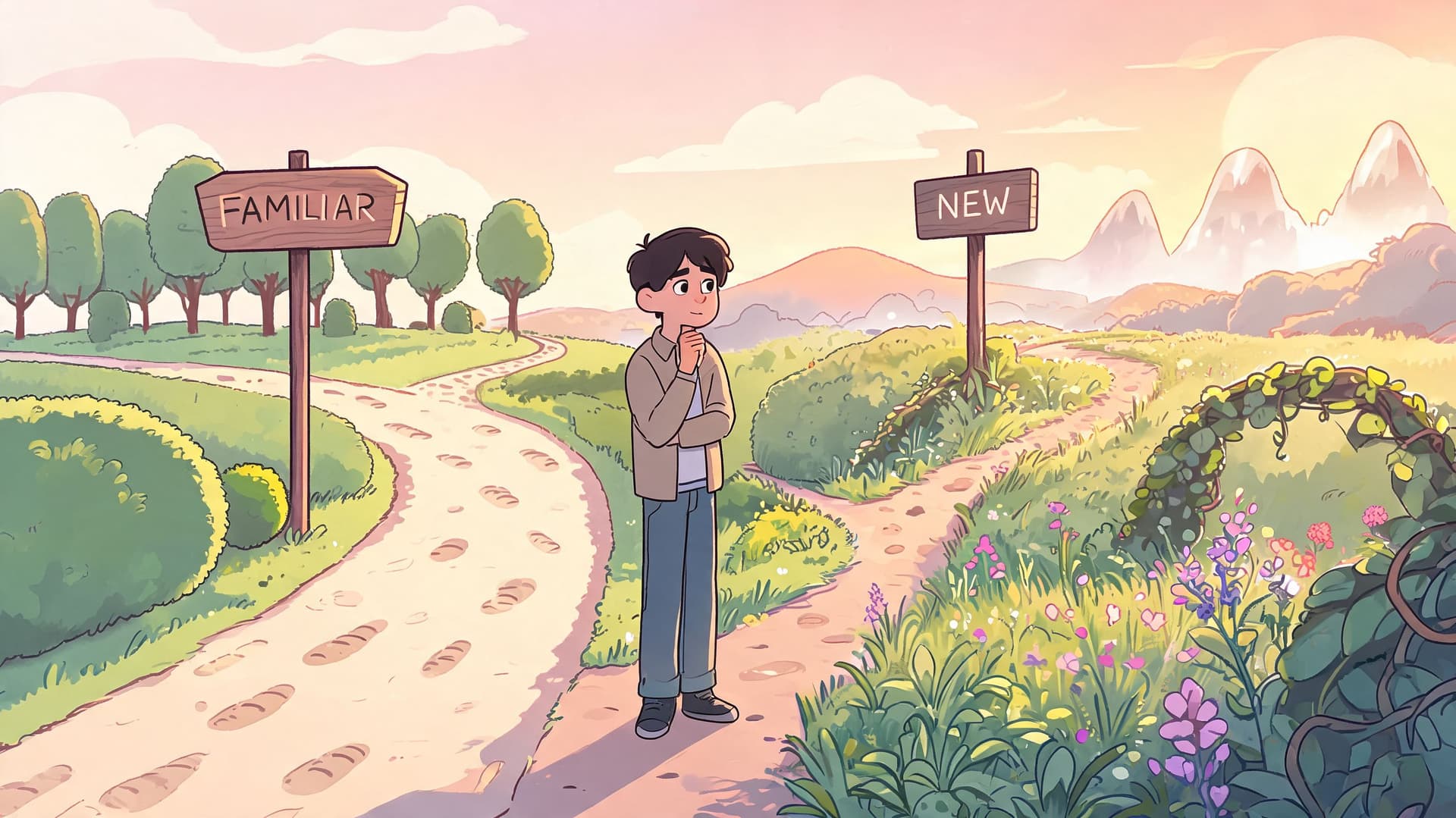
A helpful way to think about what’s a midlife crisis is this. It’s a period of deep internal re-evaluation, often in adulthood, when old roles and goals stop feeling solid and a new identity hasn’t fully formed yet.
It can feel like a software update for the soul. The old operating system still runs, but it glitches. What used to motivate you doesn’t land the same way. You start reviewing your life with sharper eyes.
According to GoodTherapy’s overview of midlife crisis patterns, the average onset is around age 47. It often follows a recognizable arc: a trigger event, a period of intense self-examination and doubt, and then a possible resolution phase where a new sense of identity forms.
What usually triggers it
The trigger doesn’t have to be dramatic.
Sometimes it’s a birthday. Sometimes it’s seeing your face age in a photo. Sometimes it’s an empty nest, a career plateau, a health scare, a breakup, or the death of someone in your wider circle. Sometimes the trigger is accumulated fatigue.
What all these moments have in common is that they interrupt autopilot. They force you to notice time. They make life feel finite, not abstract.
The deeper questions underneath it
A midlife crisis usually isn’t about one bad week. It’s more like a sudden pressure to answer questions you’ve managed to postpone:
- Identity questions like “Who am I if I’m not just a parent, partner, achiever, or provider?”
- Meaning questions like “What matters to me now?”
- Regret questions like “What did I abandon to become this version of myself?”
- Time questions like “If life isn’t endless, what do I want the next chapter to be?”
That’s why people can seem irrational during this stage from the outside. A person may not really want a sports car, a flirtation, a move, or a dramatic career leap. Often they want relief from inner deadness, and they mistake action for clarity.
Practical rule: Don’t assume every urge for change is wisdom. But don’t assume it’s nonsense either. Midlife often brings real information, mixed with impatience.
How it differs from ordinary stress
Ordinary stress says, “I have too much to do.”
A midlife crisis says, “I’m not sure why I’m doing any of this.”
That distinction matters. Stress asks for rest and support. A midlife transition asks for those things too, but it also asks for honesty. It wants you to examine whether your current life reflects your values, your limits, and the person you are now.
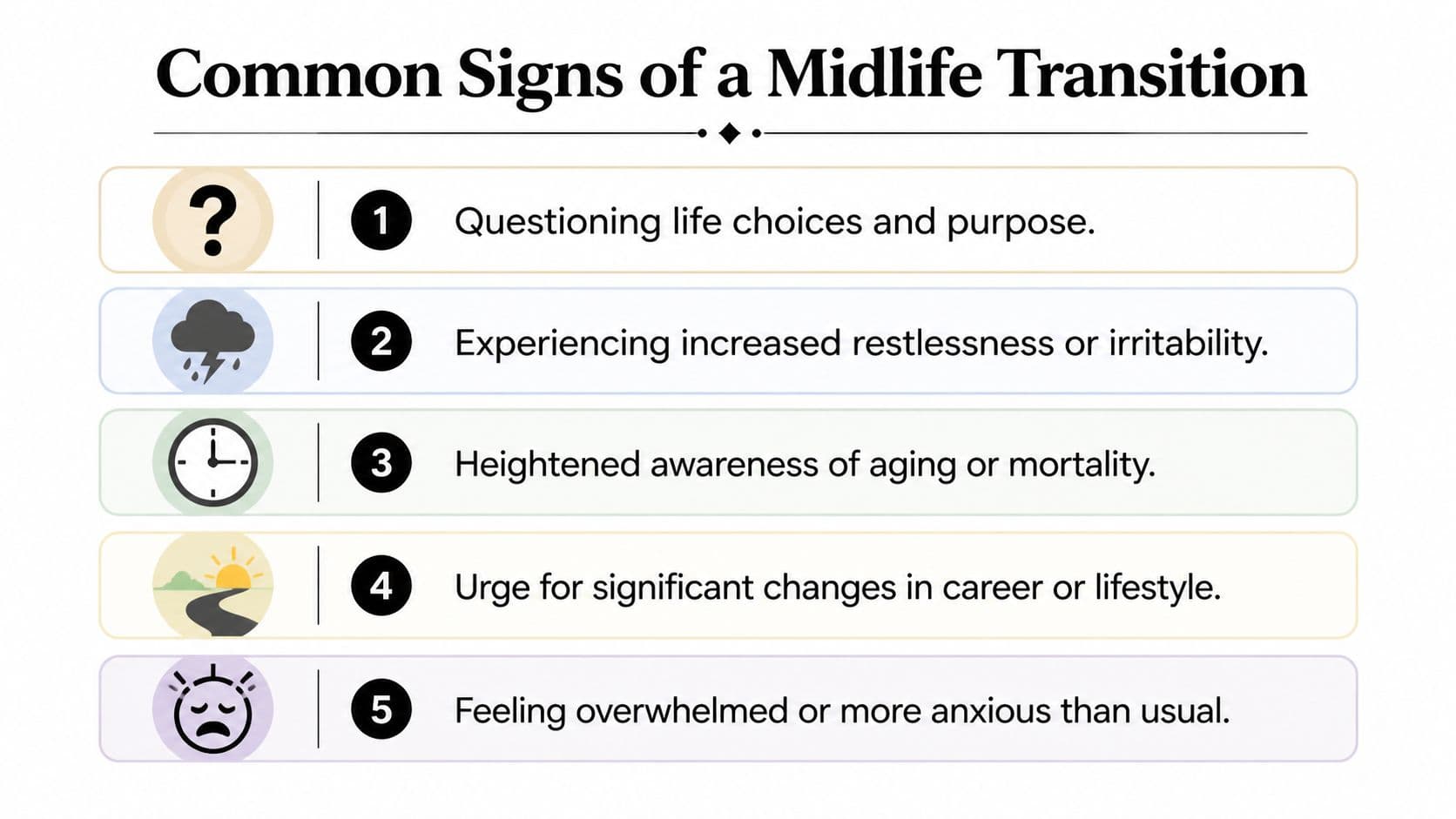
Common Signs of a Midlife Transition
People typically don’t walk around saying, “I’m having a midlife crisis.” They usually say something more ordinary. “I’m exhausted.” “I’m in a rut.” “I don’t feel like myself.” “I want to disappear for a week and think.”
The signs are often easier to notice when you sort them into categories.
Emotional signs
These tend to show up first, even if you can’t name them clearly.
- Restlessness that follows you everywhere, even during downtime
- Irritability that seems bigger than the situation in front of you
- Numbness when you expected satisfaction
- Envy of people who seem more free, brave, or alive
- A vague grief for time, youth, missed chances, or unlived versions of yourself
You might also feel trapped by things you once chose willingly. That can be especially disorienting.
Thought patterns that often appear
Midlife transitions often bring looping thoughts. Not random ones. The same themes tend to repeat.
You may find yourself mentally replaying old decisions, old relationships, or roads not taken. You may become more aware of aging, of your parents’ vulnerability, of your own body changing, or of how quickly years pass.
Some people become unusually focused on purpose. Others become suspicious of their own routines. The outer question sounds practical, like “Should I change jobs?” The inner question is often more existential, like “What kind of life am I building now?”
Behavioral changes
Not every change is dramatic. Some are subtle and easy to miss.
- Pulling away socially because you don’t have the energy to pretend you’re fine
- Changing habits suddenly, such as wardrobe, fitness, hobbies, or spending
- Questioning relationships that used to feel settled
- Daydreaming about escape, even if you never act on it
- Wanting a major reset in work, home, or identity
These behaviors don’t automatically mean you’re in crisis. But together, they often signal a transition that deserves attention.
Physical and daily-life clues
The body often joins the conversation when the mind has been overridden too long.
You may notice tension, disrupted sleep, low motivation, fatigue, or a sense of being constantly overclocked. Some people feel as if they can’t fully relax anymore. Others feel flat and disconnected from pleasure.
If your life looks manageable from the outside but your nervous system feels like it’s running a silent alarm, take that seriously.
The Hidden Pressures That Fuel the Fire
A midlife transition doesn’t happen in a vacuum. It’s not just about personality, aging, or private regret. Many people are carrying structural pressures that would strain almost anyone.
That matters because shame grows when people treat midlife distress like a personal failure. In reality, a lot of people aren’t weak. They’re overloaded.
The sandwich generation strain
One of the most overlooked pressures is caregiving.
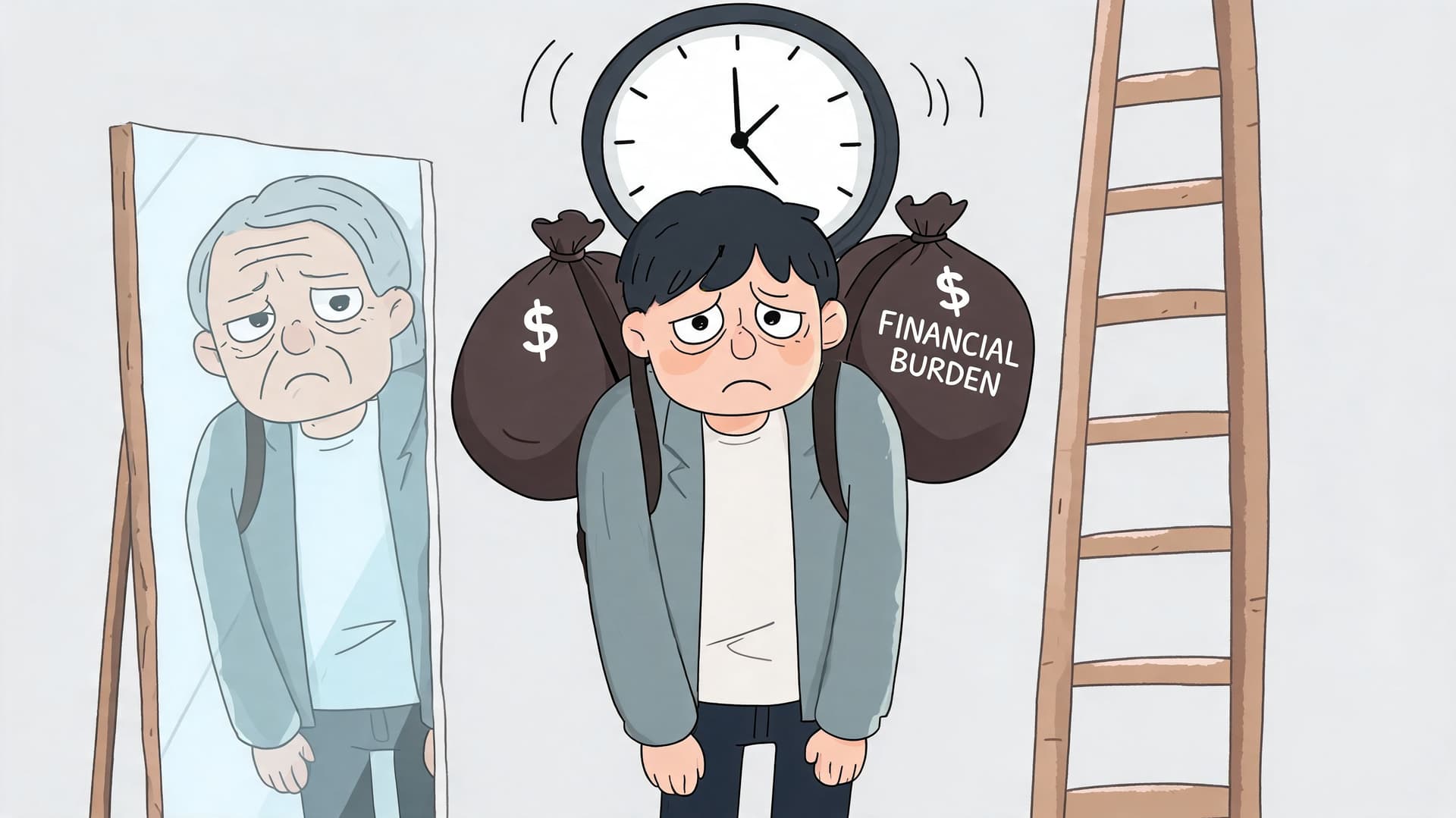
As For Hers explains in its discussion of caregiver burden and midlife, a major trigger is the sandwich generation problem. Middle-aged adults may be caring for aging parents while still supporting children, which creates intense stress, financial strain, and mental health decline. That burden can feed a crisis of identity and purpose.
If you’re doing this, you may feel split into pieces. One part of you is the responsible adult handling logistics. Another part is grieving your own lack of freedom. Another part feels guilty for even wanting space.
Economic pressure changes the emotional picture
A person who feels unfulfilled but has time, savings, and support may process midlife very differently from a person who feels unfulfilled while juggling bills, caregiving, and unstable work.
That’s why modern midlife often feels less like a dramatic rebellion and more like a trapped feeling. You may crave change while knowing change has a cost. That tension can make people feel stuck and ashamed at the same time.
Work can sharpen this further. Many people hit a point where they’re experienced enough to carry more responsibility, but not free enough to step back and ask whether the role still fits. They become efficient at a life they’re no longer sure they want.
The invisible identity load
There’s also the emotional labor of being “the one who handles things.”
You may be the planner, the breadwinner, the peacekeeper, the fixer, the reliable sibling, the stable parent. Over time, these roles can become so dominant that your own interior life gets treated like an inconvenience.
A midlife crisis often appears when that arrangement stops working. The old identity becomes too narrow.
Here are a few hidden pressures that often intensify the experience:
- Role overload when everyone needs something from you at once
- Delayed self-reflection because survival tasks always come first
- Comparison pressure from peers who seem more fulfilled or secure
- Unprocessed grief around aging, family changes, or lost possibilities
Many midlife adults don’t need more lectures about gratitude. They need room to admit they’re tired, conflicted, and carrying too much.
Debunking Midlife Crisis Myths
Pop culture has done this topic no favors. The phrase “midlife crisis” still makes many people picture reckless spending, impulsive romance, or a personality transplant.
The experience is quieter and more varied.
According to Wikipedia’s summary of national studies on midlife crisis, only about 23% of middle-aged adults report experiencing one, which challenges the idea that everyone goes through a universal meltdown. That same overview notes that for many people, the issue is not aging itself but overload stressors from juggling work, family, and health. It also notes that women often face higher distress from work-family crossover demands.
Midlife Crisis Myths vs Realities
| Common Myth | The Reality |
|---|---|
| Everyone has a midlife crisis. | Many people don’t. The experience is real, but it isn’t universal. |
| It’s always about getting older. | Often it’s about overload, identity strain, and accumulated pressure rather than age alone. |
| It has to look dramatic. | For many people, it’s mostly internal. More questioning than chaos. |
| Only men go through it. | Women experience midlife distress too, often shaped by work, caregiving, and family crossover stress. |
| It means you’re immature or ungrateful. | Often it means your life needs re-examination, not that you’ve failed morally. |
| Big impulsive changes are the answer. | Some changes help. Rash decisions made in pain often create new problems. |
Why these myths matter
Myths don’t just confuse people. They delay self-understanding.
If you think a midlife crisis has to look ridiculous, you may ignore your own version because it looks more like emptiness than drama. If you think it’s only about vanity or aging, you may miss the role that exhaustion, caregiving, work pressure, and identity loss are playing.
That misunderstanding can keep people silent for years.
You don’t need to earn compassion by having the most visible breakdown. Quiet suffering still counts.
How to Navigate This Transition and Find Your Purpose
Once you stop treating this period like a joke or a failure, a better question appears. Not “How do I get back to normal?” but “What is this transition asking of me?”
That shift matters. It changes the task from suppression to interpretation.
Start with smaller truths, not bigger drama
Individuals don’t need to make a life-changing decision on the worst day of their confusion. They need to hear themselves clearly.
A useful place to begin is with a few grounded practices:
- Journal about what drains you, what enlivens you, and what you’ve been pretending not to know
- Track recurring fantasies because they often point toward needs, not literal instructions
- Reduce noise for a while, including unnecessary comparison and performative busyness
- Talk to one wise person who won’t either panic or romanticize your urge to change
If your discontent centers on work, practical guidance can help you separate fantasy from a real transition plan. A grounded resource on reinventing your career path in the UK can be useful if your questions are becoming more vocational than purely emotional.
Don’t ask only what to leave
Midlife reflection often gets framed as escape. Leave the job. Leave the marriage. Leave the city. Sometimes change is necessary. But the better first question is often, “What am I trying to move toward?”
That one change in language can calm the nervous system.
Try writing down answers to these prompts:
- What feels deadening right now?
- Where do I still feel genuine energy?
- What part of me hasn’t had a voice in years?
- What responsibilities are real, and which ones are inherited guilt?
These questions won’t solve everything overnight. They do help you sort signal from noise.
A developmental lens can make this less frightening
One reason people suffer so much in midlife is that they think the upheaval is random. It often isn’t. It can be part of a larger developmental rhythm.
That’s where some readers find value in Dan Millman’s book The Life You Were Born to Live. Millman’s system treats life as patterned rather than chaotic. It offers a framework for understanding life paths and nine-year cycles, helping people view difficult periods as meaningful stages of growth rather than proof that everything is falling apart.
If you’re drawn to that perspective, it can be especially helpful during a midlife turning point. Instead of asking, “Why is this happening to me?” you begin asking, “What is this phase asking me to learn, release, or become?” Readers exploring work identity in particular may also appreciate this reflection on career change at midlife.
Build a bridge, not a fantasy
A healthy response to midlife rarely comes from one grand gesture. It usually comes from a bridge made of smaller, honest choices.
That bridge might include:
- a conversation you’ve delayed
- a new boundary with family
- a less prestigious but more human job direction
- a return to creativity, spirituality, study, service, or rest
- therapy, coaching, or guided self-inquiry
The point isn’t to become a new person overnight. The point is to stop abandoning the person you already are.
When a Transition Becomes a Mental Health Concern
Not every midlife struggle is “just a phase,” and not every phase should be handled with self-help alone.
That distinction is important because some people minimize symptoms that need medical or psychological attention. Others assume they’re having a breakdown when they’re moving through a painful but workable life transition. You deserve more clarity than either extreme.
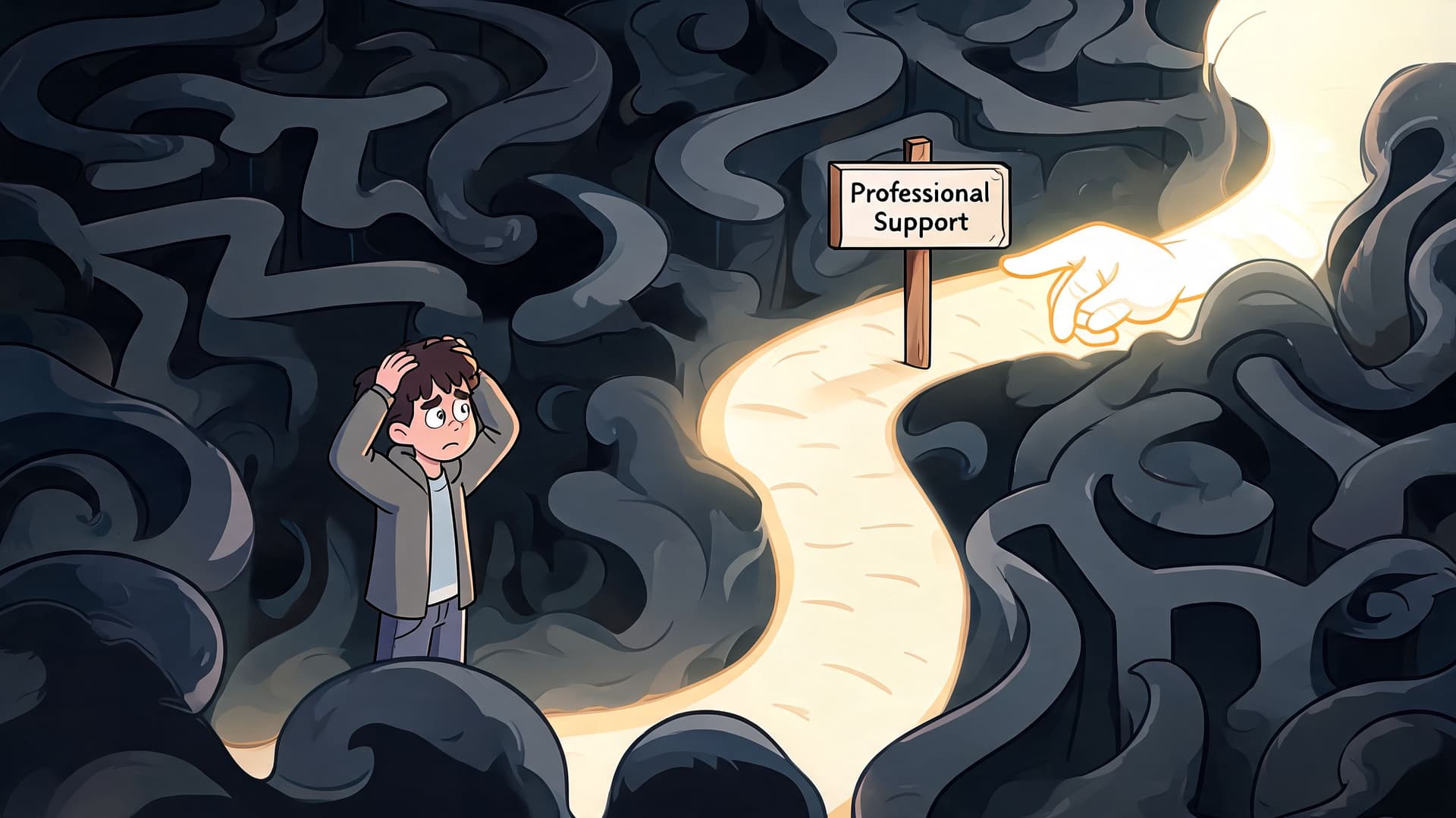
According to this telepsychiatry article on midlife symptoms and medical overlap, it’s important to distinguish a life transition from a medical issue. Persistent hopelessness, extreme fatigue, or sudden mood shifts may point to underlying depression or even thyroid problems, and a medical evaluation is an important first step if symptoms are severe or persistent.
Signs you shouldn’t brush off
A few signs call for more than reflection:
- Persistent hopelessness that doesn’t lift
- Extreme fatigue that feels out of proportion or physically concerning
- Sudden mood shifts that feel intense or unfamiliar
- Heavy reliance on alcohol, substances, or risky behavior to cope
- Inability to function at work, at home, or in basic daily tasks
If you’re unsure where to begin, a structured resource like this expert guide to adult mental health assessment can help you understand what professional evaluation may involve.
Getting help is not giving up
People sometimes resist support because they don’t want to be dramatic, needy, or “the kind of person” who needs therapy or assessment. That thinking keeps a lot of suffering hidden.
A doctor can help rule out medical issues. A therapist can help you sort grief, burnout, depression, anxiety, resentment, identity conflict, or trauma from a broader life transition. If what you’re dealing with also overlaps with depletion, this guide may help you name what your body and mind have been carrying.
Seeking help doesn’t mean your insight failed. It means you respect your own life enough to get support.
Some seasons ask for courage. Others ask for care. Midlife often asks for both.
If this stage of life has stirred deeper questions about meaning, timing, and who you’re becoming, Life Purpose App offers a practical way to explore Dan Millman’s The Life You Were Born to Live. It helps you look at your life path and nine-year cycles in a structured, personal way, so this transition can feel less random and more understandable.
Discover Your Life Purpose Today!
Unlock your true potential and find your life’s purpose.
