March 17, 2026 (Today)

7 Cooling Yoga Poses to Find Your Center in 2026

Beat the heat from the inside out with these 7 cooling yoga poses. Find balance, calm your mind, and reduce stress with our simple guide.

← Back to blog
Cover Image for 7 Cooling Yoga Poses to Find Your Center in 2026

Beat the heat from the inside out with these 7 cooling yoga poses. Find balance, calm your mind, and reduce stress with our simple guide.

When life feels hot and hectic, whether from a summer heatwave, a demanding workout, or just the friction of daily challenges, it's easy to feel overwhelmed and overheated. We often look for external solutions like air conditioning or a cold drink, but there's a powerful, ancient way to cool down from the inside out: yoga. This isn't about pushing through a sweaty vinyasa flow. Instead, we will explore specific cooling yoga poses designed to soothe your nervous system, quiet your mind, and quite literally lower your body's temperature.

This practice is about turning inward to find balance, a process that mirrors the search for clarity on one's life direction. Finding physical equilibrium can echo the quest for a deeper purpose, a journey that requires a calm and centered mind. Author Dan Millman explores this connection between inner states and life purpose in his book, The Life You Were Born to Live. Tools like the Life Purpose App, which is based on Millman's system, can help uncover insights about our unique path, but a receptive state of mind is key.

While these cooling yoga poses can help you manage your body temperature during the day, ensuring a restful night often involves other strategies. For those who frequently struggle with night sweats, exploring options like the best sheets for hot sleepers can make a significant difference. This guide will provide you with the poses and breathwork to cool your body and create the mental space needed to connect with that essential inner wisdom.

1. Shitali Pranayama (Cooling Breath)

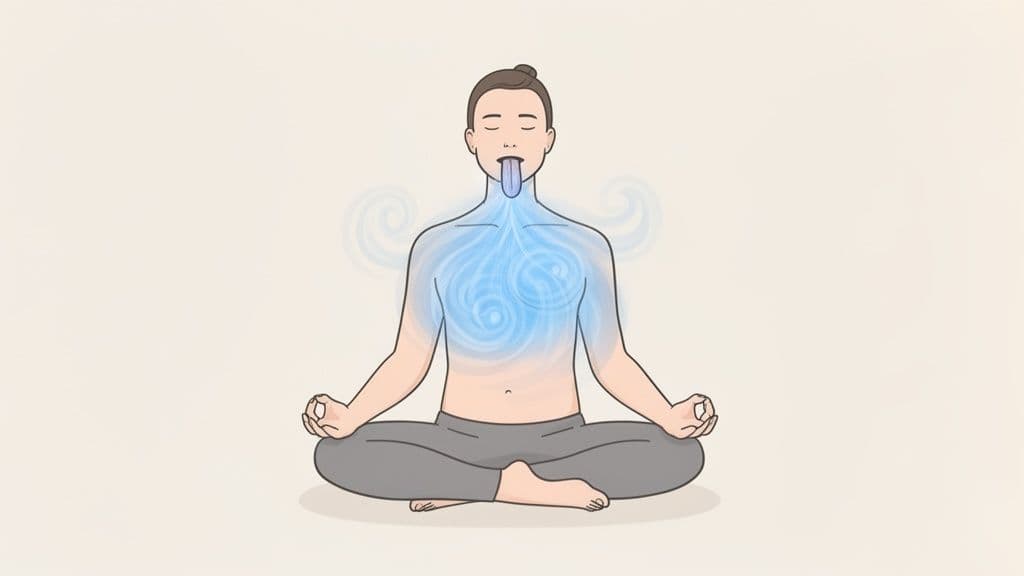
While not a traditional yoga "pose" or asana, Shitali Pranayama is a foundational breathing technique that is arguably one of the most effective cooling yoga poses for the body and mind. This ancient practice works by drawing air across the moist surface of the tongue, which has a direct cooling effect on the body, much like evaporation cools the skin. It’s an invaluable tool for lowering internal body temperature, soothing an agitated nervous system, and promoting emotional balance.

Person in a yoga pose performing a cooling breath exercise with blue energy in their chest.

The practice’s ability to calm the mind is particularly useful for those on a path of self-discovery. Gaining mental clarity is essential when contemplating your life path, as described in Dan Millman's book, The Life You Were Born to Live. This pranayama can help quiet mental chatter, allowing you to connect more deeply with your intuition. Many practitioners use it before making important decisions to access this inner wisdom, a core concept behind tools like the Life Purpose App.

How to Practice Shitali Pranayama

  1. Sit Comfortably: Find a relaxed, seated position with a straight spine, either on a cushion or in a chair.
  2. Prepare the Tongue: Stick your tongue out and curl the sides to form a tube or straw. If you can't roll your tongue, simply create a small 'O' shape with your lips (this variation is called Sitkari Pranayama).
  3. Inhale: Breathe in slowly and deeply through the tube of your tongue as if sipping air through a straw. You should feel a distinct cooling sensation on your tongue and in your mouth.
  4. Exhale: Withdraw your tongue, close your mouth, and exhale slowly through your nose.

Key Insight: The cooling effect of Shitali isn't just physical. It’s known to reduce mental and emotional "heat" like frustration, anger, and anxiety, creating a state of inner tranquility.

When to Use This Practice

This cooling breath is exceptionally versatile. Yoga studios often incorporate it into classes during hot summer months to prevent overheating. Mental health professionals also suggest it as a simple, effective tool for managing moments of high anxiety or panic. By practicing mindfulness through breathwork, you can directly influence your physiological and psychological state. For more guidance, you can explore how to practice mindfulness in your daily life. For optimal results, practice Shitali for 5-10 minutes in the morning or early evening before a meal.

2. Sitali Pranayama (Cooling Breath Variation)

For those who find it difficult to curl their tongue for Shitali Pranayama, Sitali Pranayama offers a powerful and equally effective alternative. This breathing exercise is one of the most accessible cooling yoga poses because it does not require genetic tongue-rolling ability. The practice involves gently clenching the teeth and inhaling through the gaps, creating a hissing sound and a cooling sensation that calms the body and quiets the mind.

This technique is valued not just for its physical effects but for its ability to create a sense of inner sanctuary. This internal quiet is a vital resource for anyone on a journey of self-discovery, helping to clear away distractions and connect with deeper truths. As explored in Dan Millman's book, The Life You Were Born to Live, understanding your unique life path requires this kind of inner peace, a state that Sitali Pranayama helps to cultivate. It's a practice that supports the wisdom needed to navigate your purpose, a core function of tools like the Life Purpose App.

How to Practice Sitali Pranayama

  1. Find a Comfortable Seat: Sit upright in a relaxed position, on the floor or in a chair, ensuring your spine is long.
  2. Position Your Teeth and Tongue: Gently bring your top and bottom teeth together. Press the tip of your tongue against the back of your teeth.
  3. Inhale: Part your lips and inhale slowly through the gaps in your teeth, creating a soft hissing sound. You will feel the air cool as it passes over your tongue and into your mouth.
  4. Exhale: Close your mouth and exhale slowly and completely through your nose.

Key Insight: Sitali is known in Ayurvedic traditions to pacify pitta dosha, the energy associated with heat, fire, and metabolism. This makes it an excellent practice for reducing feelings of irritation and impatience.

When to Use This Practice

Sitali is exceptionally useful in moments of physical or emotional overheating. Athletes often use it after intense training to help lower their core body temperature, while meditation centers incorporate it into spring and summer practices to maintain balance. You can also use it to manage feelings of frustration before they escalate. For best results, practice on an empty stomach for 5-15 minutes. If you feel dizzy or too cold, stop the practice and return to normal breathing.

3. Child's Pose (Balasana)

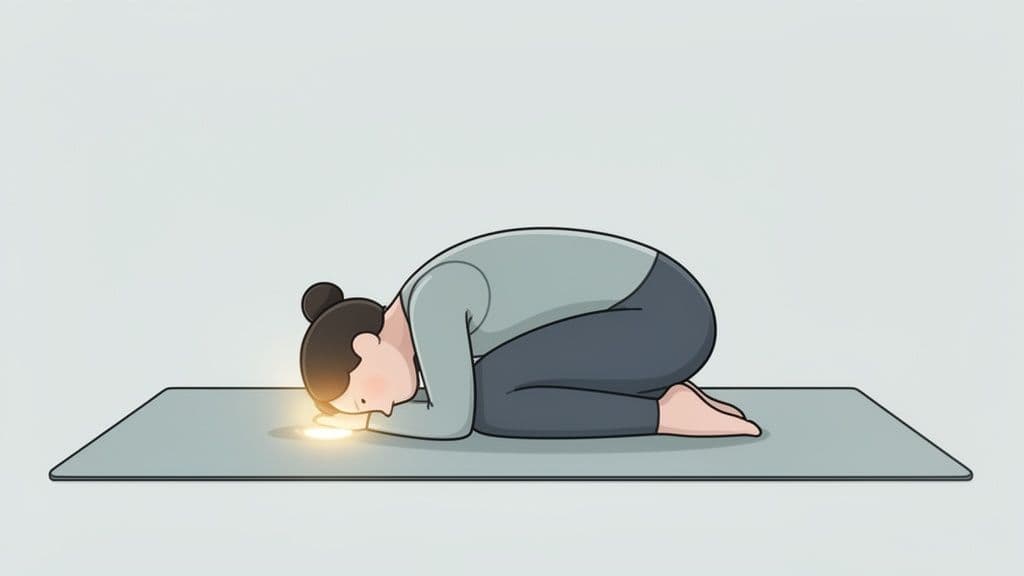
Child's Pose, or Balasana, is a deeply restorative and grounding posture that stands out among cooling yoga poses for its ability to calm the mind and soothe the nervous system. This gentle forward fold involves resting the forehead on the earth, which creates a powerful introspective effect. The posture physically releases tension in the back, neck, and shoulders while mentally providing a safe sanctuary for reflection, turning your awareness inward.

A cartoon person in Child's Pose on a yoga mat, with a gentle glow under their head.

This sense of inner retreat is perfect for anyone on a journey of self-discovery. When confronting big life decisions or contemplating your purpose, as outlined in Dan Millman's book The Life You Were Born to Live, moments of quiet are essential. Balasana facilitates this stillness, helping you connect with the core principles of your being. This pose is often used by those using tools like the Life Purpose App to create a quiet space to reflect on personal growth and life cycles.

How to Practice Child's Pose

  1. Start on Your Knees: Begin on your hands and knees on a yoga mat. Bring your big toes to touch and widen your knees, keeping them mat-width apart or closer together, depending on your comfort.
  2. Fold Forward: Exhale and slowly lower your torso between your thighs. Allow your forehead to rest gently on the floor.
  3. Position Your Arms: You have two options for your arms. You can either stretch them forward with your palms facing down for a gentle shoulder stretch or rest them alongside your body with your palms facing up, which encourages your shoulders to relax completely.
  4. Breathe and Release: Close your eyes and breathe deeply into your back, feeling your ribcage expand with each inhale and soften with each exhale.

Key Insight: Child's Pose fosters a sense of surrender and non-striving. By physically bowing to the earth, you symbolically let go of mental stress and ego, creating space for authentic self-reflection and inner peace.

When to Use This Practice

Balasana is incredibly versatile. Yoga teachers frequently use it as a resting pose between more challenging sequences, allowing the heart rate to slow down. Therapists also recommend it for managing feelings of anxiety or being overwhelmed. It can also deepen a meditation practice, creating a contained, secure environment for contemplation. Integrating this pose into your routine aligns with principles like non-harm and self-study, which are foundational to yogic philosophy. To learn more about these guiding ethics, you can explore the yamas and niyamas and how they support a life of purpose. Practice for 1-5 minutes whenever you need to cool down, find clarity, or reconnect with yourself.

4. Legs-Up-the-Wall Pose (Viparita Karani)

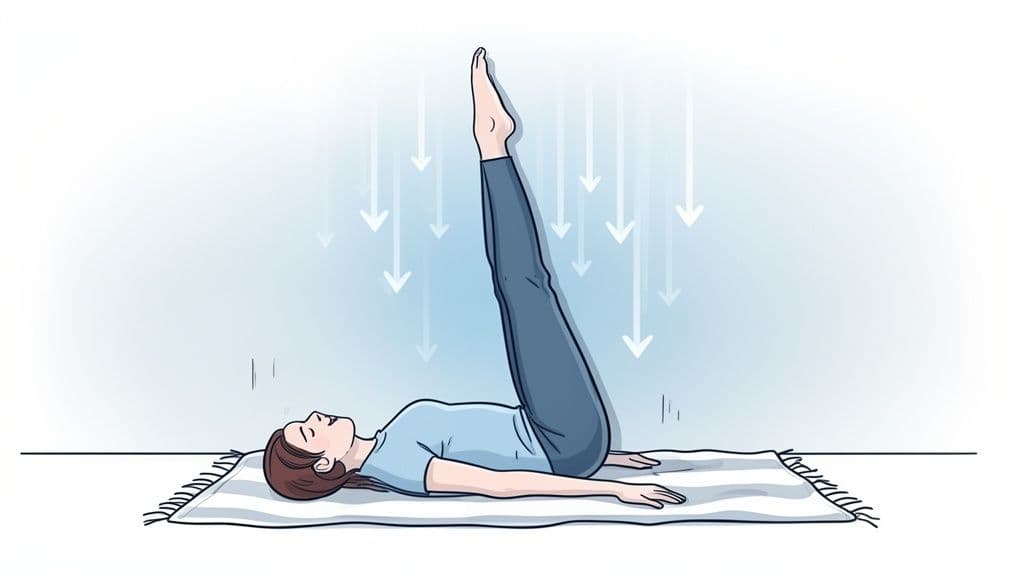
Viparita Karani, or Legs-Up-the-Wall Pose, is a supremely restorative inversion that offers profound cooling benefits. As one of the most passive and accessible cooling yoga poses, it calms the entire system by gently reversing the normal effects of gravity on the body. This pose drains stagnant fluid from the legs, soothes the nervous system, and encourages a state of deep relaxation, making it an ideal practice for cooling both physical and mental heat.

Woman lying on back on a mat with legs raised vertically, performing a cooling yoga pose.

This pose is particularly powerful for those on a journey of self-discovery. After exploring complex life path insights from resources like Dan Millman's The Life You Were Born to Live or the Life Purpose App, the mind can feel overstimulated. Viparita Karani provides a quiet space to release emotional heat surrounding career or relationship challenges, allowing you to integrate newfound awareness with clarity and calm. Athletes use it for recovery, and sleep clinics often recommend it for stress-related insomnia.

How to Practice Legs-Up-the-Wall Pose

  1. Position Yourself: Sit on the floor sideways against a wall. Your hip should be touching the wall.
  2. Swing Your Legs Up: In one smooth motion, swing your legs up the wall as you lie back on the floor. Your sitting bones should be as close to the wall as is comfortable, ideally between 6-12 inches away.
  3. Settle In: Adjust your position. You can place a folded blanket or a bolster under your hips for support and a gentler inversion. Let your arms rest by your sides with palms facing up.
  4. Relax and Breathe: Close your eyes and breathe naturally. Stay in the pose for 5-15 minutes to experience its full benefits.

Key Insight: This pose is not about physical effort but about surrender. It helps the lymphatic system drain and resets the nervous system, making it a perfect antidote to modern-day stress and overstimulation.

When to Use This Practice

Legs-Up-the-Wall is incredibly versatile. Yoga instructors frequently use it as a final relaxation pose to conclude a practice. It is especially beneficial in the evening to wind down and prepare the body for restorative sleep. You can also pair it with other gentle energy practices; for instance, some find it complements the grounding effects described in Chi Gong exercises for beginners. Consider practicing it after an intense day or before journaling to process insights about your life path.

5. Forward Fold (Uttanasana)

Forward Fold, or Uttanasana, is a fundamental standing inversion that acts as a powerful balm for an overstimulated nervous system. By folding the torso toward the thighs, this pose creates a gentle, passive stretch for the entire back body while encouraging blood flow to the head. This makes it one of the most accessible and effective cooling yoga poses for quieting mental chatter and cultivating a sense of surrender.

The theme of surrender in Uttanasana is particularly relevant for those on a spiritual journey. Releasing resistance and accepting your unique life path are essential when using tools like the Life Purpose App. This pose helps you let go of the mental struggle that can arise when confronting your core challenges and gifts, as detailed in Dan Millman's book, The Life You Were Born to Live. Yoga classes often use Uttanasana to transition between active sequences and restorative postures, while mental health practitioners recommend it for managing moments of high stress.

How to Practice Forward Fold

  1. Start Standing: Begin in Tadasana (Mountain Pose) with your feet hip-width apart and your hands on your hips.
  2. Hinge and Fold: Exhale and hinge forward from your hips, not your waist. Keep your spine long as you lower your torso.
  3. Release and Relax: Let your head and neck hang heavy. Allow your hands to rest on the floor, your shins, or hold opposite elbows. Bend your knees generously to protect your lower back and release tension in your hamstrings.
  4. Breathe Deeply: Stay in the pose, breathing slowly and steadily. With each exhale, imagine releasing tension and folding a little deeper, letting gravity do the work.

Key Insight: The true benefit of Uttanasana isn't how far you can fold, but how much you can surrender. Letting go physically encourages a mental and emotional release, cooling feelings of overwhelm and frustration.

When to Use This Practice

Uttanasana is a grounding pose perfect for moments when you feel overwhelmed or mentally scattered. If you're exploring the deep information about your life path, such as analyzing your life cycles through the Life Purpose App, practicing a forward fold beforehand can provide the grounded perspective needed to absorb the insights without feeling anxious. Hold the pose for 30 seconds to two minutes, allowing your nervous system to cool and reset.

6. Supported Shoulder Stand (Salamba Sarvangasana) - Modified Version

Supported Shoulder Stand is a powerful inversion that traditionally requires significant strength and neck flexibility. However, its modified, prop-supported version makes it one of the most accessible and therapeutic cooling yoga poses available. By elevating the legs above the heart with the support of a chair, wall, or blankets, this pose reverses blood flow without putting stress on the neck and shoulders. This gentle inversion calms the nervous system, cools the body, and helps quiet the mind.

The mental clarity that arises from this pose is profound. It supports the kind of emotional release and introspection needed to understand one's true calling, a central theme in Dan Millman's book, The Life You Were Born to Live. Using this pose after an emotionally charged session with a tool like the Life Purpose App can help integrate insights about your life path and relationships, allowing for a calmer, more centered perspective. Yoga therapy programs frequently use these modifications for clients with anxiety, while physical therapists recommend them for releasing tension.

How to Practice Supported Shoulder Stand (Legs-on-Chair Variation)

  1. Set Up Your Props: Place a yoga mat perpendicular to a sturdy chair. You may also place a folded blanket on the floor for your shoulders and head.
  2. Position Your Body: Lie on your back with your knees bent and feet flat on the floor. Scoot your hips as close to the chair as possible.
  3. Elevate Your Legs: Carefully lift your legs and rest your calves on the seat of the chair. Your body should form a rough 90-degree angle at the hips and knees.
  4. Relax and Settle: Let your arms rest by your sides with palms facing up. Close your eyes and breathe deeply, allowing your entire body to feel heavy and supported. Hold for at least 1-3 minutes.

Key Insight: This modification offers the cooling and calming benefits of an inversion without the risks associated with a full shoulder stand. It promotes lymphatic drainage and soothes the nervous system, making it a safe way to cool down physically and emotionally.

When to Use This Practice

This supported pose is ideal after a vigorous yoga practice or a stressful day to help the body and mind cool down. It’s also incredibly beneficial during hot weather to reduce internal heat. Because of its calming effects, it’s an excellent pose to practice before bed to encourage restful sleep or before meditation to settle the mind. Always remember to work with a qualified instructor when first trying inversions, and never turn your head while in the pose.

7. Moon Salutation (Chandra Namaskar)

Where Sun Salutations build heat and energy, Moon Salutation (Chandra Namaskar) is a flowing sequence that offers the opposite: a cooling, calming effect. It is a graceful series of cooling yoga poses designed to honor the reflective, yin energy of the moon. This practice involves slow, mindful movements that ground the body and quiet the mind, making it an ideal practice for evening reflection and unwinding from the day’s activities.

The contemplative nature of this sequence encourages deep spiritual reflection. It creates a space to consider your unique life path and inherent gifts, themes explored in Dan Millman's book, The Life You Were Born to Live. The gentle, lateral movements open the hips and side body, releasing emotional tension and allowing for greater inner clarity. Many people find that practicing Chandra Namaskar, especially during a full moon, helps them connect with the wisdom needed to navigate life-cycle transitions, a process that can be supported by tools like the Life Purpose App.

How to Practice Moon Salutation

The sequence is a mirror image, moving from right to left and then back again. Here is a simplified flow:

  1. Start in Mountain Pose (Tadasana): Stand at the side of your mat, feet together, hands at your heart.
  2. Extended Mountain Pose & Side Bend: Inhale, reach your arms up. Exhale, bend to the right. Inhale to center, exhale, bend to the left.
  3. Goddess Pose (Utkata Konasana): Step your left foot out wide, turning your toes out. Exhale and bend your knees, sinking your hips.
  4. Triangle Pose (Trikonasana): Straighten your legs and turn your right foot out. Exhale and hinge at your right hip, reaching down into Triangle Pose.
  5. Pyramid Pose (Parsvottanasana): Bring your left hand down and square your hips to the front of the mat, folding over your right leg.
  6. Low Lunge (Anjaneyasana): Bend your right knee and step your left foot back into a low lunge.
  7. Half Moon Pose (Ardha Chandrasana) - Center: Turn to face the long edge of your mat in a wide-legged squat.
  8. Repeat on the Other Side: Move through the poses in reverse order on the left side (Low Lunge, Pyramid, Triangle, Goddess) until you return to Mountain Pose.

Key Insight: Unlike the linear Sun Salutation, the Moon Salutation moves laterally across the mat. This side-to-side movement is believed to balance the left and right hemispheres of the brain, promoting mental harmony and creativity.

When to Use This Practice

Chandra Namaskar is most beneficial when practiced in the evening, ideally a couple of hours before sleep, to help the body and mind prepare for rest. It is a staple in yoga studios for full moon ceremonies and is also recommended by women's health practitioners to support hormonal balance. Consider integrating this sequence on your rest days or when you feel the need to move gently rather than intensely. The key is to move slowly, synchronizing each movement with your breath to maximize its cooling and meditative effects.

7-Point Comparison of Cooling Yoga Poses

Practice🔄 Implementation complexity⚡ Resource requirements & efficiency📊 Expected outcomes💡 Ideal use cases⭐ Key advantages
Shitali Pranayama (Cooling Breath)Low — learn rolled‑tongue or pursed‑lip inhalationNo props, short practice (5–10 min), highly portableRapid cooling, reduced agitation, improved digestionHot weather, pre‑decision clarity, anxiety reliefImmediate cooling effect, easy to practice anywhere
Sitali Pranayama (Cooling Breath Variation)Low–Medium — straight‑tongue positioning and hiss soundNo props, 5–15 min, best on empty stomach, seasonal timingLowers body temperature, detoxifying, supports sleepThose who cannot roll tongue, post‑exercise cooling, pitta imbalanceMore accessible alternative to Shitali, strong detox benefits
Child's Pose (Balasana)Very low — simple forward fold, easily modifiedMat or cushion optional, quick setup, suitable for mostDeep relaxation, parasympathetic activation, gentle stretchRest between sequences, emotional processing, contemplative pausesHighly accessible restorative pose, supports introspection
Legs‑Up‑the‑Wall (Viparita Karani)Low — basic inversion using wall supportWall space, blanket or pillow optional, minimal effortCalms nervous system, improves circulation, relieves leg fatigueEvening recovery, post‑session integration, insomnia supportGentle inversion with strong restorative effects
Forward Fold (Uttanasana)Low–Medium — standing/seated variations, needs alignmentMat optional, props for hamstrings, brief to moderate holdCalms mind, posterior chain stretch, supports surrenderGrounding before analysis, transitions in practice, stress reliefEffective mental quieting and accessible with modifications
Supported Shoulder Stand (Modified)Medium — requires props and careful setup, instruction advisedProps (chair/blanket/blocks), supervision recommended, longer holdsPowerful calming, endocrine support, improved circulationTherapeutic sessions, post‑intense emotional work, guided practiceStrong inversion benefits with safety via props

Weaving a Cooler, Calmer You Into Your Life Path

You have now explored a collection of powerful cooling yoga poses designed to lower your body's temperature and soothe your nervous system. From the direct thermoregulation of Shitali and Sitali Pranayama to the deep surrender of Child's Pose and the restorative power of Legs-Up-the-Wall, each practice offers a unique pathway to inner quiet. We've seen how forward folds like Uttanasana calm the mind, while gentle inversions and the flowing sequence of Moon Salutation invite a sense of introspection and peace.

The true value of these practices extends far beyond physical comfort on a hot day. Mastering these poses is about creating an internal environment of stillness and clarity. It’s about building a toolkit you can turn to whenever life feels overwhelming, whether from external pressures or internal turbulence. This state of composed awareness is essential for any meaningful self-exploration.

Connecting Your Practice to Your Purpose

Think of these cooling yoga poses as a support system for your personal journey. When you are delving into the deep spiritual laws and energies that shape your existence, a calm and receptive mind is your most crucial asset. This is particularly true when engaging with frameworks like Dan Millman's work in "The Life You Were Born to Live".

As you work to understand your life number and the specific challenges and strengths associated with your path, your yoga practice becomes a sacred space. It’s a place to quiet the mental chatter and absorb the profound insights offered by systems like the one in Dan Millman's The Life You Were Born to Live and the Life Purpose App, which map out life's purpose.

By integrating a pose like Supported Shoulder Stand or a sequence like Chandra Namaskar into your routine, you are not just cooling your body; you are preparing your mind to receive wisdom. You create the ideal conditions to process complex spiritual information without the distortion of stress or anxiety. This allows you to connect more deeply with your authentic self and the unique destiny you came here to fulfill.

Your Actionable Path Forward

Making these concepts a part of your life doesn't require a dramatic overhaul. The journey toward a cooler, calmer state is built on small, consistent actions. Here are your next steps:

  • Choose One Pose: Don't try to master everything at once. Select the one pose from this list that felt most inviting to you. Was it the gentle release of Child's Pose or the unique sensation of Sitali Pranayama?
  • Commit to Five Minutes: Dedicate just five minutes each day, perhaps in the morning or before bed, to practice your chosen pose. Focus on your breath and the physical sensations.
  • Observe the Shift: Keep a simple journal. Note how you feel before and after your short practice. Over a week, you may notice subtle but meaningful changes in your mood, stress levels, and ability to focus.

This practice of turning inward is an act of profound self-respect. It affirms that you are worthy of peace and clarity. As you build this foundation of inner calm, you'll find it easier to navigate life's challenges and align your daily actions with your deeper purpose, as revealed through tools like the Life Purpose App. You are not just cooling down; you are tuning in.


Ready to connect your inner calm with your life's unique blueprint? The Life Purpose App decodes the spiritual insights from Dan Millman’s book, “The Life You Were Born to Live,” helping you understand your life number and path. Use the clarity you cultivate through these cooling yoga poses to explore your purpose with this powerful tool. Find your path at Life Purpose App.

← Back to blog

Discover Your Life Purpose Today!

Unlock your true potential and find your life’s purpose.