Explore the Yamas and Niyamas, yoga's foundational ethical principles. This guide offers practical ways to apply these timeless teachings to your modern life.
March 10, 2026 (5mo ago) — last updated July 23, 2026 (1mo ago)
The Yamas and Niyamas A Modern Guide to Yogic Ethics
Explore the Yamas and Niyamas, yoga's foundational ethical principles. This guide offers practical ways to apply these timeless teachings to your modern life.
← Back to blog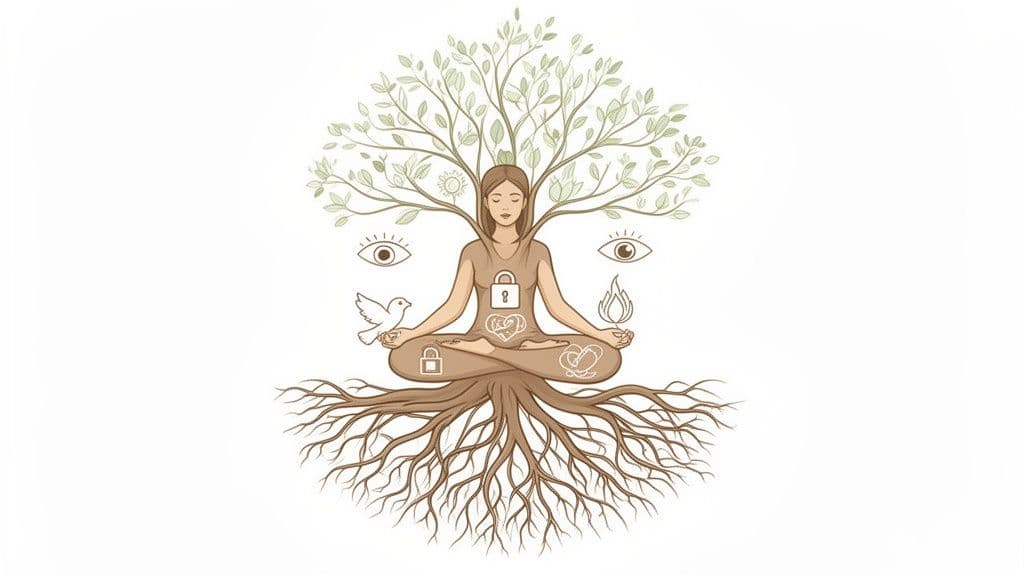
When most of us hear the word "yoga," we immediately think of the physical postures—the downward-facing dogs and warrior poses we practice on a mat. But what if I told you that the heart of yoga isn't about movement at all? Long before you ever step onto a mat, the practice begins with a deep look at how we live our lives.
The yamas and niyamas are the first two limbs of yoga’s classical eight-limbed path. They are, in essence, a moral compass for living with purpose and integrity.
A Guide for Living with Integrity
In the Yoga Sutras of Patanjali, the ancient text that codified yoga, the very first steps on the path are ethical ones. The yamas and niyamas form the root system of the entire practice, giving it the stability and moral grounding needed for any real personal growth to happen.
It helps to think of them not as rigid commandments you must follow perfectly, but as gentle, guiding principles. They're not about judging yourself for missteps. Instead, they're about bringing more awareness to your choices and actions, day in and day out. From the way we interact with others to our own inner dialogue, these principles offer a timeless framework for a more conscious life.
The Yamas and Niyamas Explained
These 10 principles are broken down into two distinct, yet complementary, categories.
-
The 5 Yamas (Social Ethics): These are the "restraints" that guide how we interact with the world around us. They are universal codes for how to treat others and our environment with respect and compassion, creating harmony in our communities.
-
The 5 Niyamas (Personal Practices): These are the "observances" that turn our focus inward. They guide our personal discipline and attitudes, helping us cultivate a more positive and nurturing relationship with ourselves.
This diagram beautifully illustrates how the yamas and niyamas are the foundation supporting the entire journey of yoga.
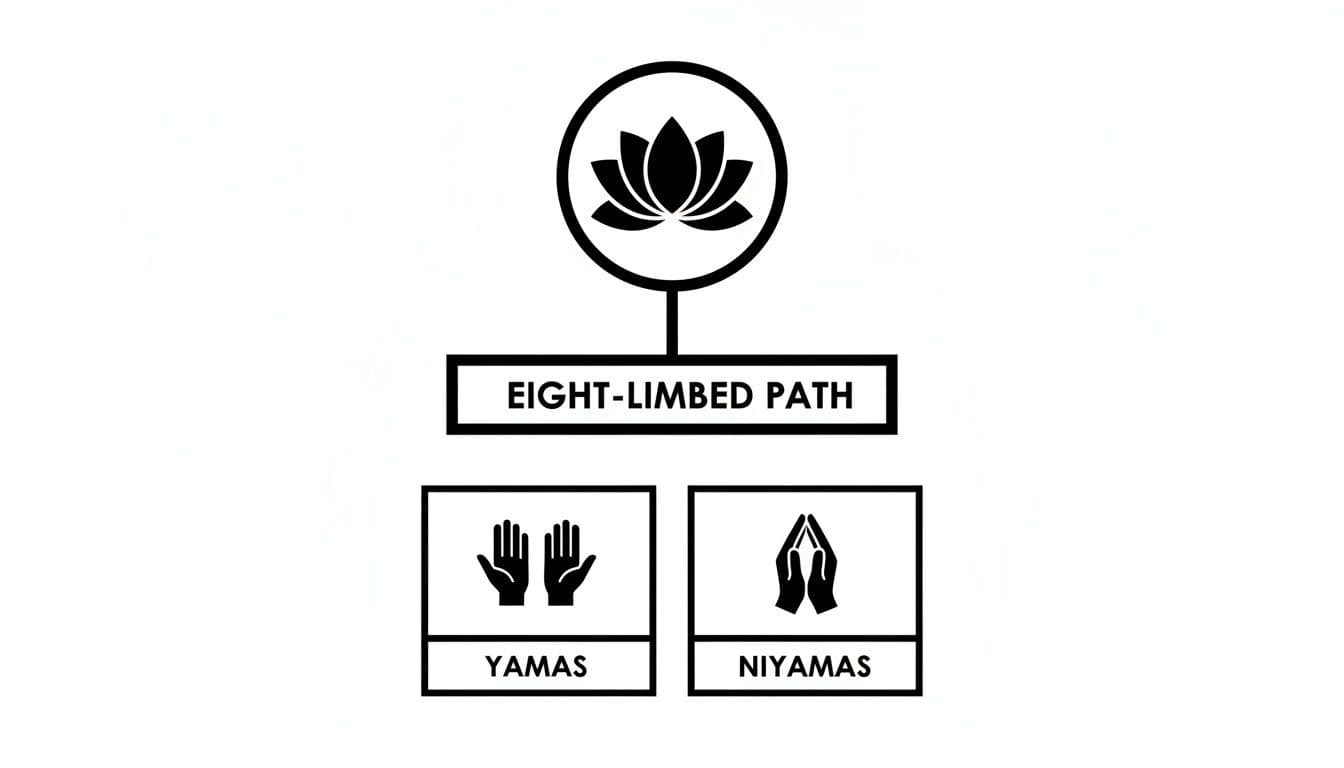
As you can see, every other limb of the practice—from the physical postures (asana) to meditation (dhyana)—is built upon this ethical foundation. Together, they create a beautifully balanced approach to life, integrating what we do in the world with who we are on the inside.
To give you a clearer picture, here is a quick overview of these 10 guiding principles.
The 10 Guiding Principles at a Glance
| Limb | Sanskrit Term | English Translation | Core Concept |
|---|---|---|---|
| Yama | Ahimsa | Non-violence | Practicing kindness and compassion toward all living things, including yourself. |
| Yama | Satya | Truthfulness | Speaking and acting with honesty and integrity. |
| Yama | Asteya | Non-stealing | Not taking what isn't freely given, from physical objects to someone's time or energy. |
| Yama | Brahmacharya | Moderation | Conserving your energy and using it wisely; right use of energy. |
| Yama | Aparigraha | Non-possessiveness | Letting go of attachment to things and outcomes; practicing non-hoarding. |
| Niyama | Saucha | Purity / Cleanliness | Maintaining cleanliness of the body, mind, and environment. |
| Niyama | Santosha | Contentment | Finding peace and acceptance with what you have and who you are right now. |
| Niyama | Tapas | Self-discipline | The inner fire that fuels personal growth and overcomes obstacles. |
| Niyama | Svadhyaya | Self-study | The practice of self-reflection, introspection, and studying sacred texts. |
| Niyama | Ishvara Pranidhana | Surrender | Trusting and surrendering to a higher power or the natural flow of life. |
This focus on integrating our actions with our inner state is a cornerstone of yogic philosophy. If you're curious to learn more about how your actions contribute to your spiritual path, you might find karma yoga insightful.
By truly understanding and practicing these principles, you begin a journey that goes far beyond physical flexibility. You start walking a path toward a more honest, compassionate, and deeply centered way of being.
Your Ethical Compass: Exploring the Five Yamas
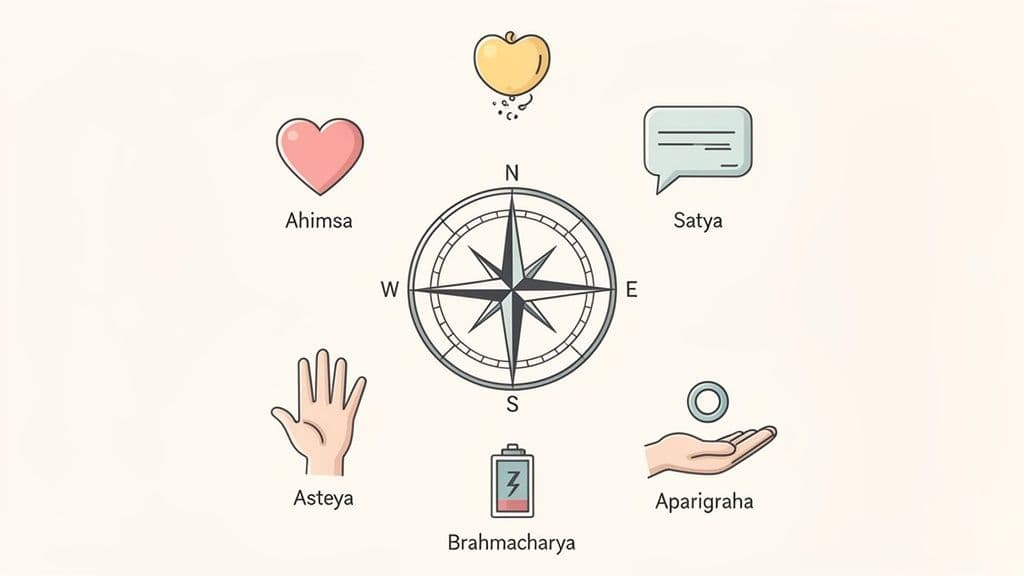
The world of yogic philosophy is immense, but the yamas and niyamas offer a wonderfully practical place to begin. The yamas, the first of these two sets, are all about how we conduct ourselves in the world. Think of them as an ethical compass guiding your interactions with others, your responsibilities, and even yourself.
These five yamas aren't a rigid set of rules demanding perfection. Instead, they're an invitation to look at your own habits with a sense of gentle curiosity. Let's walk through each one to see how they can become a powerful framework for living more consciously.
Ahimsa: The Practice of Non-Harming
The first and probably most famous yama is Ahimsa, which we translate as non-harming or non-violence. It’s easy to think this just means not getting into physical fights, but Ahimsa’s true scope is so much more profound. It applies to our actions, yes, but also to our words and even our private thoughts.
Practicing Ahimsa is about actively choosing kindness—not just for others, but for yourself, too. It’s about noticing that harsh inner critic and choosing a softer internal voice. It’s about pausing before you say something that might land like a punch, even if you don't intend it to.
This principle naturally extends to all living things and the planet we share. It can subtly shift everything from the food on your plate to the products you purchase. At its heart, Ahimsa is rooted in a deep sense of compassion, a topic you can dive into in our article on putting compassion into action.
Ahimsa asks us to consider the impact of our entire presence. It’s not just about what we don't do (harm), but about what we actively choose to do—cultivate compassion in every thought, word, and deed.
Satya: The Courage of Truthfulness
Next up is Satya, or truthfulness. This yama is our guide to living and speaking with genuine integrity. On the surface, it’s simple: don't lie. But just like Ahimsa, the real practice goes much deeper.
Living Satya means creating alignment between what you do, what you say, and what you truly feel. It’s about showing up as your authentic self. But there’s a crucial catch—Satya must always be filtered through the lens of Ahimsa. The point is never to use “brutal honesty” as a weapon.
Instead, the challenge is to find skillful and compassionate ways to communicate your truth. Sometimes that means taking a breath to find the right words. Other times, it might mean choosing silence if speaking would cause needless pain. Ultimately, Satya asks us to be honest with ourselves first and foremost, acknowledging our real motivations without judgment.
Asteya: The Generosity of Non-Stealing
Asteya means non-stealing, and it applies to so much more than just physical objects. This principle is an invitation to be mindful of taking anything that hasn’t been offered freely. This certainly includes material things, but what about the intangibles?
Think about the subtle ways we "steal" in our daily lives:
- Time: Arriving late to a meeting is, in a way, stealing the time of those who were punctual.
- Energy: Dominating a conversation or emotionally dumping on someone can steal their energetic resources.
- Ideas: Taking credit for a colleague's insight is a clear breach of Asteya.
- Attention: Glancing at your phone while a friend is confiding in you steals that moment of genuine connection.
Practicing Asteya cultivates deep respect for others' resources, boundaries, and contributions. It shifts you from a mindset of scarcity to one of generosity, trusting that you have enough and don't need to take from others to get what you need.
Brahmacharya: The Wisdom of Right Use of Energy
Brahmacharya often gets a bad rap because of its traditional translation as celibacy. This can make it feel totally irrelevant to modern life. A far more useful and empowering interpretation is "the right use of energy." This yama asks us to be conscious of where we direct our precious life force.
Our energy is finite. Brahmacharya encourages us to channel it toward what nourishes our growth and well-being, rather than letting it leak out through mindless habits and distractions. This applies to every part of your life.
Take a moment and think about your own energy budget:
- Physically: Are you constantly pushing your body to the point of burnout, or are you balancing activity with deep rest?
- Mentally: Do you lose hours to mindless scrolling, or do you dedicate focus to learning and creating?
- Emotionally: Do you get tangled in gossip and drama, or do you invest your emotional energy in supportive, meaningful relationships?
Brahmacharya isn't about strict denial; it’s about conscious moderation. It’s about making choices that fuel your higher purpose instead of draining your battery. When you practice it, you'll find you have more vitality, focus, and presence for what truly matters.
Aparigraha: The Freedom of Non-Possessiveness
The final yama, Aparigraha, translates to non-possessiveness, non-hoarding, or simply, letting go. This principle teaches us to release our tight grip on material things, specific outcomes, and even our own identities. It’s the practice of holding everything in our lives with an open hand.
Aparigraha reminds us that true security never comes from what we own or achieve. Hoarding—whether it's a closet full of clothes we never wear or old resentments we refuse to release—just creates clutter in our homes and our heads. It weighs us down.
To practice Aparigraha is to cultivate a feeling of "enough." It’s about enjoying things without needing to possess them and appreciating people without trying to control them. This creates a profound sense of freedom and lightness. When you aren't attached to one specific result, you can navigate life's twists and turns with far more grace, open to whatever comes your way.
Practices for Inner Growth: Embracing the Five Niyamas
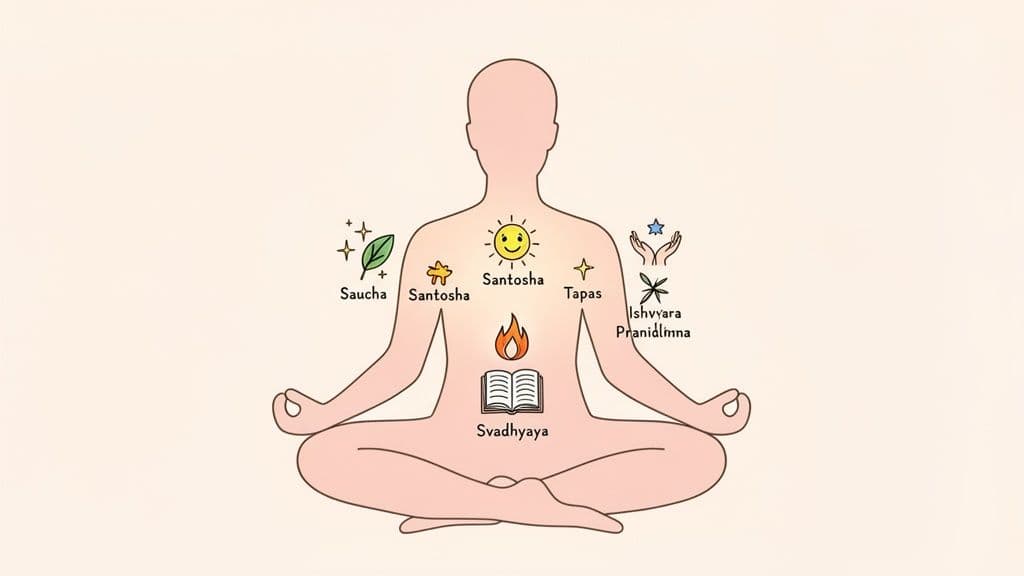
If the yamas are our guide for interacting with the world, the niyamas are the practices that turn our attention inward. These five personal disciplines are all about cultivating our inner landscape and tending to the most important relationship we have: the one with ourselves. The yamas and niyamas are two sides of the same coin, working together to bring our inner world and outer actions into a beautiful, seamless harmony.
The niyamas aren’t about restriction; they’re about active cultivation. Think of them as seeds of personal growth that we consciously plant and nurture every day. This is where we build the inner reservoir of strength, clarity, and peace that sees us through life’s inevitable ups and downs.
Saucha: Purity of Body and Mind
The first niyama, Saucha, is often translated as purity or cleanliness. On a surface level, this is pretty straightforward: it’s about keeping our bodies clean, our homes tidy, and our diets filled with fresh, nourishing foods.
But Saucha goes much deeper than that. It’s also about purifying the mind. This means actively clearing out the mental junk—the negative self-talk, the distracting thought loops, and the beliefs that hold us back. Just like decluttering a room creates physical space, practicing mental Saucha creates clarity and peace inside. This inner work, alongside self-study, builds a foundation of self-worth. In fact, engaging in specific self respect activities is a powerful way to build confidence and foster healthier connections in your life.
Santosha: The Active Practice of Contentment
Santosha, or contentment, is probably one of the most misunderstood concepts in yoga. It isn't about passively accepting your lot in life. It’s an active, conscious choice to find peace and gratitude right here, right now, with exactly what you have. It doesn’t mean you stop striving for your goals; it just means your happiness isn't postponed until you reach them.
Santosha is that quiet moment when you can genuinely say, "This is enough." It’s the gratitude you feel for a warm cup of coffee, a genuine smile from a stranger, or a moment of stillness. This practice is a powerful antidote to the modern-day anxiety of constantly wanting more. Some studies even suggest that practicing gratitude can have a real, positive impact on your sense of well-being.
Santosha is not about complacency. It is about appreciating the journey while you're on it, rather than waiting for a distant destination to feel fulfilled.
When you cultivate contentment, you start operating from a place of abundance instead of scarcity. Your entire perspective shifts, and you begin to notice the richness that’s already woven into the fabric of your daily life.
Tapas: The Inner Fire of Self-Discipline
Tapas is the inner fire of self-discipline that fuels all meaningful growth. It’s the focused, burning energy we use to get through obstacles and burn away old habits that are holding us back. Tapas is the force that gets you on your yoga mat when you’d rather stay in bed or helps you stick with a new healthy routine when the initial motivation fades.
This niyama isn't about self-flagellation or harshness. True Tapas is applied with compassion and wisdom. It’s about the consistency of showing up and putting in the steady, focused effort that real change requires.
Think of it in these simple terms:
- Committing to a daily five-minute meditation.
- Choosing to cook a wholesome meal instead of ordering takeout after a long day.
- Finally tackling that project you've been putting off.
Every time you practice Tapas, you strengthen your resolve and build your inner resilience. You’re proving to yourself, one small action at a time, that you are capable of creating positive momentum in your life.
Svadhyaya: The Deep Work of Self-Study
Svadhyaya, or self-study, is the practice of turning your awareness inward to truly understand who you are. It’s the courageous and honest process of observing your thoughts, emotions, and behaviors without judging them. Svadhyaya is the niyama that gently asks, "Who am I, beneath all the noise?"
There are two main avenues for practicing Svadhyaya:
- Self-Observation: This is where mindfulness and introspection come in. It's about watching your reactions and getting curious about the "why" behind your actions. For a deeper dive, you can explore our guide on meditation for self-discovery.
- Study of Wisdom Texts: Traditionally, this meant studying ancient scriptures like the Vedas or the Yoga Sutras. Today, it can also mean reading books from wise teachers that illuminate the human experience and inspire growth.
One incredibly powerful tool for modern Svadhyaya is the system detailed in Dan Millman's book, "The Life You Were Born to Live." This work offers a unique and structured method for understanding your life's purpose based on your birth date, revealing your core strengths, key challenges, and the spiritual laws at play in your journey.
The Life Purpose App, based entirely on Millman's work, makes this wisdom instantly accessible. By simply entering your birth details, you can uncover your unique life path and gain profound insights into your personal makeup. It’s a form of self-study that provides a practical roadmap for navigating your life with greater purpose and self-awareness.
Ishvara Pranidhana: The Grace of Surrender
The final niyama is Ishvara Pranidhana, which can be understood as surrendering to a higher power or simply to the natural flow of life itself. It's the practice of letting go of the need to control everything and trusting that you are part of something much larger than your individual self.
Surrender doesn't mean giving up or becoming a doormat. It’s about putting in your best effort and then releasing your attachment to a specific outcome. It's the profound peace that comes from recognizing you can’t control everything.
Practicing Ishvara Pranidhana looks like:
- Offering up your work and letting go of the results.
- Learning to trust your intuition and the timing of your life.
- Meeting challenges with grace and curiosity instead of resistance.
This niyama invites a deep sense of faith and trust into your life. It allows you to loosen your grip, reduce anxiety, and find peace even when things feel uncertain. It is the ultimate act of letting go, allowing you to move through life with more ease, flow, and grace.
How the Yamas and Niyamas Can Illuminate Your Life Path
When you're trying to figure out your place in the world, it can feel like you're navigating without a map. This is where the ancient wisdom of yoga, specifically the yamas and niyamas, steps in. Think of them not as a rigid set of rules, but as a compass pointing you back to yourself, helping you build a life that truly feels like your own.
These ten principles are designed to do one thing exceptionally well: strip away the noise. They help you peel back the layers of social conditioning, daily distractions, and nagging self-doubt until you can hear the quiet, steady voice of your own inner wisdom. It's a journey from a state of confusion to one of profound clarity.
The Power of Svadhyaya: The Practice of Self-Study
At the very heart of this journey is Svadhyaya, the niyama of self-study. It's the commitment to courageously turn your attention inward and get to know the person you are underneath it all. Svadhyaya is about asking the big, sometimes scary, questions: What truly motivates me? What are my deepest-held fears? What are the unique gifts I'm meant to share?
While meditation and journaling are fantastic ways to practice Svadhyaya, some find a more structured approach helpful. One of the most powerful modern tools I've come across for this kind of deep dive is Dan Millman's landmark book, “The Life You Were Born to Live.” His work lays out an incredible system, based on your birth date, for decoding your life's purpose.
It doesn't tell your fortune. Instead, it offers a detailed map of your own inner terrain—highlighting your innate strengths, your recurring challenges, and the specific spiritual laws that have the most influence on your growth.
The greatest journey we can take is the one inward. By understanding the blueprint of our own life, we can navigate its challenges with more wisdom and embrace our gifts with more confidence.
This is exactly where the Life Purpose App, which is based entirely on Millman's work, becomes such a game-changer. It puts this incredible system of self-understanding right in your pocket, giving you immediate access to your life number and what it all means.
Merging Ancient Wisdom with Modern Insight
Once you have a system like Millman's, you have the "what"—the core themes, gifts, and hurdles that define your path. The yamas and niyamas then provide the "how"—the practical, everyday tools to walk that path with integrity and grace.
Here’s how these two streams of wisdom flow together:
-
Navigating Your Challenges: Let's say the Life Purpose App reveals that a primary challenge for you involves a deep-seated fear around money and security. This is your cue to lean into the yama of Aparigraha (non-possessiveness). This practice isn't about giving everything away; it's about learning to find your security within, freeing yourself from the constant anxiety of needing more.
-
Living Your Gifts: Perhaps your life path number points to a natural talent for leadership and communication. The yamas of Satya (truthfulness) and Ahimsa (non-harming) become your guiding stars. They teach you how to speak your truth with conviction while also being compassionate, allowing you to inspire others without causing friction or harm.
By weaving together the personal insights from the Life Purpose App with the ethical framework of the yamas and niyamas, you move beyond theory. Your spiritual practice becomes real and deeply personal, tailored to the unique life you were born to live.
Weaving These Principles into Your Daily Life
Knowing the yamas and niyamas is one thing; living them is another entirely. This is where the practice moves off the mat and into your life. It’s not about making huge, dramatic changes overnight. Instead, it’s about the small, intentional choices you make in the most ordinary moments—while sipping your morning coffee, during your commute, or as you wind down for the night.
The idea is to gently weave these principles into your daily rhythm until they feel less like rules you have to follow and more like a natural part of who you are. Think of them as a compass, always there to guide you back to a more mindful and connected way of living.
Starting Small with the Yamas
The yamas shape how we interact with the world around us. Bringing them to life starts with simply noticing our daily actions and reactions. You don't need to tackle them all at once. Just pick one principle and one tiny, manageable action to focus on for a single day.
Here are a few ways to begin:
- Ahimsa (Non-harming): For just one day, try to catch yourself in moments of harsh self-criticism. When that inner critic pipes up, just pause. Gently replace the thought with one of simple kindness, even if it feels a little strange at first.
- Satya (Truthfulness): Start by noticing the small “white lies” you tell for convenience, like automatically saying "I'm fine" when you're not. The goal isn't to judge yourself, but simply to become aware of those moments.
- Asteya (Non-stealing): Think about how you use other people's time—it's a resource, too. Make it a point to show up a few minutes early for your next meeting. When a friend is sharing something, put your phone away and give them your full, undivided attention.
- Brahmacharya (Right Use of Energy): Pinpoint one activity that drains your energy without giving much back, like that 20-minute social media scroll. Consciously redirect that time and energy into something that actually refills your cup, whether it's five minutes of stretching or listening to a song you truly love.
- Aparigraha (Non-possessiveness): Take a walk through one room in your home and find a single item you haven’t used in a year. Decide to let it go. The simple act of releasing something can create a surprising sense of lightness.
Cultivating Your Inner World with the Niyamas
While the yamas look outward, the niyamas guide our focus inward. These are the practices that build our internal fortitude and peace, giving us the resilience to navigate a complicated world. It’s all about tending to your own inner garden.
The Niyamas aren't about achieving a perfect inner state. They are about consistently showing up for yourself with small acts of care, discipline, and self-reflection.
Think of it as building an inner sanctuary, one small, deliberate action at a time. Each practice helps strengthen your foundation.
For example, to practice Santosha (contentment), you could start a simple gratitude practice. Before you go to sleep, just write down three specific things from your day that you’re thankful for, no matter how small. This simple act retrains your brain to notice the good that's already there.
Similarly, practicing Tapas (discipline) doesn't have to mean some grueling ordeal. It could be as simple as committing to five minutes of quiet time each morning. The real power isn't in the duration; it’s in the consistency of showing up for yourself, day after day.
Your Daily Practice Guide
To make this all a bit more tangible, here’s a simple guide to help you get started. The key is to not get overwhelmed. Just pick one, try it out, and see how it feels.
| Principle | A Simple Daily Action | A Reflective Question to Ask Yourself |
|---|---|---|
| Ahimsa | Compliment a coworker or friend genuinely. | Where can I be kinder to myself today? |
| Satya | Before speaking, ask if your words are true, kind, and necessary. | What is one small truth I've been avoiding? |
| Asteya | Let someone else go first in traffic or in line. | Am I respecting others' time and energy? |
| Brahmacharya | Take a 10-minute break from all screens. | Where did I invest my energy today? |
| Aparigraha | Enjoy something without needing to own it (like a beautiful view). | What am I holding onto that no longer serves me? |
| Saucha | Spend five minutes tidying one small area of your home. | How can I create more mental clarity today? |
| Santosha | Pause to savor your morning tea or coffee without multitasking. | What is one thing I can appreciate right now? |
| Tapas | Choose a healthy meal when you feel tempted by convenience. | What is one small, disciplined choice I can make? |
| Svadhyaya | Write down one feeling you experienced today and explore why. | What did my reactions teach me about myself? |
| Ishvara P. | When a minor inconvenience occurs, practice saying "it is what it is." | Where can I let go of control in this situation? |
These are just starting points. The most powerful practice will be the one that resonates with you and feels authentic in your own life. Be patient, be curious, and enjoy the process of discovery.
Common Questions About The Yamas and Niyamas
As you start to weave these ancient principles into your life, you're bound to have some questions. That's a good thing—it means you're truly grappling with them. Let's walk through some of the most common ones that come up.
Do I Have to Practice Yoga to Follow These Principles?
Not at all. While the yamas and niyamas have their roots in yogic philosophy, they’re really just universal guidelines for living a more conscious and compassionate life. You can think of them as a moral compass for anyone, whether you ever step onto a yoga mat or not.
Their wisdom is timeless and offers a framework for improving your relationship with yourself, with others, and with the world around you.
What Is the Main Difference Between Yamas and Niyamas?
The easiest way to think about it is this: the Yamas guide how we act outwardly, shaping our interactions with other people and the world. They are often framed as "restraints" or things to avoid—don't cause harm, don't take what isn't yours.
The Niyamas, on the other hand, are about our inner world. They are personal observances that cultivate our internal state, like practicing contentment or dedicating time to self-study. Together, they create a beautifully balanced foundation for a more intentional life.
The goal is practice, not perfection. These principles are a lifelong journey of self-discovery, not a checklist to be conquered. Every conscious choice is a step forward.
Is It Realistic to Practice These Perfectly All the Time?
Honestly, no. And that's not the point. The journey with the yamas and niyamas is one of practice, not perfection. Some days, living these principles will feel effortless. On other days, it will be a real struggle, and that’s perfectly okay.
What truly matters is the intention you bring to the table—your willingness to keep showing up for yourself with curiosity and a bit of grace. It's about celebrating the effort you put in, not judging the final score. Every mindful choice you make is a step in the right direction.
How Do These Relate to My Life Path?
This is where it gets really interesting. These principles, especially Svadhyaya (self-study), are powerful tools for self-discovery that can shine a light on your unique purpose in this world. When you combine this internal work with a structured system for self-understanding, the insights can be profound.
For instance, a framework like the one in Dan Millman's book, “The Life You Were Born to Live,” gives you a detailed map of your innate gifts and challenges based on your birth date. The Life Purpose App, which is based on Millman's work, puts this incredible system right at your fingertips. Using the yamas and niyamas then helps you navigate the specific terrain of your life path with much greater wisdom and grace.
Are you ready to discover the map of your inner world? The Life Purpose App offers a unique system for self-understanding, based on Dan Millman's bestselling book. Uncover your core gifts, navigate your life’s challenges with clarity, and start living with a deeper sense of purpose today.
Discover Your Life Purpose Today!
Unlock your true potential and find your life’s purpose.
