Explore the full moon menstrual cycle and its connection to your body. Learn how to track your cycle with the moon and embrace your natural rhythm.
April 6, 2026 (3mo ago) — last updated June 21, 2026 (1mo ago)
Full Moon Menstrual Cycle and Your Body
Explore the full moon menstrual cycle and its connection to your body. Learn how to track your cycle with the moon and embrace your natural rhythm.
← Back to blog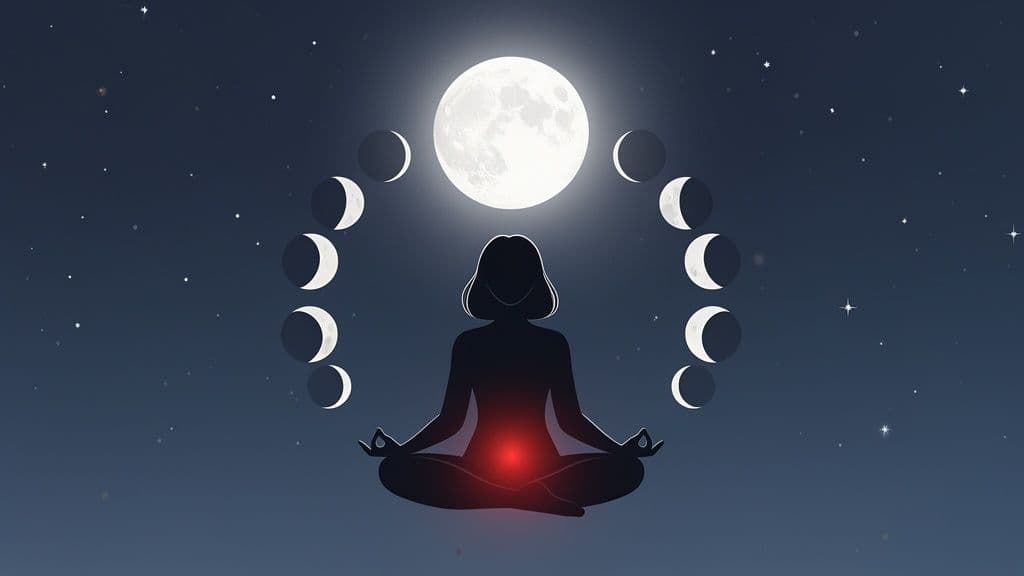
For as long as we’ve looked to the sky, we’ve felt a deep, almost primal connection between our own bodies and the moon. The idea that a woman’s cycle might align with the moon—a full moon menstrual cycle—isn’t some new wellness trend. It's an ancient belief, woven through cultures all over the world.
This shared timing, with the moon taking roughly 29.5 days to complete its journey and the average menstrual cycle being similar, has always felt like more than a simple coincidence. For many, it’s a profound link to a source of feminine power and inner wisdom.
The Ancient Bond Between Moon and Body
For thousands of years, the moon wasn't just a rock in the sky; it was a powerful symbol of the divine feminine. Its constant, predictable cycles of waxing and waning mirrored the very rhythm of life, death, and rebirth we saw all around us. It only made sense to see a similar reflection in the female body, which also ebbs and flows with its own monthly cadence.
This connection isn't just a footnote in history—it’s a cornerstone of countless spiritual and cultural traditions. Many ancient societies didn't just notice the similar timing; they built entire worldviews around it.
- Folklore and Mythology: In myth after myth, the moon is a goddess tied directly to fertility, intuition, and magic. These stories hold immense power, and you can see how they shape our understanding.
- Energetic Rhythms: Ancient wisdom often assigned specific energies to each lunar phase. The bright, luminous full moon was seen as a time of peak creative power, celebration, and release. In contrast, the dark new moon was a time for rest, introspection, and planting the seeds for new beginnings.
A Path to Self-Discovery
Looking at your own body through this lunar lens can be an incredible act of self-awareness. The goal isn't to force your cycle to match the moon's, but to simply observe the natural patterns that are already playing out within you.
This journey is a lot like discovering your own personal blueprint. Think of how Dan Millman's book, Life You Were Born to Live, and the companion Life Purpose App use numerology to reveal your unique life path number. Tuning into your cycle works in a similar way—it helps you uncover a personal rhythm that guides your energy, your moods, and what you truly need.
This way of thinking shifts the focus from folklore to your own personal flow. It encourages you to ask better questions. Instead of wondering if your body is in sync with the moon, you can start asking what your current cycle is trying to tell you. Do you feel expansive and social, like the full moon? Or are you feeling quiet and reflective, like the dark, new moon?
Simply noticing these patterns is the first step toward building a deeper, more intuitive relationship with your body and its innate wisdom.
What Science Says About Lunar and Menstrual Synchrony
While the connection between the moon and menstruation is deeply rooted in ancient wisdom, the scientific community has a much more debated take on it. For decades, researchers have been asking a key question: is the uncanny similarity between the average menstrual cycle and the lunar cycle just a beautiful coincidence, or is there a real biological link? The answer, it turns out, is anything but simple.
Interestingly, some of the most compelling evidence for a connection comes from older research. Studies conducted before the era of widespread artificial lighting hinted at a genuine link, suggesting that our bodies might have been more tuned in to the moon's rhythm when we lived by more natural light-dark cycles.
Light, Hormones, and Lunar Rhythms
So, how would this even work? One leading theory focuses on light and its powerful effect on our hormones—specifically, melatonin. You can think of melatonin as the hormone that governs our internal sleep-wake clock, and it's incredibly sensitive to light. The idea is that the faint light from a full moon might be just enough to subtly influence this internal clock, which could then have a knock-on effect on the hormones that regulate our menstrual cycle.
It’s a fascinating thought: could the gentle glow of the moon have acted as a natural pacer, nudging our bodies into a predictable rhythm? It's easy to see how modern life, with its constant glow from screens and indoor lighting, could drown out such a subtle, natural signal.
This visual comparison really drives home why the theory of synchrony emerged in the first place.
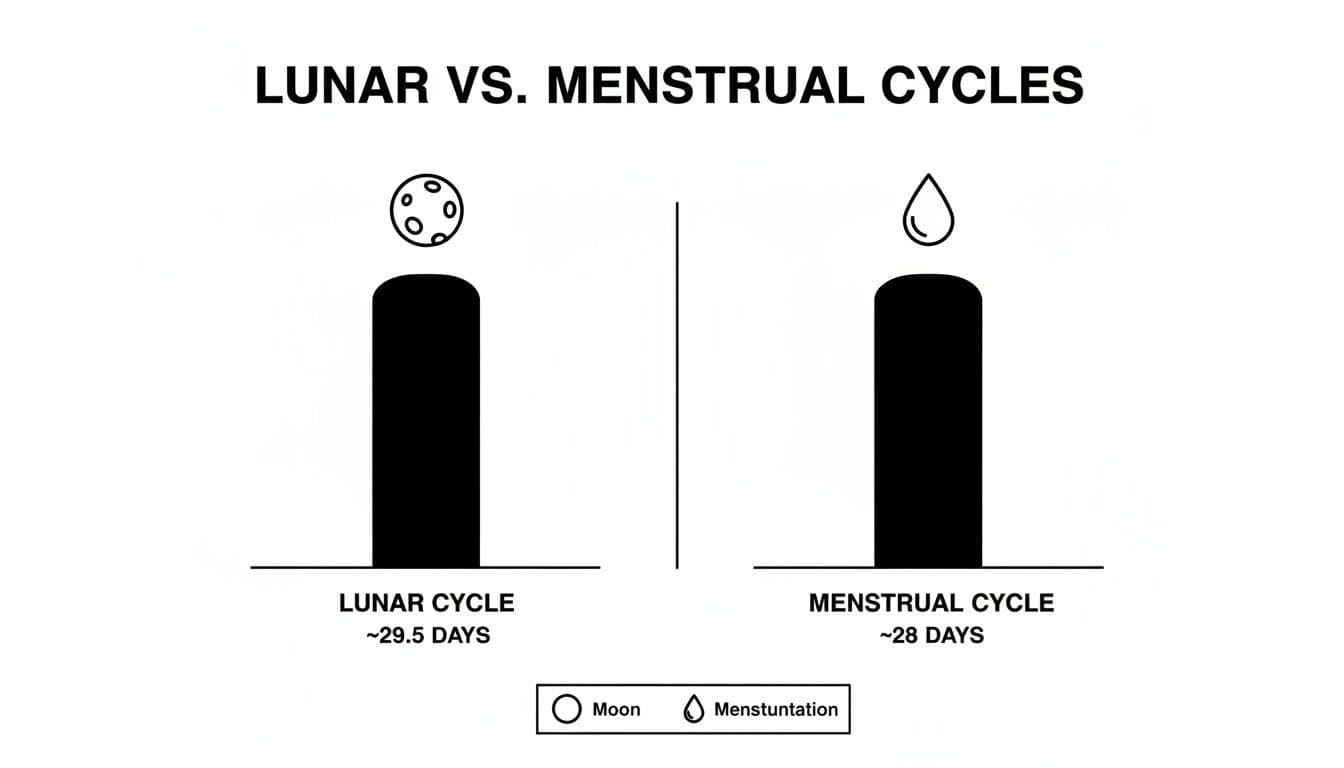
The timing is almost identical—a 29.5-day lunar cycle and an average 28-day menstrual cycle. This simple parallel is what first sparked serious scientific curiosity.
This isn't just a hypothesis, either. A landmark 1986 study involving 826 women found a very real synchronization. In that group, a striking 28.3% of all periods started around the new moon—a number far too high to be a random chance compared to other lunar phases.
The Modern Scientific View
But here's where the picture gets muddled. Many larger, more recent studies have struggled to replicate these findings across the general population. For example, a huge analysis published in 2019 that looked at over 7.5 million cycles found no consistent evidence of lunar synchrony.
So, why the conflicting results? Researchers point to a few modern-day factors that could be scrambling the signal:
- Artificial Light: As we touched on, our constant exposure to bright, artificial light at night might be completely overriding the moon’s subtle influence.
- Varying Cycle Lengths: We know that menstrual cycles vary naturally from person to person—and even from month to month for the same person. Expecting a perfect 1:1 sync with the moon is statistically unlikely for most.
- Lifestyle Factors: Modern life is complicated. Things like stress, diet, travel, and overall health all play a massive role in regulating our cycles, adding even more variables to the mix.
Ultimately, science doesn't offer a clean yes or no. What it presents is a fascinating puzzle. While a direct, universal full moon menstrual cycle link hasn't been proven in our modern world, the data leaves the door open. A subtle, underlying connection could very well exist, even if it's mostly drowned out by the noise of contemporary life.
Understanding White Moon and Red Moon Cycles
Putting science aside for a moment, let's talk about the soul of the cycle. For centuries, a rich, spiritual language has existed to describe the connection between our bodies and the moon, framing your cycle as a mirror for your inner world. This is where we get the beautiful concepts of the White Moon Cycle and the Red Moon Cycle.
These aren't strict medical terms you need to worry about. Think of them more like archetypes or energetic signatures. They offer a way to tune into the emotional and spiritual currents flowing through your life at any given moment. It’s a bit like finding your life path number in Dan Millman's book, the Life You Were Born to Live, which offers insight into your core purpose. These cycles can reveal where your energy is naturally being focused right now. You can even find modern tools like the Life Purpose App that explore similar self-discovery concepts.
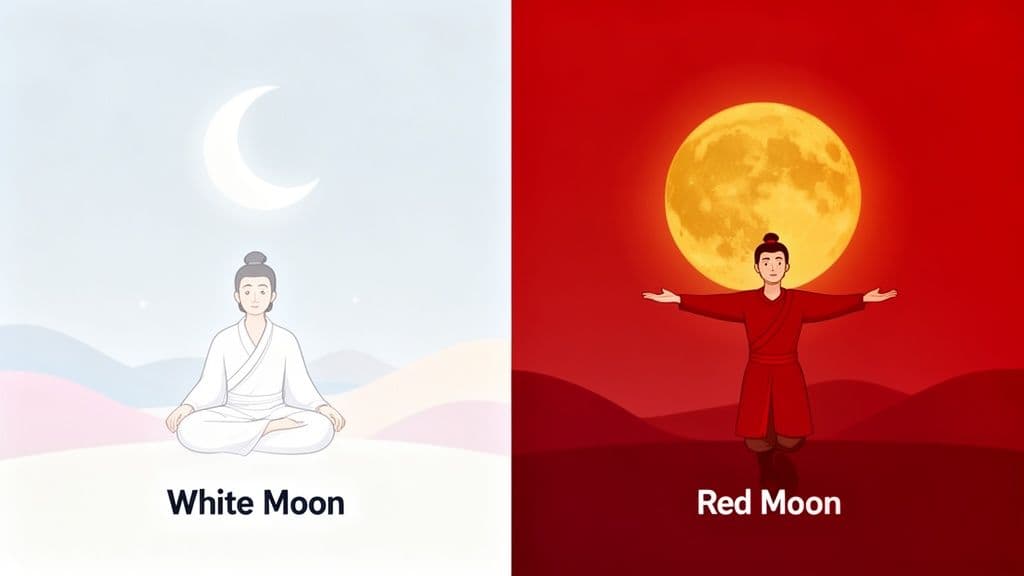
The White Moon Cycle
If your period tends to start around the new moon, leading you to ovulate near the full moon, you’re said to be on a White Moon Cycle. This pattern is deeply connected to the traditional rhythms of nature and fertility.
- Energetic Focus: Your energy naturally turns inward, becoming more reflective and nurturing.
- Archetype: This cycle is often linked to the Mother or the Nurturer archetype.
- Themes: You might feel a pull toward creating—whether that’s literally creating new life or metaphorically birthing new projects that need quiet, deep work. The focus is on self-care and planting the seeds for what’s to come.
The Red Moon Cycle
On the other hand, if your period arrives with the light of the full moon and you ovulate during the dark of the new moon, you’re flowing with a Red Moon Cycle. This pattern flips the traditional energy, directing your potent creative and menstrual power outward into the world.
- Energetic Focus: This is a time for outward expression, community connection, and action.
- Archetype: Here, the archetype is the Healer, the Teacher, or the Creative spirit.
- Themes: A Red Moon Cycle is often tied to leadership, mentorship, and sharing your wisdom. Instead of channeling creative energy inward to nurture life, you’re using it to empower, teach, and create for the benefit of others.
It’s so important to know that one cycle isn't better than the other. They are just different expressions of feminine power. You might even find yourself shifting between them at different stages of your life, reflecting your own personal growth and changing priorities.
To make this clearer, let's compare the symbolic energies of these two powerful cycles.
White Moon vs Red Moon Symbolic Energies
| Attribute | White Moon Cycle (Menstruating on New Moon) | Red Moon Cycle (Menstruating on Full Moon) |
|---|---|---|
| Lunar Sync | Menstruation on New Moon, Ovulation on Full Moon | Menstruation on Full Moon, Ovulation on New Moon |
| Energy Flow | Inward and reflective | Outward and expressive |
| Core Focus | Nurturing, rest, fertility, new beginnings | Teaching, leadership, community, creative action |
| Archetype | The Mother, the Mystic | The Teacher, the Healer, the Wise Woman |
Looking at your cycle through this lens can be a powerful practice for self-awareness. It turns your period into a sacred monthly check-in, asking a simple but profound question: Where is my energy needed most right now?
How Modern Life Affects Our Lunar Connection
If our bodies might have this ancient, built-in rhythm tied to the moon, why do so many of us feel completely out of sync with it? The answer probably has less to do with the sky above and more to do with the world we’ve built around ourselves. Modern life, with its constant stimulation and artificial environments, could be the main reason a full moon menstrual cycle feels more like a myth than a reality for many.
Think of your body's internal clock, or circadian rhythm, as a finely tuned instrument. For thousands of years, it used the simple, reliable cues of sunlight and darkness to keep time. Today, that delicate instrument is surrounded by the constant noise of artificial light from our phones, laptops, and city streets, which can easily drown out the moon's subtle influence.
The Impact of Artificial Light
Before electricity, the full moon was a significant source of nighttime light. One theory is that this gentle glow was just enough to influence hormone production—particularly melatonin, the sleep hormone—which could subtly guide our cycles.
Now, our bodies are flooded with powerful blue light long after the sun has set. This can throw our sleep patterns and hormonal balance into disarray. This very modern disruption might explain why scientific studies on lunar synchrony often come up with conflicting results.
An influential study from 1980 found a strong correlation, with 69% of participants menstruating during the light half of the lunar cycle. But a 2013 study found no such pattern, and the researchers pointed to artificial light as a potential reason for the discrepancy. You can explore the modern research on moon phases to see just how complex this has become.
Stress and Unpredictable Schedules
It’s not just light pollution, either. The relentless pace of contemporary life adds another layer of complexity that can easily throw our cycles off track.
-
High-Stress Environments: When we're chronically stressed, our bodies are flooded with cortisol. This stress hormone can directly interfere with the reproductive hormones that regulate our menstrual cycle, leading to irregular or missed periods and making any potential alignment with the moon impossible to notice.
-
Inconsistent Sleep: Between shift work, late nights, and just plain erratic sleep schedules, our core circadian rhythm gets thrown off. When this fundamental internal clock is out of whack, it creates a ripple effect, impacting the regularity and timing of our menstrual cycles.
Ultimately, our bodies are always searching for balance. But when the loud, demanding signals of modern life—bright lights, constant stress, and poor sleep—are shouting for attention, the quiet, ancient whisper of the moon can easily get lost in the noise. This doesn't mean the connection is gone forever, but it does suggest we may need to intentionally create more stillness to feel it again.
How to Track Your Cycle with The Moon
If you’re feeling a pull to explore the connection between your own body and the moon, you don’t need a science lab to get started. Think of this as an act of personal discovery—a way to gather your own data and notice patterns without any judgment. The point isn't to prove a universal link, but to simply understand your unique flow.
The whole process can begin with simple observation. Grab a basic moon phase calendar or just use a weather app that shows the lunar cycle. At the same time, start jotting down how you feel each day. This isn’t about forcing a perfect sync; it’s about developing a much deeper awareness of your own energies.
Getting Started with Tracking
The most straightforward way to dive in is by journaling or using an app. This practice is all about creating a personal map of your inner world, so it's best to use simple methods you know you'll stick with.
To see how your cycle might align with the lunar phases, checking out some of the best cycle tracking apps is a fantastic place to start. Many of these let you log not just your period, but also your moods, energy, and physical symptoms all month long.
As you track, try to focus on these key areas:
- Physical Symptoms: Make a note of things like cramps, headaches, bloating, or even changes in your skin.
- Energy Levels: Are you feeling social and full of life? Or are you feeling drained and just want to curl up and rest?
- Emotional State: How are you feeling emotionally? Creative, irritable, quiet and introspective, or maybe a bit sensitive?
- Sleep Quality: Notice your sleep. Are you sleeping like a rock, or are your nights more restless than usual?
After a few months of this gentle observation, you can start to compare your notes with the moon’s phases. You might discover that your energy consistently spikes around the full moon, or that you feel a deep need to be alone during the new moon. This reflective practice can be incredibly insightful. You can learn more about making this a powerful habit in our guide.
This journey of self-knowledge is a lot like using the Life Purpose App to understand your life path number from Dan Millman's book, the Life You Were Born to Live. Both are tools that bring personal clarity by revealing underlying patterns. Just as the app can illuminate your core gifts and challenges, tracking your cycle helps reveal your own innate rhythm.
Remember, whatever information you gather is for you and you alone. There's no right or wrong way for your body to be. Whether you find a clear connection to the full moon menstrual cycle or not, the simple act of paying attention is a powerful form of self-care. It's all about learning to listen to your body's wisdom, month after month.
Rituals and Practices for Your Menstrual Cycle
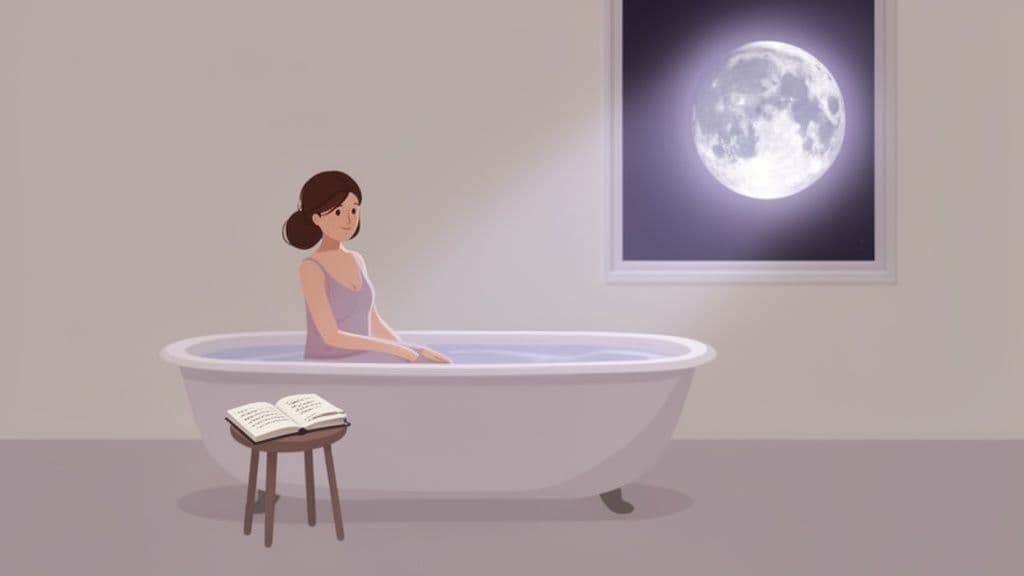
It’s a common question: do you need to be perfectly synced with the moon to benefit from its energy? The simple answer is no. Whether your cycle aligns with the lunar phases or follows its own unique timing, you can still tap into the moon's rhythm as a beautiful tool for self-care and reflection.
Think of it this way: a full moon menstrual cycle isn't a prerequisite. These rituals are about honoring your body’s needs, and the full moon simply offers a powerful backdrop for introspection and release. Its peak brightness can feel like a natural deadline—a time to check in, let go, and celebrate how far you’ve come.
Creating Your Own Full Moon Rituals
A ritual doesn't have to be some grand, complicated ceremony. In fact, the most powerful ones are often the simplest. It’s all about creating practices that feel genuinely nourishing to you, transforming your menstrual phase from an inconvenience into a sacred time of pause.
Here are a few gentle ideas to inspire you:
- Take a Full Moon Bath: There’s nothing quite like a warm bath to soothe a tired body. Add a generous amount of Epsom salts to ease muscle aches, light a candle, and just give yourself permission to soak. It's a simple, profound way to wash away the energetic residue of the month.
- Journal for Release: The full moon is famous for illuminating what's been hiding in the shadows. Use this potent energy to your advantage. Grab a journal and write down anything that feels heavy—anxious thoughts, lingering resentments, or situations that drain you. The physical act of writing it out can feel like a huge weight lifted.
- Meditate Under the Moonlight: If you can, find a quiet spot by a window or outdoors where you can see the moon. You don’t need to do anything special. Just sit for a few minutes, breathe deeply, and feel its soft glow. It’s a powerful way to feel grounded and connected to a rhythm much older and larger than our daily worries.
The real magic of any ritual is your intention. These practices are about carving out a small pocket of time that is just for you. They help you channel the expansive, illuminating energy of the full moon into your own personal wellbeing, creating a moment of peace in a relentlessly busy world.
By consciously creating these moments, you build a personal rhythm that supports and strengthens you. If you’re curious about weaving more of these habits into your life, you might find inspiration in our guide.
Answering Your Questions About the Full Moon Menstrual Cycle
Once you start paying attention to the moon and your body, you’ll naturally have questions. It’s a very personal journey, after all. Let's walk through some of the most common ones that come up as people explore the full moon menstrual cycle.
Is a Full Moon or New Moon Period Better?
There really is no better or worse when it comes to syncing with the moon. Think of it less as a competition and more as a reflection of your current life energy.
Some spiritual traditions call a period that starts near the new moon a White Moon Cycle, often associated with rest, inward focus, and fertility. In contrast, bleeding with the full moon is sometimes called a Red Moon Cycle, which is linked to outward expression, creativity, and sharing your wisdom with others.
Ultimately, the most important thing is having a healthy, regular cycle that feels right for your body, no matter which moon phase it aligns with.
Can I Sync My Cycle with the Full Moon?
While some people have tried to nudge their cycle into alignment using practices like moon bathing (spending time under the moonlight) or limiting artificial light exposure at night, there’s no foolproof way to make it happen.
Your menstrual cycle is a complex dance of hormones, and it’s easily influenced by things like stress, diet, travel, and overall health. A more empowering approach is simply to track your natural rhythm and honor where it currently falls, rather than trying to force it to change.
When Should I See a Doctor About My Cycle?
Tuning into the spiritual side of your cycle is wonderful, but it never replaces professional medical advice. Your physical health should always be the top priority.
It's definitely time to see a doctor if you experience things like severe pain that disrupts your life, unusually heavy bleeding, or a cycle that is consistently and unpredictably irregular. You should also get checked out if your period suddenly stops for a few months and you aren't pregnant. A healthcare provider can make sure everything is okay.
This path of self-discovery is yours and yours alone. At Life Purpose App, we're passionate about creating tools that help you connect more deeply with yourself. You can explore your unique life path and cycles, based on Dan Millman's book, the Life You Were Born to Live. Find your purpose today by visiting lifepurposeapp.com.
Discover Your Life Purpose Today!
Unlock your true potential and find your life’s purpose.
