Learn practical, evidence-informed steps to open your heart chakra (Anahata) and cultivate self-love, empathy, healthy boundaries, and deeper relationships.
March 19, 2026 (6mo ago) — last updated August 2, 2026 (1mo ago)
Open Your Heart Chakra (Anahata): Heal & Connect
Evidence-informed steps to open your heart chakra (Anahata) for self-love, empathy, healthy boundaries, and deeper relationships.
← Back to blog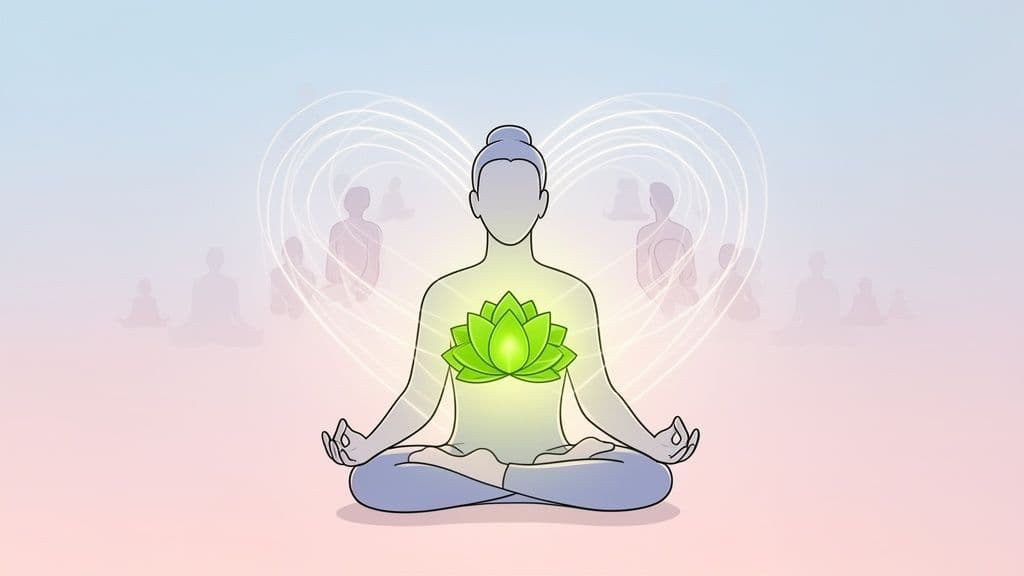
Open Your Heart Chakra (Anahata): Heal & Connect
Practical steps to open your heart chakra (Anahata) for self-love, empathy, healthy boundaries, and deeper relationships.
Learn practical, evidence-informed steps to open your heart chakra (Anahata) and cultivate self-love, empathy, healthy boundaries, and deeper relationships.
So, what does it actually mean to open your heart chakra? It’s a phrase you hear often, but it can be misunderstood. This isn’t about becoming naive or leaving yourself defenseless. It’s about building resilient emotional strength that lets you connect authentically—first with yourself, then with others.
What It Really Means to Open Your Heart
The heart chakra, known in Sanskrit as Anahata, is the energetic bridge between your lower, more physical chakras and your higher, spiritual centers. When this center is balanced and open, it changes how you move through the world.
An open heart doesn’t mean you have no boundaries. It points to emotional maturity and the capacity to feel the full range of experience without shutting down. That balance gives rise to genuine compassion, self-love, and a deep sense of belonging.
Finding Balance from Within
The journey to an open heart is personal and looks different for everyone. It asks you to turn inward, tend to old wounds, and practice forgiveness for yourself and others. This path can stir up emotions you’ve held down for years, but the reward is relationships that are more honest and a steadier inner peace.
Understanding your life purpose can help clarify why certain relationship patterns repeat. Dan Millman’s book, “The Life You Were Born to Live,” and the Life Purpose App can be useful tools for self-awareness and growth.
“When we close our heart out of fear of pain, we not only keep unpleasant feelings away, but also the vibrant and loving emotions. And isn’t that what we all long for—aliveness and love?”
The Shift in Your Emotional World
When your heart center begins to open, changes are often tangible. Empathy deepens: you start to feel with people, not just for them. This capacity for connection ripples into relationships, bringing more meaning and joy. If you’re beginning, try our guide on meditation practices for chakra alignment.
Is Your Heart Chakra Blocked or Open?
Think of your heart center like a door. Sometimes it’s wide open, other times it’s slightly ajar, and sometimes it’s bolted shut. Figuring out where you stand isn’t about judgment—it's honest awareness. Recognizing signs of a blocked or open Anahata is the first step toward balance.
What a Blocked Heart Feels Like
A blocked heart chakra is often a defense built after being hurt. When this center is closed off, you might feel lonely even in a crowded room.
Common signs of a blocked heart chakra include:
- A persistent feeling of jealousy
- A crippling fear of intimacy or being truly seen
- An intensely harsh inner critic that nitpicks everything you and others do
What an Open Heart Feels Like
An open heart chakra radiates an easy flow of love and compassion. You find it easier to forgive—both yourself and others—without getting tangled in old grudges. An open heart lets you form deep, authentic connections while maintaining healthy emotional boundaries.
How do you interact with the world? Do you build walls to keep people out, or do you generally feel safe enough to let love in? A blocked heart often leaves us isolated and defensive, while an open one cultivates unity and acceptance.
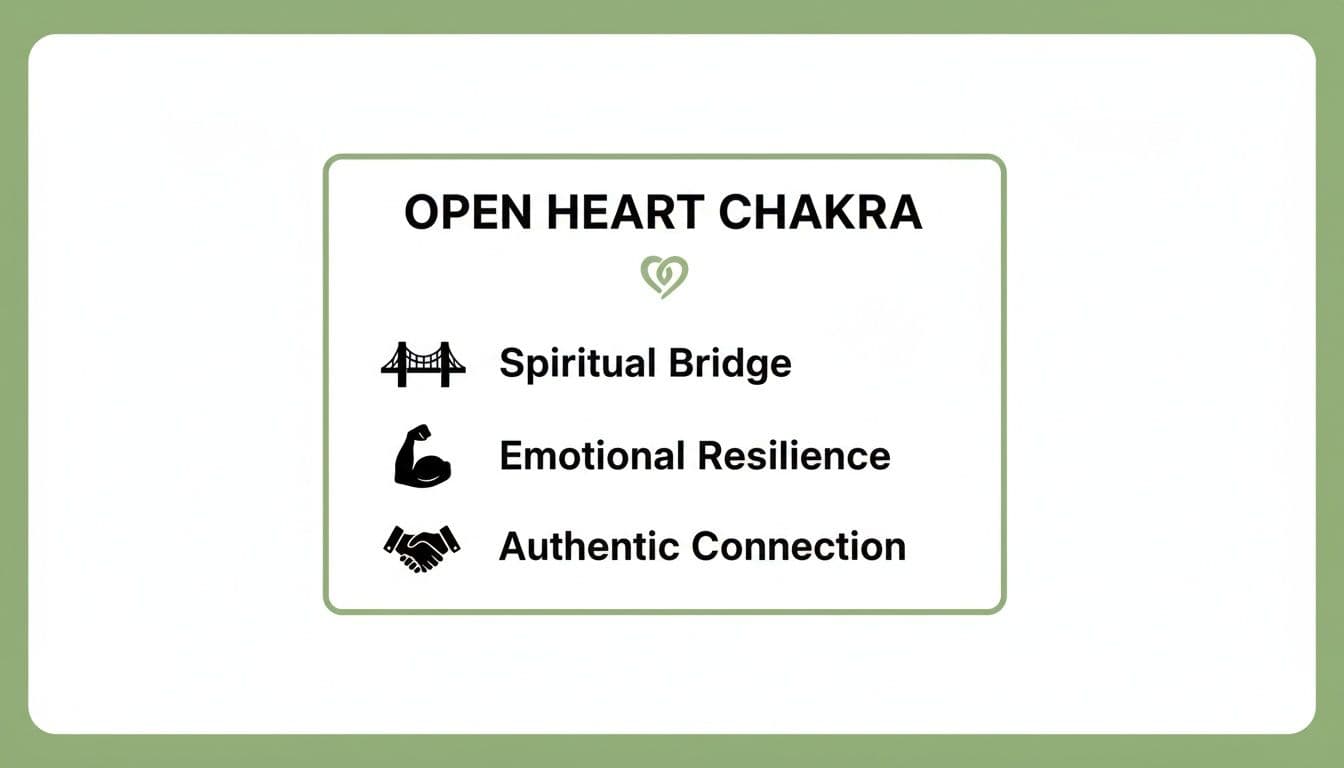
These benefits—a spiritual bridge, emotional resilience, authentic connection—create tangible shifts in everyday experience.
Anahata Chakra: A Quick Comparison
| Characteristic | Signs of a Blocked Heart Chakra | Signs of an Open Heart Chakra |
|---|---|---|
| Emotional state | Jealousy, loneliness, defensiveness, isolation | Joy, compassion, empathy, inner peace |
| Relationships | Fear of intimacy, difficulty trusting, codependency, withdrawal | Deep connections built on trust and respect |
| Self-perception | Excessive self-criticism; victim mentality | Self-love, self-acceptance, self-compassion |
| Boundaries | Overly guarded or completely porous | Healthy, compassionate, flexible boundaries |
| Forgiveness | Holding grudges and resentment | Ability to forgive and release negative attachments |
If you see more of yourself in the “blocked” column, don’t view it as failure. See it as an opportunity to grow, heal, and open your heart.
The Spiritual Rewards and Emotional Realities
Opening your heart is personal and best approached with clear eyes. The spiritual upside is deep: more empathy, real connection, and a sense of purpose that feels truly yours. This isn’t about chasing constant bliss. It’s about allowing yourself to feel the full spectrum of being human.
When your Anahata finds balance, you begin building relationships based on trust and mutual respect, leaving behind fear and codependency. For many, this shift feels like coming home to themselves.
Living in Alignment with Your Purpose
Dan Millman’s system in “The Life You Were Born to Live” maps a life path that highlights your natural strengths and challenges. The Life Purpose App helps explore how your spiritual blueprint shapes relationships and directs your energy where it will make the most impact.
This self-knowledge helps explain why certain relationship dynamics feel natural while others are a struggle. It’s a roadmap that guides you to live in sync with who you are.
“An open heart is not an unguarded one. It is a wise heart, capable of discerning when to give freely and when to protect its energy with loving boundaries.”
The Realities of an Open Heart
An open heart can feel raw and vulnerable. As defenses soften, you may feel everything more intensely, which can be overwhelming. You may become more sensitive to others’ energy and suffering, so learning to set compassionate boundaries is essential.
This work will likely involve confronting old wounds. The path to an open heart runs through your past hurts. See our article on healing and forgiveness for gentle guidance.
Studies show that meditation and heart-centered practices can improve emotional regulation and well-being1. Compassion and loving-kindness practices can increase prosocial behavior and empathy2. Yoga and movement-based practices often reduce stress and help regulate mood3. Wellness organizations report that visualization and heart-focused practices increase feelings of self-love and compassion4.
Practical Ways to Heal and Open Your Heart
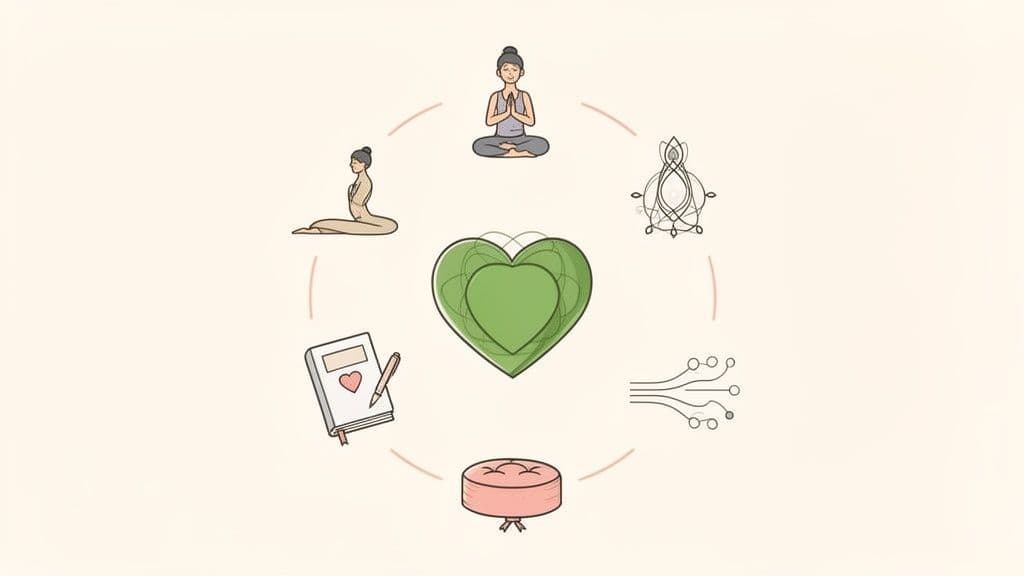
Knowing you want a more open heart is the first step; tangible, simple practices create real change. These are practices you can fit into life, not another task on your list.
Think of it as building a personal toolkit for your heart. Some days a few deep breaths will suffice. Other days you may feel called to a longer practice. The key is listening to what your heart needs.
Heart-Opening Yoga and Breathwork
Certain yoga poses, called heart-openers, physically create space in your chest and around your Anahata chakra, which can lead to emotional and energetic release.
- Cobra Pose (Bhujangasana): Gently lifting your chest creates a soft arch that awakens the heart center.
- Camel Pose (Ustrasana): A deeper backbend that opens the front body. Approach gently and honor your limits.
Pair movements with pranayama, or intentional breathwork. Place a hand over your heart, close your eyes, and visualize warm green light entering that space. Feel your chest expand on the inhale and soften on the exhale. Learn more about chakra colors.
Guided Meditation and Journaling
Meditation helps quiet the mind so you can hear the heart’s wisdom. Loving-kindness meditation (Metta) cultivates compassion by repeating phrases like, “May I be happy. May I be safe. May I be at peace.” Start with yourself, then extend that energy to others.
Journaling gives you space to speak honestly with yourself and untangle the knots you hold in your heart.
Try these prompts:
- Write a kind, compassionate letter to your younger self.
- What would it look and feel like to show yourself unconditional love today?
- What old hurt are you carrying, and what’s one small step toward forgiveness?
Many people who work with heart-centered practices report forgiveness as a major breakthrough in their healing2.
These practices can be tailored to your spiritual blueprint. Use the Life Purpose App to explore the spiritual laws tied to your life number and find practices that resonate with you.
Aligning an Open Heart with Your Life Path
Why open your Anahata now, and what does it look like for you? Tying heart work into your life story gives your efforts direction. Dan Millman’s system uses your birthdate to reveal lessons and tendencies. The Life Purpose App helps you explore this framework.
Discovering Your Soul’s Blueprint
With the app, you can see which paths make living from the heart feel natural and which paths make it a central lesson. Knowing your path helps you stop measuring progress against others—the journey becomes yours.
Customizing Your Heart-Opening Journey
When you align heart work with your life path, advice becomes personal. Pick meditations, journaling prompts, or boundary exercises that target your main growth areas. This turns the vague goal of an “open heart” into focused, intentional living.
Living a Heart-Centered Life Every Day
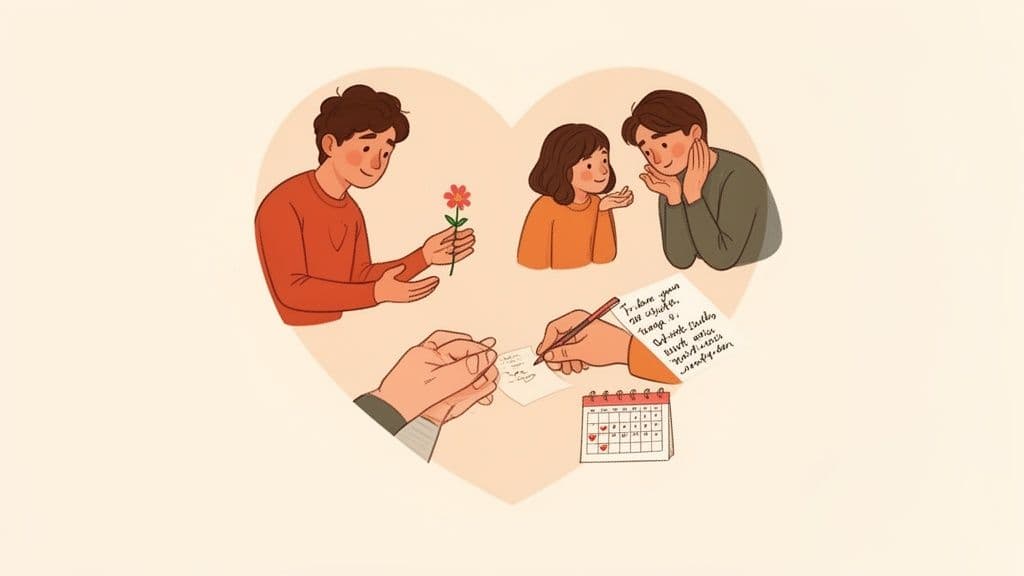
An open heart isn’t a destination. It’s a way of moving through the world, moment by moment. The real work happens away from the yoga mat. It’s about weaving heart-led awareness into daily life until compassion becomes your natural response.
Simple Shifts for Everyday Connection
Small, consistent actions create lasting change. Treat these as invitations to lead with love.
- Practice active listening: listen to understand, not to plan your reply.
- Give genuine compliments: notice and share appreciation.
- Perform small acts of kindness: hold the door, send a quick supportive text.
- Set compassionate boundaries: say “no” with kindness to protect your energy.
These practices shouldn’t feel like chores. They’re experiments in living from the heart. To support this work, some people keep a Rose Quartz Love Crystal Tree in their home or workspace.
“The real journey to an open heart isn’t found in grand gestures. It’s built in the small, quiet moments where you choose compassion over judgment, connection over distance, and love over fear.”
Ultimately, opening your heart creates a life that feels deeply good on the inside and uplifts those around you.
Common Questions on the Path to an Open Heart
As you explore your energy, questions will arise. Here are clear answers to common concerns.
Can Your Heart Chakra Open Spontaneously?
Yes. While steady practices usually open the heart over time, powerful life events can create sudden shifts. Falling deeply in love, the birth of a child, profound spiritual connection, or intense grief can crack armor open and flood you with love and connection.
What Is the Difference Between an Open Heart and No Boundaries?
An open heart is loving and discerning. Boundaries are not walls; they’re a fence around your sacred garden. They let you give and receive love without depletion. No boundaries often signal an imbalanced heart chakra, while healthy boundaries show emotional maturity.
How Does My Life Path Relate to My Heart Chakra?
Your life number, as explained in Dan Millman’s work, highlights your core purpose and challenges. Understanding your path clarifies why some relationship patterns feel easy and others are hard. The Life Purpose App shows how your blueprint connects to heart-centered growth.
Quick Q&A
Q: How do I know if my heart chakra is blocked?
A: Notice persistent jealousy, fear of intimacy, or a harsh inner critic. These are common signs of a blocked Anahata.
Q: What simple daily practices open the heart?
A: Daily breathwork, loving-kindness meditation, short journaling prompts, and small acts of kindness help steadily open the heart.
Q: Can being more empathetic be exhausting?
A: Yes. As your heart opens you may feel others’ emotions more strongly—compassionate boundaries and self-care prevent overwhelm.
Ready to explore your spiritual blueprint? Discover your life path with the Life Purpose App and learn how heart-centered living fits your unique journey.
1.
Goyal M, Singh S, Sibinga EMS, et al. “Meditation Programs for Psychological Stress and Well-being: A Systematic Review and Meta-analysis.” JAMA Internal Medicine. 2014. https://jamanetwork.com/journals/jamainternalmedicine/fullarticle/1809754
2.
Weng HY, Fox AS, Shackman AJ, et al. “Compassion training alters altruism and neural responses to suffering.” Proceedings of the National Academy of Sciences. 2013. https://www.pnas.org/content/110/36/14442
3.
Cramer H, Lauche R, Langhorst J, Dobos G. “Yoga for depression: a systematic review and meta-analysis.” Depression and Anxiety. 2013. https://www.ncbi.nlm.nih.gov/pmc/articles/PMC3982700/
4.
Six Senses Wellness. “How to open your heart chakra.” Six Senses. https://www.sixsenses.com/en/wellness-spa/stories/how-to-open-your-heart-chakra/
Discover Your Life Purpose Today!
Unlock your true potential and find your life’s purpose.
