The phone keeps buzzing. Your chest tightens, and your mind rehearses three conversations at once. If someone has ever told you to “just meditate” and you felt more frustrated, Ram Dass offers a kinder approach. His teaching invites you to meet whatever is present with tenderness and to recognize the awareness that notices the mind.
April 29, 2026 (3mo ago) — last updated June 23, 2026 (2mo ago)
Ram Dass Meditation: Loving Awareness Guide
Learn Ram Dass’s loving awareness practices—breath, mantra, witnessing, and self-inquiry—with a 15-minute guide and practical tips to bring meditation into daily life.
← Back to blog
Ram Dass Meditation: Loving Awareness Guide
Summary
Learn Ram Dass’s loving awareness practices—breath, mantra, witnessing, and self-inquiry—with a 15-minute guided sit, practical tips, and research-backed benefits.
Introduction
The phone keeps buzzing. Your chest tightens, and your mind rehearses three conversations at once. If someone has ever told you to “just meditate” and you felt more frustrated, Ram Dass offers a kinder approach. His teaching invites you to meet whatever is present with tenderness and to recognize the awareness that notices the mind.
An Introduction to Ram Dass
Before he was Ram Dass, he was Richard Alpert, a Harvard psychology professor who had academic success and still felt something essential was missing. That tension makes his voice feel human. He wasn’t born speaking in spiritual poetry; he was a serious Western thinker who went searching.
Everything changed after his meeting with Neem Karoli Baba in 1967, a turning point that redirected his life from academic psychology to spiritual practice. His 1971 book Be Here Now sold two million copies and became a cornerstone of Western adoption of Eastern spirituality1.
Why his voice reached so many people
Ram Dass could translate ancient teachings without flattening them. He understood the skeptical Western mind because he had lived inside it. He also understood longing, confusion, ego, and the ache to find something real beneath performance.
A few qualities make his work stand out:
- He knew psychological language and could explain inner experience to analytic minds.
- He practiced with discipline: retreats, devotion, and years of testing the teachings.
- He stayed tender: even after illness and loss, he taught with humility and warmth.
Ram Dass didn’t present meditation as self-improvement alone. He treated it as a way of remembering who you are beneath fear, ambition, and role.
If you approach Ram Dass meditation as another productivity tool, you may miss its heart. The central question shifts from “How do I control my mind?” to “Who is aware of the mind?” That change alters everything.
The Philosophy of Loving Awareness
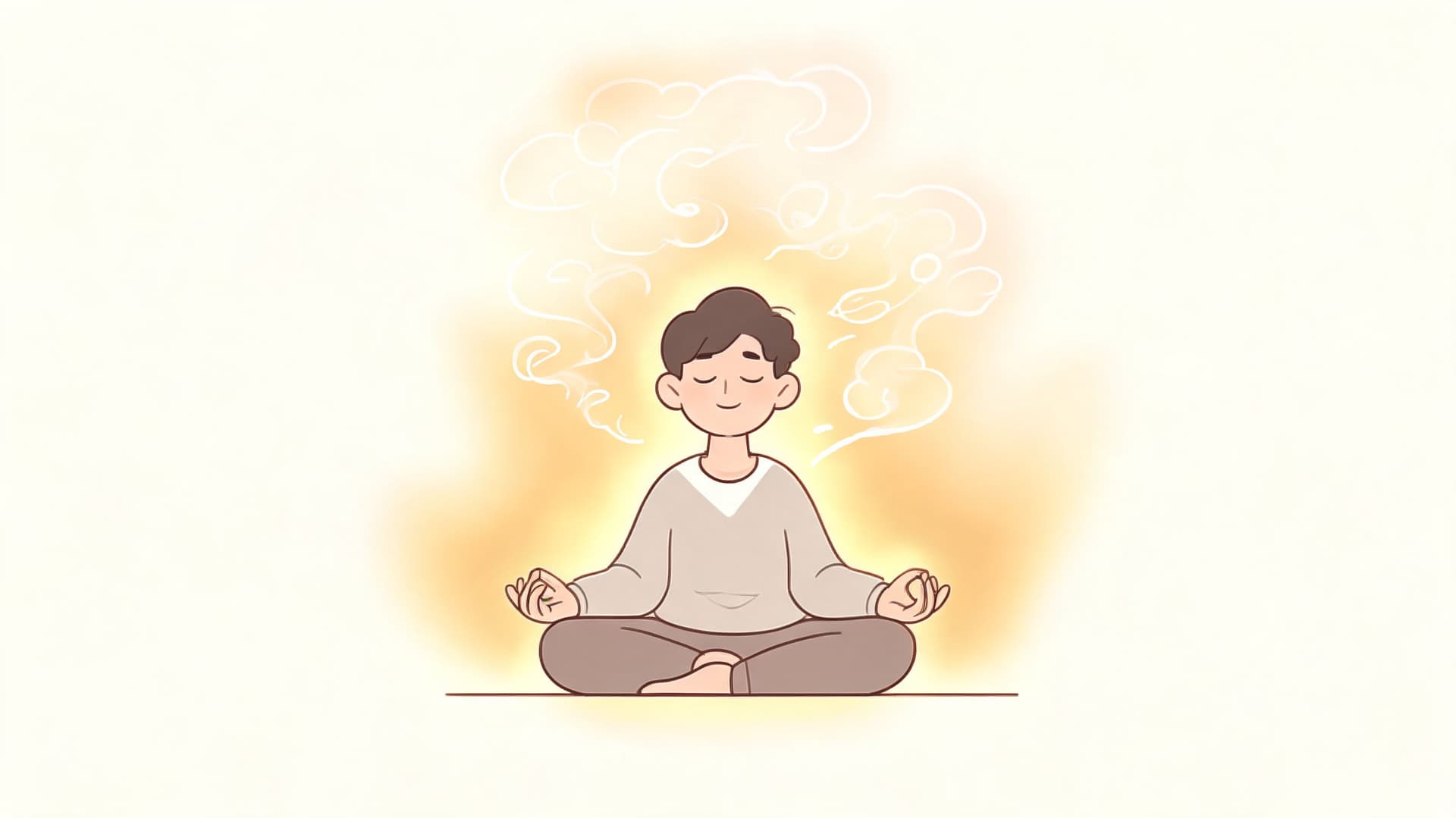
Ram Dass returned to one simple shift: you are not the storm of your thoughts; you are the awareness that notices them. That’s the basis of loving awareness. Not cold observation, not detached indifference, but a gentle, spacious presence with whatever arises.
The sky-and-clouds way of seeing
Think of awareness as the sky and thoughts as clouds. Some clouds pass quickly; some look dramatic. The sky isn’t harmed by clouds. Meditation isn’t about emptying the sky. It’s about not chasing every cloud.
That perspective is practical. If anger appears, you don’t have to become “an angry person.” If anxiety appears, you don’t have to build an identity around it. You notice, breathe, and remain a little less trapped.
Practice gave his words weight
Ram Dass tested these teachings through dedicated practice. During an intensive six-month retreat in 1968, he practiced Raja Yoga for hours daily, maintained silence, and lived simply. That discipline doesn’t make someone superior; it shows these ideas were tested in experience.
Core instructions he emphasized:
- Notice what the mind is doing.
- Stop taking every thought as personal truth.
- Return to presence.
- Meet what arises with compassion.
Loving awareness is intimate without entanglement. For many, heart-centered practices help this resonate more than pure concentration; an open-heart practice can complement Ram Dass’s approach.
From role to soul
We all play roles: parent, partner, employee, wounded one, seeker. Meditation is a movement from role to soul. That doesn’t mean abandoning life. It means holding identities more lightly so you can witness the play from a more stable place. Once you taste that, meditation stops feeling like one more task and starts feeling like coming home.
Key Ram Dass Meditation Practices
A Ram Dass practice begins by meeting the person who is here now: distracted, tired, hopeful. He taught methods to sit with all of that and carry awareness into difficult conversations, work, and evenings. That practical thread matters because many people quit meditation when the mind stays busy. Ram Dass treated that busy mind as part of the training.
Breath awareness
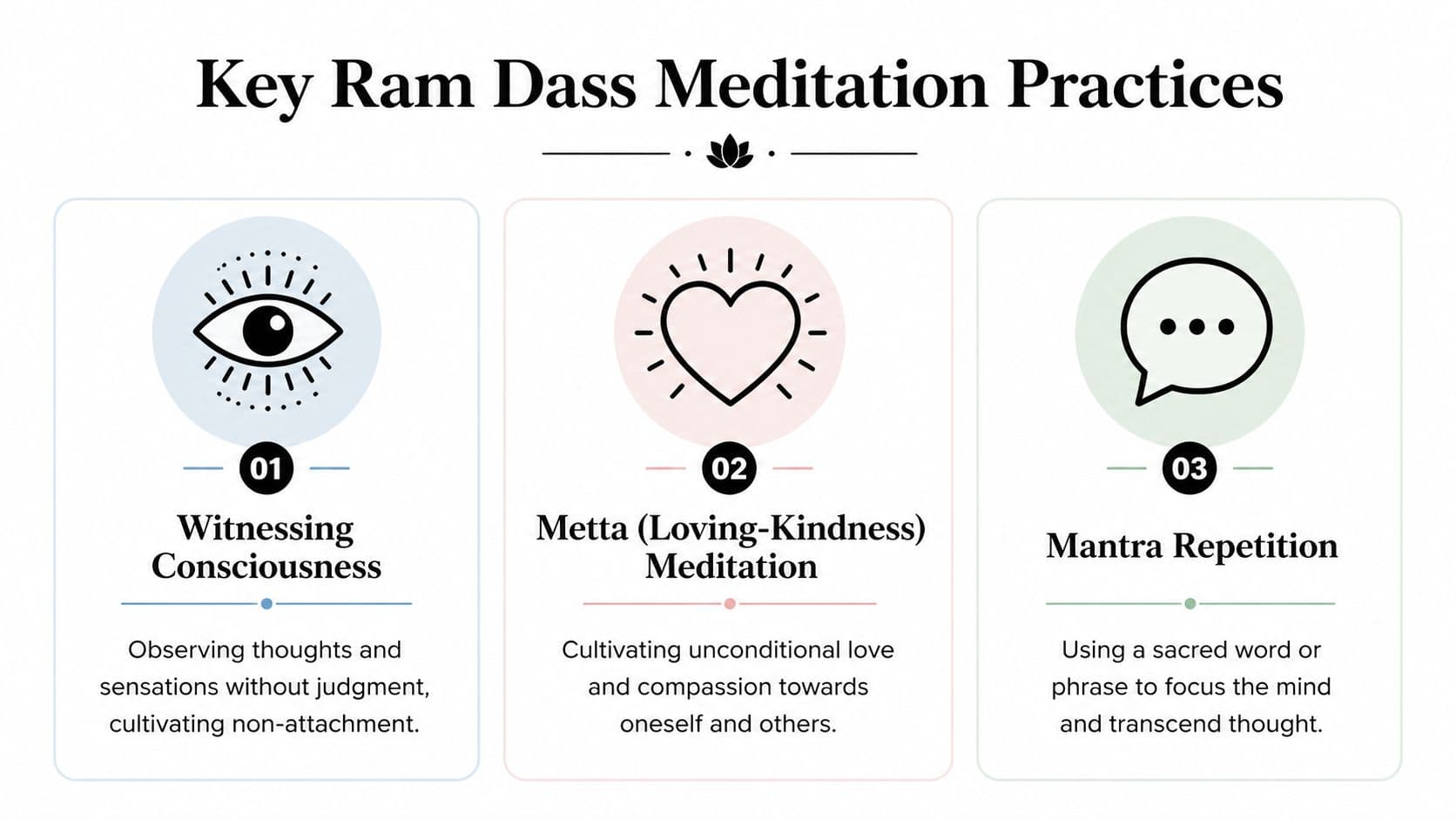
Breath awareness is often the kindest starting point. The breath keeps happening whether the mind is calm or noisy, so it gives attention somewhere simple to rest. Ram Dass often pointed people back to the natural rise and fall of the abdomen. That small movement is a steady handrail.
Try this:
- Sit in a position you can maintain.
- Notice the body breathing on its own. Let the belly rise and fall.
- Stay with one clear sensation, the abdomen.
- Return each time attention drifts. The return is the practice.
If you feel scattered, a short three-part breath practice can help you settle.
Mantra and heart practice
When breath feels too dry, a mantra can steady attention and open the heart. A simple phrase like “I am loving awareness” gives the mind a home base. Use it with breathing, during emotional spikes, or in ordinary moments to anchor presence.
Resting as the witness
Witnessing practice notices whatever comes and goes: sounds, itches, plans, waves of feeling. The point isn’t blank detachment; it’s recognizing that thoughts and emotions happen in awareness but aren’t the whole of who you are.
Practice cue: Ask, “Can I notice this thought clearly?” That question often helps more than trying to silence the mind.
Witnessing transfers naturally off the cushion. In traffic you can notice irritation without acting from it. In a meeting you can feel insecurity without letting it run the room.
Self-inquiry
Self-inquiry is the subtler edge. After stability with breath or mantra, attention can ask who is having these experiences. It’s like sitting by a river and then asking who is watching the water. The question itself loosens old identification. Approach it gently and without forcing answers.
Comparison of Techniques
| Technique | Primary Focus | Core Goal | Best For |
|---|---|---|---|
| Breath awareness | Abdomen rising and falling | Loosen identification with thoughts | Beginners, anxious minds, daily grounding |
| Mantra repetition | Sacred phrase or simple words | Steady the mind and open the heart | Emotional overwhelm, heart-centered practice |
| Witnessing consciousness | Observing thoughts and sensations | Cultivate non-attachment | Daily life integration, self-observation |
| Self-inquiry | The sense of “I” itself | Move beyond ego identification | Experienced meditators with stable attention |
You don’t need to master all four. Some days breath is enough. Some days the heart needs a mantra. Ram Dass consistently pointed people back to sincerity over performance.
A Sample 15-Minute Guided Session
A 15-minute sit often begins before you close your eyes. You’ve been solving problems and carrying a conversation in your head; expect the mind to keep moving. A pond settles gradually.
Minutes 0 to 3
Sit comfortably. Feel points of contact—feet, legs, back. Take a slightly deeper breath, then let the body breathe on its own. Say quietly, “For the next 15 minutes, I do not need to solve my life.”
Minutes 3 to 7
Bring attention to the abdomen rising and falling. Keep it plain. Return each time attention drifts. Name the movement if naming helps: “rising,” “falling.”
Minutes 7 to 11
Add a soft phrase: on the in-breath, I am; on the out-breath, loving awareness. Use the phrase as a tuning note. If it feels flat, return to the breath until it feels right.
Minutes 11 to 15
Let the phrase quiet and rest in simple noticing. Sounds, sensations, and thoughts come and go. Notice them and sense the awareness that knows them. When you open your eyes, pause. Notice the room and your impulse to rush. Carry one thread of this into the next email, conversation, or traffic light.
Benefits and How to Handle Common Pitfalls
Meditation isn’t only working when the mind is silent. The moment you notice you’ve been lost in thought and come back, that’s progress. Research shows meditation programs can reduce anxiety and improve well-being in many people2.
What tends to grow with practice
Benefits usually appear subtly. You may notice:
- More space in hard moments
- Greater compassion for yourself and others
- Steadier presence in ordinary life
- Less fear of inner weather
The racing-mind problem
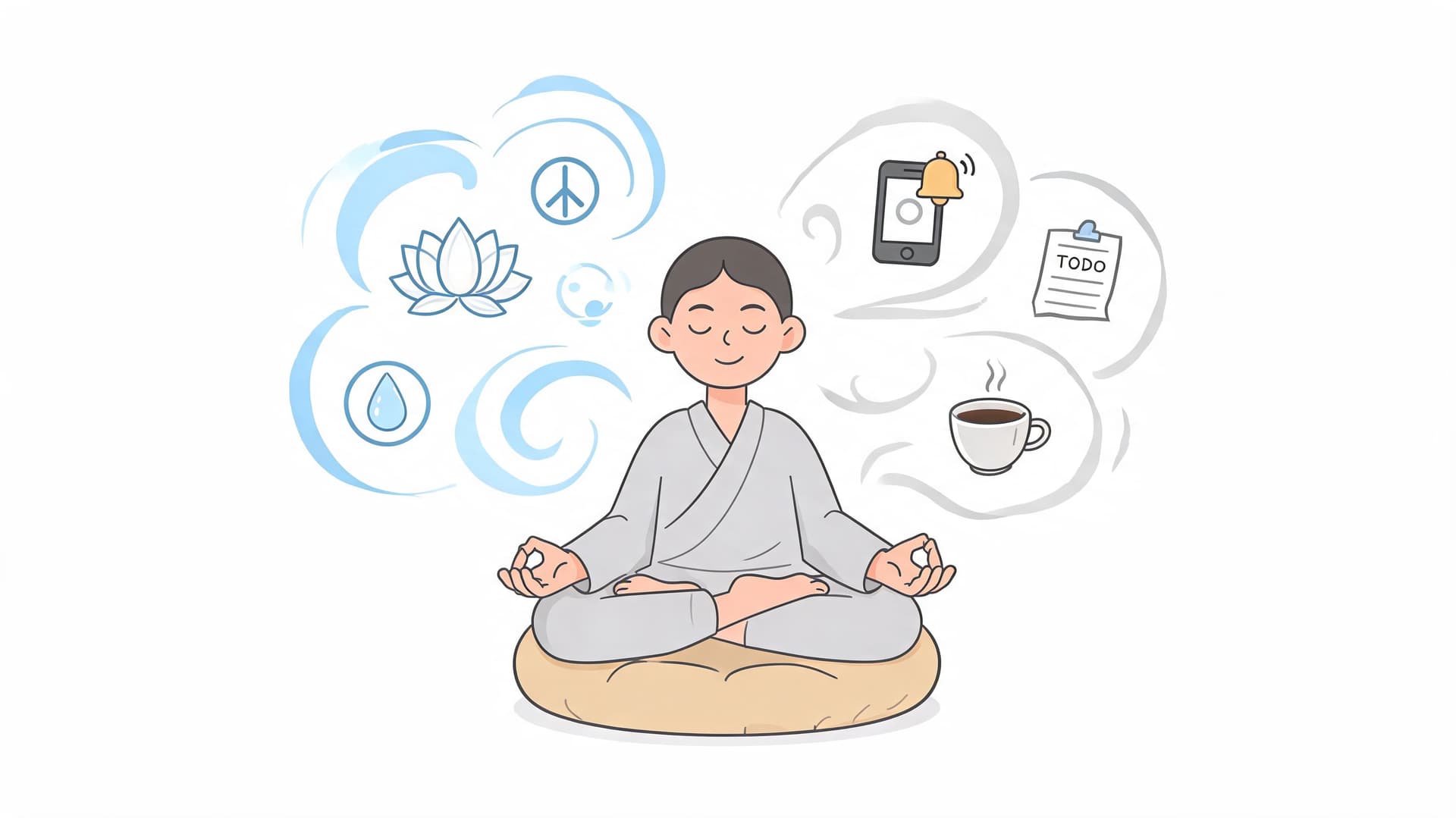
“I tried meditating, but my mind was everywhere.” Good. Now you’re seeing the mind. That recognition is useful because it makes the mind workable. Many meditators feel frustrated and drop the practice; a kinder definition of meditation helps sustain practice3.
What to do when practice feels bad
If meditation feels dull or agitating:
- Shorten the session to ten honest minutes.
- Use a stronger anchor: breath, mantra, or body sensation.
- Notice self-judgment as just another thought.
- Bring practice into daily life: one conscious breath before replying to a tense message.
Meeting yourself is the doorway. Ram Dass’s practice works best when you stop using meditation to escape being human.
Connecting Meditation to Your Life Purpose
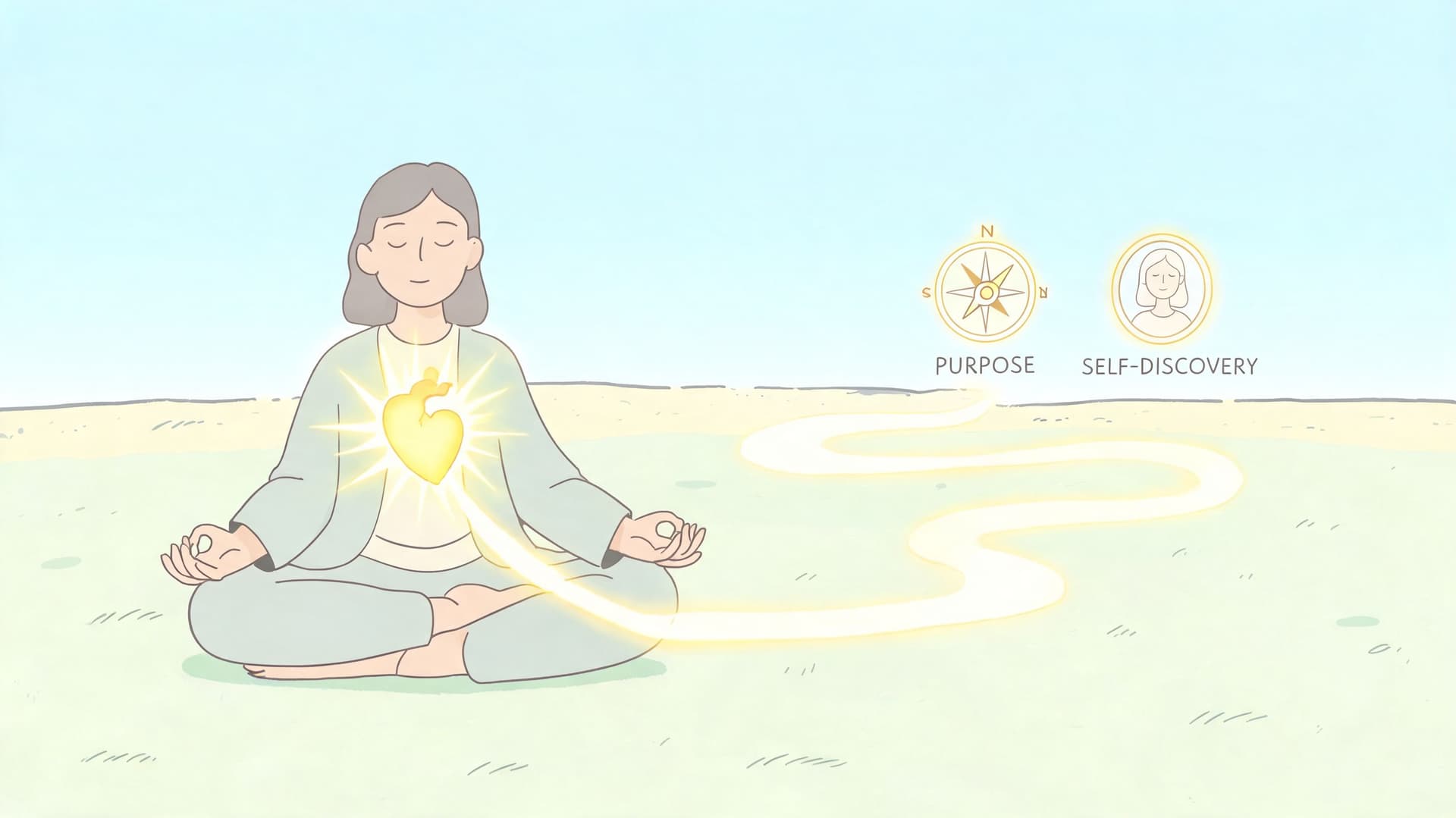
Meditation can calm your nervous system and also clear the noise that hides what’s truly important. Regular sitting refines your listening so you can tell the difference between what’s loud and what’s true.
Clarity changes decisions
Over time you may sense which work drains you, which relationships ask you to shrink, and which choices leave you inwardly clean. Meditation helps you notice the quieter voice of purpose so you can act with more alignment.
Dan Millman’s The Life You Were Born to Live offers a framework that pairs well with inner listening. The Life Purpose App can help translate inner clarity into practical steps and relationship patterns.
Inner practice and outer service
Ram Dass never reduced spirituality to private bliss. Practice should make you more available to life. Signs your practice is connecting with purpose include choosing with less panic, listening better, caring less about image, and feeling drawn toward meaningful service.
Frequently Asked Questions About Ram Dass Meditation
Is Ram Dass meditation religious?
It can be devotional but doesn’t require belonging to a religion. Ram Dass drew from Hindu bhakti, Buddhist meditation, and inquiry traditions. Some practice devotionally; others use it as contemplative awareness.
Do I need a guru to practice it?
No. You can start with breath awareness, mantra, and witnessing on your own. A teacher can help with deeper inquiry, but sincerity and consistency matter more than spiritual status.
What if I can’t stop thinking?
You’re not supposed to stop thinking by force. The practice is noticing thought and returning without judgment. A wandering mind offers more chances to practice returning.
Is mantra necessary?
No. Breath works for many people. Use mantra if it steadies you or opens the heart. If a phrase feels forced, don’t use it.
How often should I practice?
Regularity beats intensity. Small, steady sessions are more sustainable than infrequent intense retreats. Practice in a way you can live with.
Can I use this in daily stress, not just on a cushion?
Yes. That’s where much of the value appears. One breath before speaking in anger, one moment of witnessing during shame, one soft return to awareness in a crowded day. That’s living practice.
Quick Q&A
What is Ram Dass meditation in one sentence?
A practice of meeting what’s present with tenderness while recognizing the awareness that notices thoughts and feelings.
How do I begin when my mind races?
Start with short breath-focused sessions, treat each return as progress, and use mantra or body anchors when needed.
Can this practice shift my sense of purpose?
Yes. By reducing noise and increasing clarity, meditation helps you hear quieter, more authentic impulses that guide choices.
If you want to connect meditation with a clearer life purpose, the Life Purpose App complements Dan Millman’s work and offers practical tools for bringing inner listening into daily choices.
1.
Ram Dass, Be Here Now sold two million copies and helped popularize Eastern spirituality in the West. https://en.wikipedia.org/wiki/Ram_Dass
2.
Meditation programs can reduce anxiety and improve well-being according to a systematic review and meta-analysis. https://jamanetwork.com/journals/jamainternalmedicine/fullarticle/1809754
3.
Many meditators report early frustration and dropout; discussions of practice components note retention challenges. https://beherenownetwork.com/ram-dass-here-and-now-ep-204-components-of-meditation/
Discover Your Life Purpose Today!
Unlock your true potential and find your life’s purpose.
