Explore the role of Vata in Ayurveda. Learn to identify signs of imbalance and discover practical diet, lifestyle, and yoga tips to pacify Vata dosha.
April 15, 2026 (1mo ago)
Vata in Ayurveda: A Practical Guide to Finding Balance
Explore the role of Vata in Ayurveda. Learn to identify signs of imbalance and discover practical diet, lifestyle, and yoga tips to pacify Vata dosha.
← Back to blog
Some days have a very specific feel to them. Your mind is racing, but not in a focused way. You open one tab, then another, then forget why you picked up your phone. Your hands are cold. You’re hungry, then not hungry at all. By evening, you feel tired and wired at the same time.
In Ayurveda, that pattern often points to Vata.
Ayurveda is an old system of self-understanding from India. It looks at health through the lens of doshas, the three core organizing principles called Vata, Pitta, and Kapha. These aren’t rigid labels. They’re ways of describing how energy behaves in the body and mind.
Vata is especially important because it governs movement and communication. Breath moves. Thoughts move. Food moves through digestion. Nerve signals move. Blood circulates. Words leave your mouth. All of that falls under Vata.
If you’ve ever felt like your whole system was moving too fast, or not smoothly enough, learning about vata in ayurveda can be surprisingly comforting. It gives language to experiences that many people dismiss as “just stress” or “just the way I am.”
If you’re still figuring out your constitution, an Ayurveda dosha test can give you a helpful starting point. It won’t replace a practitioner’s assessment, but it can help you notice patterns.
Introduction Embracing Your Inner Elements
A woman once described her life to me this way: “I’m productive on paper, but inside I feel like a leaf in the wind.” She wasn’t lazy. She wasn’t doing anything wrong. She was overextended, undernourished, sleeping lightly, skipping meals, and living in a constant stream of stimulation.
That’s a very Vata story.
Ayurveda teaches that each person has a unique constitutional makeup, called Prakriti. Some people run hotter and sharper. Some are steadier and slower. Some are more changeable, sensitive, quick, and mobile. That last pattern belongs to Vata.
When Vata is balanced, it gives life sparkle. You may feel creative, alert, responsive, and adaptable. You can learn quickly, speak with enthusiasm, and sense subtle things other people miss.
When Vata gets pushed too far, the same gifts can flip. Creativity becomes overwhelm. Sensitivity becomes anxiety. Movement becomes restlessness. Spaciousness becomes feeling ungrounded.
Vata often speaks in whispers before it starts shouting. Dry skin, irregular appetite, light sleep, scattered thinking, and cold hands can all be early signals.
This is why so many modern people see themselves in Vata. Fast schedules, travel, endless notifications, multitasking, inconsistent meals, and mental overstimulation all share the same basic quality. They increase movement.
And in Ayurveda, too much movement disturbs Vata first.
The Essence of Vata Dosha Air and Space
Vata is the principle of movement. In Ayurveda, it arises from air and space, two elements that are easy to recognize in daily life. Air is what moves. Space is what gives movement room to happen. Together, they describe the part of us that changes quickly, travels easily, responds fast, and can also lose steadiness under strain.
For people drawn to self-knowledge, this matters. Your Prakriti, or innate constitution, is not a label to box you in. It is more like a map of your natural tendencies. It helps explain why one person thrives on variety while another needs routine, and why certain phases of life can feel especially stretching or awakening. Vata often becomes easier to understand when you see it not only as a body type, but as a pattern that can shape how you think, create, relate, and move through periods of transition.
Wind is a useful comparison here. A gentle breeze brings freshness, motion, and inspiration. Strong, irregular wind dries things out, scatters what was organized, and makes it hard for anything to settle. Vata behaves in much the same way in the body and mind.
Ayurvedic teaching describes Vata as the dosha that directs movement throughout the system. Because movement is involved in so many functions, an aggravated Vata can affect the whole organism and can influence the other doshas as well.
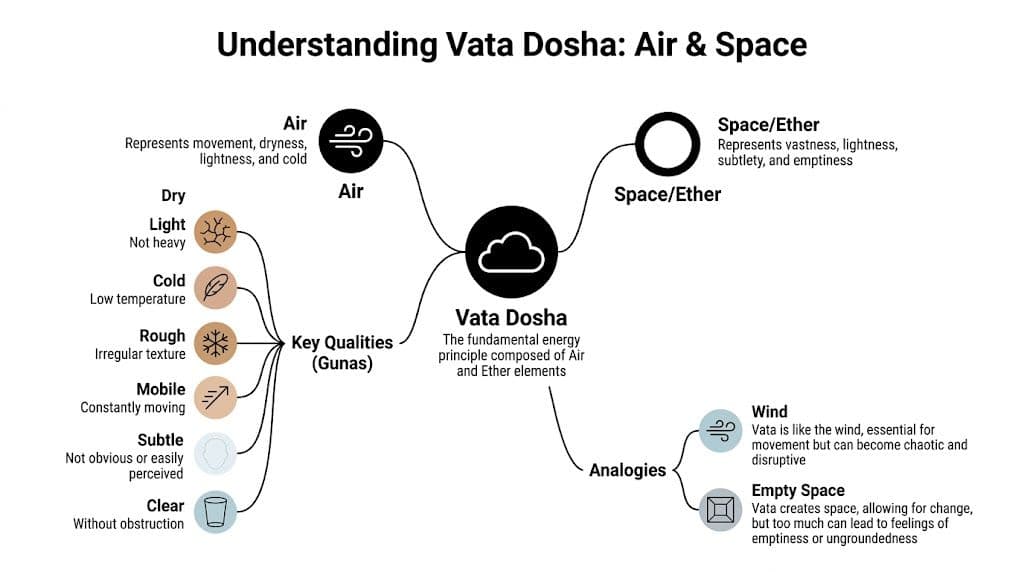
The seven qualities of Vata
Ayurveda explains each dosha through qualities, called gunas. These can sound abstract at first. They become much clearer when you connect them to ordinary experience.
- Light means Vata does not have much heaviness or density. In real life, this may feel like quick energy, fast shifts in mood or attention, or a sense that you need more grounding.
- Dry shows up anywhere moisture is lacking. You might notice it in the skin, lips, hair, stool, or even in a feeling of emotional depletion.
- Cold reflects reduced warmth in the system. Cold hands and feet, sensitivity to wind, and a preference for warm meals often fit this pattern.
- Rough is the opposite of smooth. It can appear as cracking joints, dry tissue, or irregular body rhythms.
- Subtle helps explain why Vata people often perceive fine details, moods, and changes quickly. The same sensitivity can also make overstimulation more likely.
- Mobile is the quality of motion. It supports adaptability, creativity, and quick response. In excess, it can turn into restlessness, inconsistency, or trouble settling.
- Clear suggests openness and spaciousness. In balance, this can feel expansive and mentally bright. In excess, it may feel more like too much emptiness or not enough containment.
A simple way to understand these qualities is to ask, “What is increasing in me right now?” If life has become more dry, cold, irregular, mobile, and overstimulating, Vata is often part of the picture.
What Vata actually does
Vata is not just a description of temperament. It refers to functions that keep life moving from one moment to the next.
It is linked to:
- Breath and respiration
- Circulation
- Nervous system activity
- Absorption and elimination
- Speech and expression
- Physical movement
- Mental activity and sensory response
You can see why Vata is so important. If Pitta works like transformation and Kapha works like structure, Vata works like communication and transport. It carries signals, impulses, breath, and motion. In modern life, many people on a path of growth or reinvention are asking big questions about purpose, identity, and direction. That inner searching has value, but it can also stir a lot of movement. Ayurveda offers a helpful reminder. Insight lands more clearly when the system feels steady enough to receive it.
A good rule for self-care is simple. When your life starts to feel like too much wind and too much space, your body usually needs the opposite qualities. Warmth. Moisture. Rhythm. Rest. Nourishment.
Signs of Vata Balance and Imbalance
You don’t need to memorize Sanskrit to recognize Vata. You need to notice patterns.
Balanced Vata has a lively quality. Imbalanced Vata feels erratic. The same person can experience both states at different times.
What balanced Vata looks like
When Vata is in a good place, people often feel mentally bright and physically responsive. They learn quickly, communicate easily, and bring originality into whatever they do.
Common signs include:
- Steady enthusiasm
- Clear, quick thinking
- Good sleep onset
- Regular digestion and elimination
- Warm enough hands and feet
- A sense of vivacity
What imbalanced Vata looks like
When Vata rises too high, the body starts losing rhythm. Appetite becomes irregular. Sleep becomes lighter or broken. The mind gets scattered.
A useful sleep clue comes from a 2015 study on understanding Vata dosha, which reported that Vata-constitution individuals take longer to fall asleep, feel less rested on waking, and have more disrupted sleep with reduced deep slow-wave periods.
Mental and physical signs often travel together. The person who can’t settle their thoughts may also be dealing with gas, bloating, constipation, fatigue, or cold extremities.
Vata Quick Reference Chart Balance vs. Imbalance
| Characteristic | Balanced Vata | Imbalanced Vata |
|---|---|---|
| Energy | Energetic, vivacious | Fatigued, tired |
| Mind | Learns easily, clear mind | Forgetful, scattered |
| Sleep | Easy sleep onset | Insomnia, disturbed sleep |
| Digestion | Regular digestion and elimination | Constipation, gas, bloating |
| Circulation | Good circulation, warm extremities | Cold hands and feet, poor circulation |
A simple self-check
Ask yourself these questions:
- Do I feel nourished or depleted?
- Is my energy steady or jumpy?
- Am I sleeping soundly or lightly?
- Is my digestion regular or unpredictable?
- Do I feel grounded in my body?
If several of your answers point toward irregularity, dryness, coldness, and restlessness, Vata may need attention.
Common Causes of Vata Aggravation
Most Vata aggravation doesn’t come from one dramatic event. It builds through repeated friction.
A skipped lunch here. A late night there. Too much screen time. Too much talking. Too many decisions. Not enough rest. Vata accumulates through speed, irregularity, and depletion.
The modern triggers that stir the wind
Certain habits almost always provoke Vata:
- Irregular routine. Different wake times, missed meals, unpredictable work hours.
- Cold and dry intake. Raw salads, crackers, iced drinks, eating on the go.
- Excess stimulation. Constant noise, notifications, multitasking, scrolling before bed.
- Travel and transitions. Airports, time changes, rushing, sleeping in unfamiliar places.
- Overexertion. Too much exercise, too much output, not enough rebuilding.
External conditions matter too
Environment has a direct effect on Vata. Windy weather, cold climates, and dry seasons often increase it. Ayurveda also notes seasonal movement in Vata, with accumulation in summer and aggravation in the rainy season, while later life tends to become more Vata in nature because tissues naturally decline.
That’s one reason older adults often need more warmth, lubrication, and routine.
Emotional patterns count
Fear, worry, uncertainty, and too much mental input all disturb Vata. They share the same qualities of mobility and instability.
Modern life's influence is significant. Current Ayurvedic discussion often misses how strongly high-stress careers, digital lifestyles, and changing life phases can affect Vata differently across a person’s life. That gap is thoughtfully described in this discussion of Vata imbalance and life stage vulnerabilities.
Ayurvedic Diet and Herbs to Pacify Vata
Food is one of the fastest ways to calm Vata because it gives the body direct sensory information. Warmth says “you’re safe.” Moisture says “you’re supported.” Regular meals say “you can stop bracing.”
The Ayurvedic principle is simple. Like increases like, and opposites bring balance. Since Vata is cold, dry, light, and mobile, it’s soothed by food that is warm, moist, grounding, and easy to digest.

What to eat more often
Vata usually does well with the tastes Ayurveda describes as sweet, sour, and salty.
Good examples include:
- Warm cooked grains like oatmeal, rice, and other soft cooked meals
- Soups and stews with root vegetables
- Healthy fats such as ghee and oils used in cooking
- Soft, nourishing foods like bananas and avocados
- Warming spices such as ginger and cinnamon
- Meals eaten at regular times
Foods that are moist and cooked tend to be easier for Vata than foods that are dry, cold, or rough.
What to reduce for a while
If Vata is clearly aggravated, it often helps to pull back on:
- Raw salads and cold smoothies
- Iced drinks
- Dry snack foods like crackers
- Skipping meals
- Too much caffeine or other stimulants
This isn’t about perfection. It’s about noticing cause and effect. If you already feel airy and overstimulated, an iced coffee and a handful of crackers usually won’t bring you back to center.
A note on herbs
People often ask about herbs right away. That makes sense, but herbs work best when meals and routine are already supporting you.
In everyday Ayurvedic conversation, you’ll often hear about ashwagandha, ginger, and triphala for Vata-related concerns. The exact fit depends on your digestion, strength, symptoms, medications, and overall constitution. If you want a broader introduction to plant support, this overview of adaptogenic herbs is a useful place to begin.
Food for Vata should feel like a relief, not a challenge. If a meal leaves you warmer, calmer, and more settled, that’s a good sign.
Creating a Grounding Daily Routine for Vata
If I had to choose one medicine for Vata, it would be regularity.
Vata’s nature is mobile and changeable. A steady daily rhythm gives it something solid to lean against. This is why routine in Ayurveda isn’t boring. For a Vata person, it’s strongly regulating.

Why routine works so well
A consistent schedule reduces internal negotiation. The body starts trusting what comes next. Hunger arrives on time. Sleep becomes easier. The nervous system stops scanning for unpredictability.
A grounded Vata routine often includes:
- Waking at a similar time each day
- Eating meals at regular times
- Going to bed before exhaustion becomes wiredness
- Leaving space between commitments
- Choosing fewer inputs in the evening
This isn’t rigid discipline. It’s rhythm.
Abhyanga as daily medicine
One of the classic practices for Vata is Abhyanga, or warm oil self-massage. A practical protocol for Vata imbalance includes daily warm sesame or almond oil self-massage and a grounding diet of warm, moist foods eaten at fixed times, as described in this guidance on Vata dosha care and Abhyanga.
Why is Abhyanga so effective?
The answer sits right in Vata’s qualities. Oil counters dryness. Warmth counters cold. Slow touch counters excess mobility. Repetition counters irregularity.
Try this simple version:
- Warm a small amount of oil so it feels comfortable, not hot.
- Massage it into the body with slow strokes, especially the limbs, joints, scalp, ears, and feet.
- Rest peacefully for a short time before bathing or showering.
Even a brief practice can feel surprisingly settling.
A realistic Vata day
You don’t need a perfect spiritual schedule. You need anchors.
A simple version might look like this:
- Morning with warm water and a quiet start
- Midday meal as the most substantial meal
- Evening with less stimulation, lighter conversation, and a consistent wind-down
If you want more ideas for making care feel doable, these self-care rituals can help you think in terms of rhythm rather than pressure.
Calming Yoga and Breathwork Practices
Vata needs movement, but it needs the right kind of movement. Fast, competitive, overstimulating exercise can leave a Vata person more depleted than before.
Slow, rhythmic, grounded practices usually work better. Think less “push” and more “settle.”
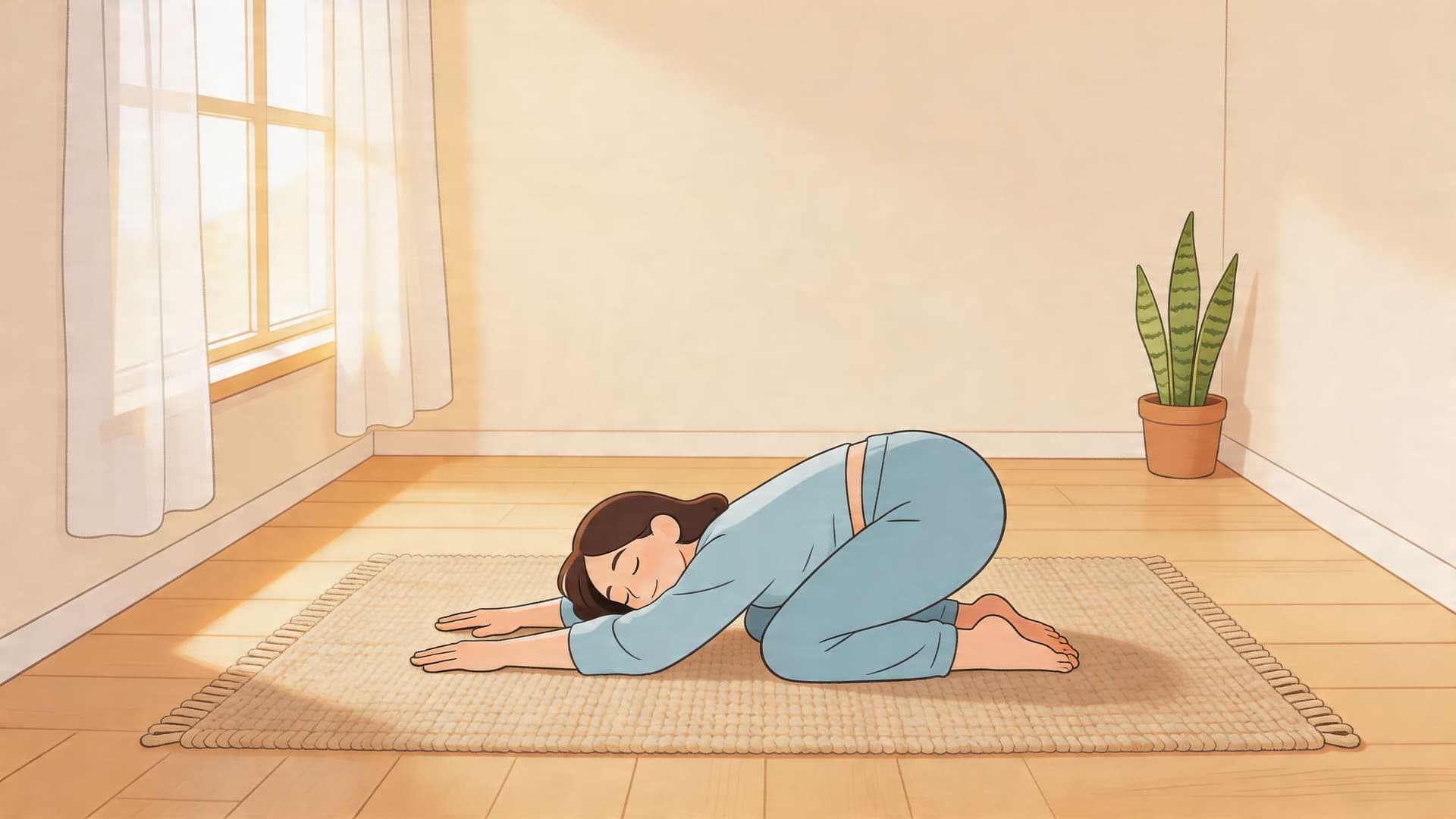
Helpful yoga directions for Vata
Focus on poses that create containment, softness, and contact with the ground.
Good options include:
- Child’s Pose
- Cat-Cow
- Legs-Up-the-Wall
- Slow seated folds
- Gentle lower-body and pelvic opening work
Longer holds, steady breathing, and a warm room tend to help.
Breath as a direct tool
Because Vata governs movement and the nervous system, breathwork can be powerful. Gentle practices often calm the mind faster than trying to “think” your way into relaxation.
Alternate nostril breathing is a classic choice. So is slow diaphragmatic breathing. If you’d like a simple method to start with, this guide to the 3-part breath is practical and easy to follow.
Pairing breathwork with a warm evening drink can help some people shift out of mental overactivity. If you enjoy herbal beverages, this guide to tea that relaxes body and mind offers gentle ideas that fit well with a calming nighttime routine.
Slow practices often feel “too simple” to the Vata mind. That’s usually a clue they’re exactly what’s needed.
When to Seek Professional Guidance
Self-care is powerful, but it has limits.
If your symptoms are intense, chronic, or confusing, it’s wise to work with a qualified Ayurvedic practitioner and, when appropriate, a medical professional. That includes persistent insomnia, significant digestive distress, unexplained weight loss, severe anxiety, chronic pain, or symptoms that keep worsening despite consistent care.
Ayurveda is individualized. Two people can both say “I have Vata symptoms” and need different support. One may need more nourishment. Another may need gentler digestion support. Another may need evaluation for something outside the Ayurvedic framework of self-care.
Herbs also deserve care. A plant that suits one person may not suit another, especially during pregnancy, while breastfeeding, or when medications are involved.
Getting help isn’t a failure of intuition. It’s part of mature healing.
Frequently Asked Questions About Vata
Is Vata just another word for anxiety
Vata describes movement in the body and mind. Anxiety is one possible sign that Vata has become disturbed, but it is only one piece of a much larger picture.
In Ayurveda, Vata also governs the flow of breath, the movement of food through digestion, elimination, circulation, speech, sensory input, and the quick spark of ideas. Wind is a useful comparison here. A gentle breeze keeps everything moving. Too much wind creates instability, dryness, and restlessness.
Research has also linked stronger signs of Vata imbalance with anxiety, rumination, lower mindfulness, and reduced quality of life, as noted earlier. That does not mean every anxious person is only “a Vata type,” or that Vata should replace modern psychological understanding. It means Ayurveda offers one more lens for noticing patterns in how stress shows up.
Can someone be naturally Vata and still be healthy
Yes. Many healthy people have a Vata-dominant constitution.
Balanced Vata often shows up as creativity, adaptability, sensitivity, enthusiasm, and a lively imagination. These are beautiful qualities. Ayurveda does not treat your constitution as a flaw to fix. It asks how you can care for your natural tendencies so they remain steady enough to serve your life well.
This is an important distinction for anyone drawn to self-knowledge work. Your prakriti is your starting pattern, not your prison.
Does Vata change during different phases of life
Yes, and this question deserves more attention than it usually gets.
Ayurveda teaches that doshas shift across seasons, stages of life, and major transitions. A person may have a certain inborn constitution, yet still move through periods where Vata rises sharply. That can happen during adolescence, after childbirth, around menopause, during grief, after travel, or through long stretches of overstimulation and uncertainty.
For people interested in both Ayurveda and life purpose, this can be very clarifying. Constitution tells you something about your baseline nature. Life phase tells you what is being asked of you now. Dan Millman’s work, especially The Life You Were Born to Live, speaks to this same human question from another angle. Who am I, and what am I learning in this season?
The Life Purpose App offers a thoughtful way to explore those themes through life path, relationship patterns, and changing cycles. For some readers, that wider frame makes Ayurvedic self-care feel more personal and more meaningful.
Does Vata affect relationships and work
Often, yes.
When Vata is balanced, it can bring originality, warmth, quick insight, and a gift for seeing possibilities that others miss. In relationships, that may feel playful and emotionally perceptive. In work, it may look like innovation, flexibility, and strong creative instincts.
When Vata is aggravated, those same traits can lose their grounding. A creative mind becomes scattered. Sensitivity becomes overwhelm. Quick thinking turns into overthinking. In practical terms, that might mean changing direction too often, struggling with follow-through, feeling unrooted in relationships, or becoming depleted by noise, deadlines, and constant digital input.
The goal is not to get rid of Vata. The goal is to give it structure, warmth, rhythm, and rest so its gifts remain usable.
Discover Your Life Purpose Today!
Unlock your true potential and find your life’s purpose.
